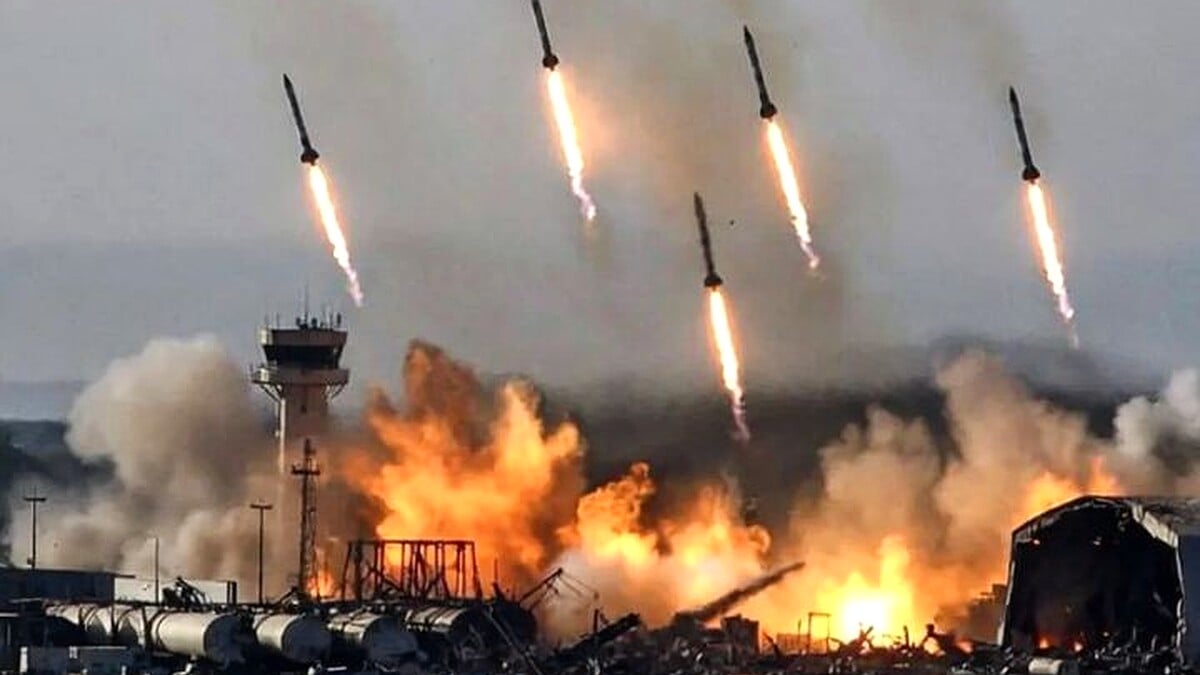




ISLAMABAD: Iran has intensified its retaliatory campaign against United States military presence and allied infrastructure in the Middle East, launching coordinated missile and drone strikes on a US base in Iraq, Kuwait International Airport’s fuel depot, and structures associated with American interests in Kuwait.
The attacks, reported on March 8, 2026, mark a significant escalation in the ongoing US-Israel-Iran conflict, now in its second week, as Tehran responds to sustained airstrikes on its territory.
Iran’s Islamic Revolutionary Guard Corps claimed responsibility for waves of drones and ballistic missiles targeting US-hosted facilities across the Gulf.
In Iraq, drones targeted a United States military installation near Erbil International Airport, with local forces intercepting at least one projectile aimed at a base close to Baghdad International Airport.
Explosions were reported near US positions, though American officials have not confirmed casualties from the latest incidents.
Earlier strikes in the campaign damaged structures at Erbil, including areas hosting US troops, with smoke plumes visible in verified imagery.
In Kuwait, Iranian drones struck fuel tanks at Kuwait International Airport, igniting fires that firefighters later brought under control.
The Public Authority for Civil Aviation described the incident as a direct attack on vital infrastructure, with no significant injuries reported.
A separate strike hit a government building in Kuwait City, identified as the headquarters of the Public Institution for Social Insurance, causing material damage and forcing temporary closure.
Kuwaiti air defenses neutralized multiple incoming projectiles, including drones and missiles, amid loud explosions in the capital.
Reports indicate civilian facilities sustained damage from debris during interceptions.
These actions follow Iran’s broader strategy to target US military sites in the region, including bases in Kuwait such as Camp Arifjan and Ali Al Salem Air Base.
US officials previously confirmed casualties at Camp Arifjan, with three service members killed and others wounded in earlier strikes.
The pattern extends to other Gulf states, where Iran has fired hundreds of drones and missiles at facilities hosting American forces.
Satellite imagery and verified videos show damage to communications equipment, radar systems, and other infrastructure at sites in Bahrain, Qatar, the United Arab Emirates, and Saudi Arabia.
Iran’s operations appear aimed at disrupting US coordination and connectivity in the Middle East.
Gulf nations have reported intercepting barrages, with Kuwait downing 26 projectiles in one instance.
Explosions rocked capitals, and fires erupted at targeted sites, heightening fears of wider regional involvement.
The conflict originated from joint US-Israeli strikes on Iran, which began with the targeting of military and leadership sites, resulting in significant casualties and infrastructure losses in Tehran.
Iranian oil depots and refining facilities faced recent attacks, disrupting fuel distribution in the capital.
Tehran’s response has drawn condemnation from Arab League officials, who described the strikes on Gulf states as reckless.
Despite an initial statement from Iran’s president suggesting restraint toward neighbors, attacks continued, prompting mixed messages from Iranian leadership.
Hardline elements within the Revolutionary Guard have pushed for sustained operations.
The United States has ramped up its campaign, with precision strikes on Iranian command centers, air defenses, and missile sites.
President Donald Trump has stated the war will persist until Iran’s military capabilities are neutralized.
Oil prices have surged amid concerns over disrupted supplies through the Strait of Hormuz.
Global air travel faces snarls, and embassies in the region, including US missions, have closed or restricted operations.
The escalation risks drawing in more actors, as Gulf states balance defense pacts with calls for de-escalation.
Analysts note Iran’s widening of targets to include civilian-linked infrastructure signals desperation amid heavy losses on its soil.
Casualty figures remain fluid, with Iranian claims of hundreds of US personnel affected contrasting official US reports.
The region braces for further developments as both sides signal no immediate end to hostilities.