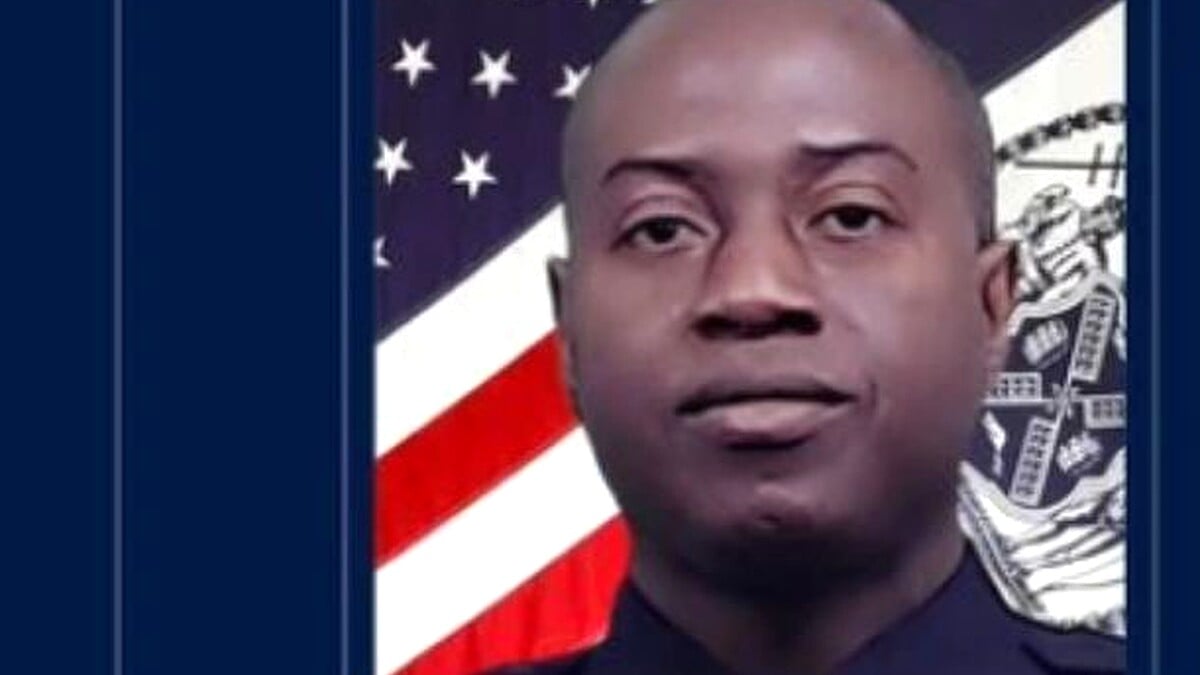




ISLAMABAD: The New York City Police Department has announced the death of one of its officers, Police Officer Sorffly Davius, who also held the rank of Major in the New York Army National Guard’s 42nd Infantry Division.
Davius passed away on March 6, 2026, at Camp Buehring in Kuwait following a medical episode while deployed in support of Operation Epic Fury, the ongoing US military campaign targeting Iranian security infrastructure.
The NYPD confirmed that the incident was non-hostile and unrelated to direct combat, describing it as an unspecified medical issue that proved fatal.
Davius joined the NYPD in 2014 and was assigned to the 79th Precinct in Brooklyn, where he served for over a decade as a committed law enforcement professional.
In his military capacity, he had been a member of the New York Army National Guard since September 2004, rising through the ranks to major and specializing as a data systems engineer.
His dual service exemplified the citizen-soldier tradition, balancing duties on New York streets with national defense obligations overseas.
Operation Epic Fury commenced on February 28, 2026, under US Central Command direction, focusing on dismantling Iranian offensive missiles, production facilities, naval assets, and related security elements through coordinated strikes.
The operation, involving US and allied forces, has seen limited but significant US casualties, primarily from Iranian retaliatory actions in the region.
US authorities have confirmed six service members killed in a March 1, 2026, unmanned aircraft system attack at Port Shuaiba in Kuwait, involving soldiers from the 103rd Sustainment Command.
Those fatalities marked the primary combat-related losses for American forces in the early phase of the campaign.
Davius’s death stands apart as the only reported non-combat fatality among US personnel linked to the operation so far, highlighting the risks even in support roles far from frontline engagements.
New York Governor Kathy Hochul expressed profound sorrow, describing Davius as a true citizen-soldier who protected communities at home and served abroad with distinction.
She noted his prior contributions to Joint Task Force Empire Shield, safeguarding high-profile locations in New York from potential threats.
The NYPD issued a statement emphasizing that Davius’s service would be remembered forever, with the department extending condolences to his family, colleagues, and fellow service members.
He is survived by his wife and five children, underscoring the personal toll of such dedicated public service.
The incident occurs against a backdrop of escalating tensions in the Middle East, where Operation Epic Fury aims to neutralize perceived imminent threats from Iranian capabilities.
Military analysts observe that while air and missile strikes dominate the campaign, support operations in bases like Camp Buehring remain vital for logistics, command, and sustainment.
Non-hostile incidents, including medical emergencies, are not uncommon in deployed environments due to stress, climate, and operational demands.
The US Department of Defense has yet to release further details on Davius’s medical condition, respecting privacy protocols for service members.
Tributes from police unions, including the Detectives’ Endowment Association, have highlighted his commitment to both uniforms, portraying him as embodying the finest ideals of service.
Public officials, including congressional representatives, have voiced heartbreak over the loss, praying for his family and colleagues.
This event brings renewed attention to the sacrifices of dual-status personnel who serve in law enforcement while maintaining military readiness.
As the conflict continues, US forces maintain focus on strategic objectives, with commanders stressing the importance of all contributions, combat or support.
Davius’s passing serves as a somber reminder of the human cost behind military operations, even when not directly tied to enemy action.
Communities in New York and the broader nation continue to mourn a dedicated father, husband, officer, and soldier whose legacy of service endures.