



ISLAMABAD: A classified assessment prepared by the National Intelligence Council, which aggregates insights from America’s eighteen intelligence agencies, has concluded that even an extensive military campaign against Iran would probably fail to dislodge the country’s deeply rooted military and clerical establishment.
The report, completed shortly before the initiation of joint United States-Israel military operations on February twenty-eighth, presents a sobering evaluation amid escalating conflict in the region. It directly challenges optimistic declarations from administration officials regarding the potential for rapid leadership overhaul through sustained bombardment.
According to individuals familiar with the document’s contents, the analysis examined two primary scenarios. The first involved a narrowly focused campaign targeting key Iranian leaders. The second envisaged a broader offensive directed at leadership structures and governmental institutions.
In both instances, the intelligence community determined that Iran’s clerical hierarchy and military apparatus would activate established succession protocols. These mechanisms aim to ensure continuity of authority, even following the elimination of high-ranking figures such as the Supreme Leader.
The findings underscore the resilience of Iran’s power structure, forged since the nineteen seventy-nine Islamic Revolution. The clerical establishment, anchored in institutions like the Assembly of Experts, retains significant influence over governance and ideological direction.
Complementing this is the Islamic Revolutionary Guard Corps, a formidable military-economic entity that commands loyalty through patronage networks and regional proxy operations. Despite reported losses in the ongoing campaign, including damage to naval assets and missile capabilities, no evidence has emerged of widespread defections or internal fractures.
The report’s timing adds weight to its conclusions. Prepared in advance of the current hostilities, it anticipated potential outcomes from decapitation strikes or prolonged attrition. It raises questions about the feasibility of installing a preferred successor without substantial ground involvement, an approach historically fraught with complications.
Historical precedents reinforce the assessment’s cautionary tone. Air campaigns alone have rarely produced regime change, as evidenced by past efforts in various conflict zones. Experts note that entrenched systems adapt through decentralised command and ideological cohesion.
Current developments appear to align with the report’s projections. Despite claims of significant degradation to Iran’s conventional forces, including the rendering of its navy as combat ineffective, the clerical and security networks demonstrate persistence. An interim leadership council has assumed transitional responsibilities, drawing from conservative clerical and judicial figures.
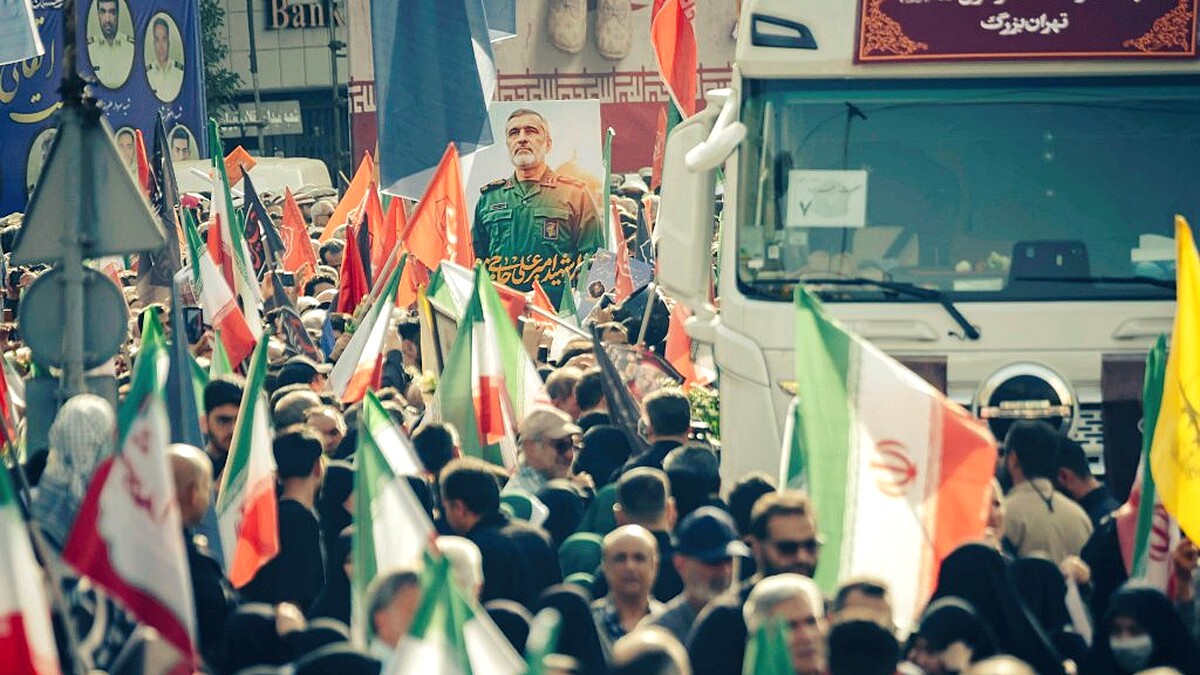
Public responses within Iran remain mixed, with pro-government demonstrations coexisting alongside reported restrictions on dissent. Internet blackouts have limited independent verification of internal dynamics, complicating assessments of popular support for change.
The analysis also considers the fragmented nature of Iran’s opposition. Disparate groups lack unified organisation or broad-based legitimacy sufficient to capitalise on military setbacks. This fragmentation diminishes prospects for an organic power transition in the wake of external pressure.
Broader regional implications emerge from the report’s perspective. A prolonged conflict risks escalation through proxy actors or asymmetric responses, potentially drawing in additional parties. Iran’s capacity for retaliatory actions, including targeted operations or cyber efforts, persists despite material losses.
The assessment arrives as administration rhetoric emphasises extended operations. Officials describe the campaign as nascent, with objectives encompassing the neutralisation of threats from ballistic missiles, naval disruption in the Strait of Hormuz, and proxy networks.
Yet the intelligence evaluation introduces restraint into discussions of transformative outcomes. It implies that military action may degrade capabilities without fundamentally altering governance structures.
Observers familiar with United States policy formulation note that such community-wide judgments inform strategic planning. The National Intelligence Council’s role ensures comprehensive representation of analytic views, minimising reliance on single-source optimism.
As hostilities continue, the report serves as a benchmark against which progress will be measured. Its emphasis on institutional durability highlights the challenges of achieving decisive political change through kinetic means alone.
The document’s disclosure through media channels reflects ongoing scrutiny of policy alignment with intelligence realities. It prompts reflection on the balance between military objectives and attainable strategic ends in a complex theatre.
In summary, the National Intelligence Council’s findings portray Iran’s leadership as adaptable and resilient, casting doubt on expectations of swift regime transformation through assault.