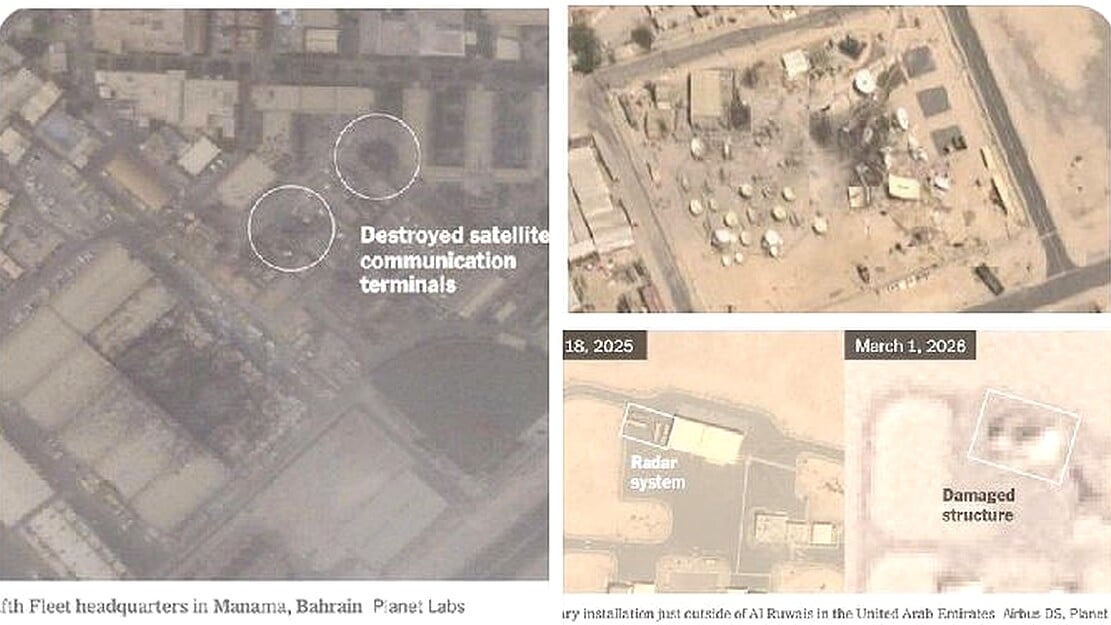




A CNN investigation has revealed significant damage to multiple US military installations across the Gulf region from Iranian retaliatory strikes, according to satellite imagery and geolocated videos analyzed in early March 2026.
ISLAMABAD: A detailed CNN investigation, drawing on high-resolution satellite imagery and verified open-source videos, has exposed the scope of damage inflicted by Iranian missile and drone strikes on American military facilities throughout the Gulf states. The strikes, launched in retaliation for US-Israeli operations against Iran that began in late February 2026, have targeted strategic assets at no fewer than nine US positions in less than 48 hours of intensified conflict. This escalation marks a critical phase in the ongoing Middle East war, where Iran has sought to disrupt US command, control, and air defense capabilities rather than pursue widespread destruction.
The primary focus of the Iranian attacks appears to be degrading connectivity and defensive systems. Communications equipment, satellite communications terminals, and radar installations have sustained notable impacts across several sites. For instance, at Al Udeid Air Base in Qatar—the largest US military installation in the Middle East—strikes have affected key infrastructure, though Qatari fighter jets intercepted Iranian Su-24 bombers mere minutes from their target in one documented near-miss.
In Bahrain, home to the US Navy’s Fifth Fleet headquarters, geolocated footage shows a Shahed drone striking a radar dome directly, causing visible structural compromise to protective radomes and associated systems. Similar patterns emerge in the United Arab Emirates, where buildings housing radar components linked to air defense networks were hit at multiple locations, including Al Dhafra Air Base. While the precise operational status of the equipment remains unclear in some cases, the targeted nature suggests an intent to impair detection of incoming threats.
Jordan has also featured prominently in the assessments. Satellite photographs indicate that the radar system supporting a US THAAD missile battery was struck and likely rendered inoperable during the initial days of the conflict. This aligns with broader efforts to weaken American and allied missile interception capabilities across the Arabian Peninsula.
Kuwait experienced direct casualties and infrastructure losses. Drone attacks claimed the lives of at least six US service members at facilities including Al Salem Air Base, with additional strikes causing aircraft incidents and operational disruptions. Saudi Arabia reported intercepts of Iranian missiles and drones near Riyadh and southern bases, though limited damage occurred to communications and intelligence assets.
The CNN analysis, conducted by reporters including Tamara Qiblawi, examined imagery from more than 60 regional bases to map the strikes’ precision. Rather than aiming for total base obliteration, Iran prioritized elements essential for US coordination: radar arrays for early warning, SATCOM terminals for global connectivity, and intelligence hubs. This strategic choice reflects Tehran’s objective to limit rapid US response options amid the wider campaign.
The conflict’s origins trace to US-Israeli joint operations that targeted Iranian leadership and military sites, resulting in over 1,000 fatalities in Iran according to reports. Iran’s counterstrikes extended beyond military targets, affecting civilian infrastructure in Gulf states, including oil facilities in Bahrain and data centers, though the emphasis on US assets remains evident.
Regional responses have varied. Gulf nations hosting US forces, such as Qatar and the UAE, have bolstered intercepts, while closures of American embassies in several countries underscore the heightened risks. The Pentagon has acknowledged casualties and intensified its own operations deeper into Iranian territory, including naval engagements that have sunk Iranian vessels.
Experts assess that these strikes have temporarily impaired aspects of US regional posture, particularly in air defense integration and real-time communications. However, the US Central Command has reported reductions in Iranian missile and drone activity in subsequent days, suggesting possible degradation of Tehran’s launch capabilities or shifts in tactics.
The investigation underscores the volatile expansion of the conflict, now spanning multiple countries and threatening stability in the Persian Gulf. As satellite data continues to emerge, the full operational implications for US forces and allied defenses will become clearer, amid ongoing diplomatic efforts to contain further escalation.