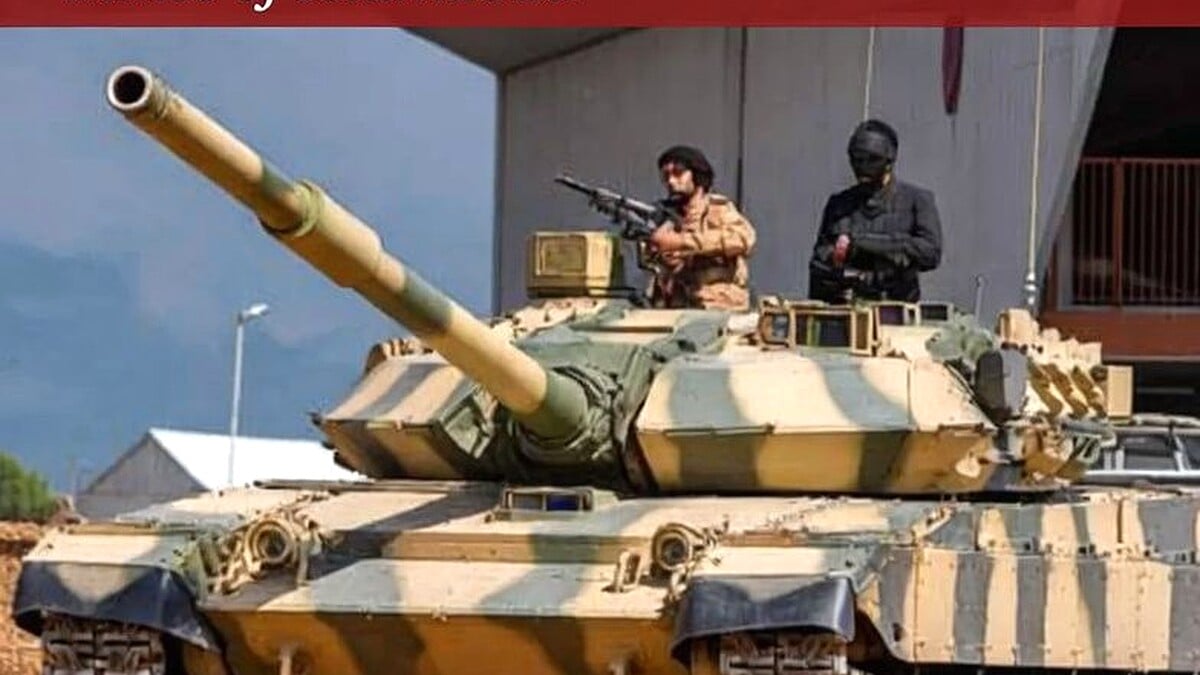




ISLAMABAD: Reports from northern Iraq indicate significant transportation of military equipment toward the Kurdistan Region’s border with Iran, heightening tensions in an already volatile regional landscape.
Local sources observed convoys moving heavy weaponry and supplies in recent days, prompting speculation about preparations for cross-border operations.
The Kurdistan Regional Government (KRG) has officially described these deployments as routine measures to bolster border security and protect territorial integrity against potential threats.
KRG officials emphasized that the movements are defensive in nature, aimed at reinforcing patrols along the approximately 750-kilometer frontier shared with Iran.
This explanation comes amid escalating hostilities between the United States, Israel, and Iran, where airstrikes have targeted military installations in western Iran.
Multiple international reports suggest that Iranian Kurdish opposition groups, based in northern Iraq, are preparing for possible incursions into Iran’s Kurdish-majority regions.
These groups, including factions such as the Kurdistan Freedom Party (PAK), the Free Life Party of Kurdistan (PJAK), and others in a recent coalition, have expressed readiness to act against the Iranian regime.
Analysts note that a unified alliance of six Iranian Kurdish parties formed in late February 2026, coordinating political and military strategies to challenge Tehran’s authority.
United States officials have reportedly engaged in discussions with Kurdish leaders, exploring options for support in operations that could divert Iranian forces.
President Donald Trump has publicly indicated openness to Kurdish involvement, describing potential actions as beneficial and promising air cover in conversations with regional leaders.
Reports from credible sources indicate that the Central Intelligence Agency (CIA) has been involved in efforts to provide arms to select Kurdish factions, with the objective of fostering internal unrest in Iran.
This approach aligns with a strategy to avoid direct American ground troop commitments while seeking regime destabilization through proxy forces.
Kurdish fighters, experienced from prior conflicts including operations against the Islamic State group, possess knowledge of the mountainous terrain along the border.
Positions in areas such as Sulaymaniyah province and near crossings like Haji Omran and Bashmaq have seen increased activity, according to informed accounts.
However, senior KRG representatives have repeatedly denied any official involvement in offensive plans against Iran.
They assert that the autonomous region will not permit its territory to serve as a staging ground for attacks on neighboring states, in line with prior security understandings.
Iranian authorities have responded aggressively, launching drone and missile strikes on suspected Kurdish positions in northern Iraq.
These operations have targeted bases and ammunition depots, with Tehran accusing the groups of collaborating with American and Israeli interests.
Iran’s military has warned that any militant entry from Iraqi Kurdistan would prompt broader retaliation against facilities in the region.
Conflicting narratives persist, with some opposition sources claiming limited operations already underway in western Iran’s Zagros Mountains.
Others maintain that forces remain on standby, awaiting favorable conditions or further external backing.
The developments raise concerns about spillover effects into Iraq, potentially drawing the Kurdistan Region deeper into the wider conflict.
Iraqi federal authorities in Baghdad have remained largely silent, though diplomatic channels with both Erbil and Tehran continue.
Observers highlight historical precedents where Kurdish aspirations for autonomy have intersected with great power interests, often with uncertain outcomes.
The current mobilization occurs against a backdrop of intensified aerial campaigns degrading Iranian defenses near the border.
Such actions may aim to create opportunities for ground movements, though the lightly armed nature of many Kurdish units limits their capacity for sustained engagements.
Regional stability hangs in the balance as parties navigate denials, accusations, and strategic calculations.
The situation underscores the complex interplay of ethnic dynamics, geopolitical rivalries, and security imperatives in the Middle East.
Further developments along the frontier will likely determine whether defensive postures evolve into more active confrontations.