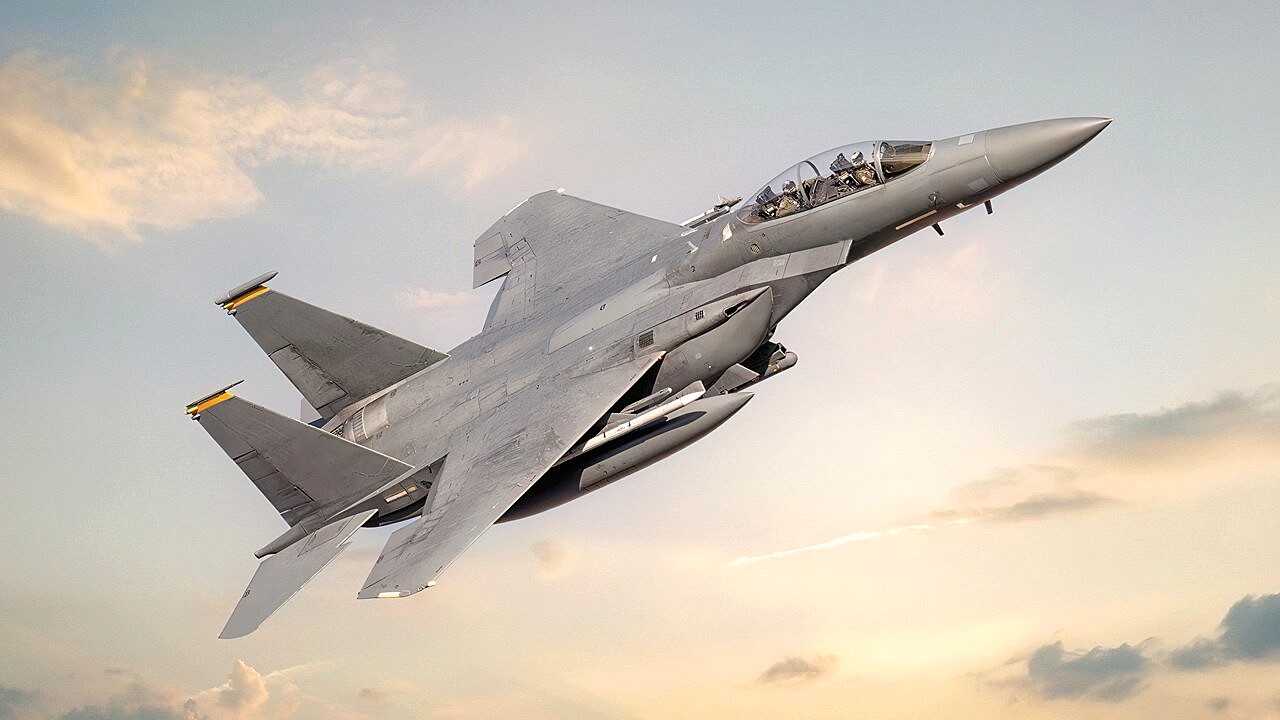




ISLAMABAD: A Kuwaiti Air Force F/A-18 Hornet fighter jet reportedly shot down three United States Air Force F-15E Strike Eagle aircraft in a major friendly fire incident over Kuwait on March 2, 2026, during heightened combat operations linked to Operation Epic Fury against Iran. Initial reports indicate the engagements involved AIM-9 Sidewinder air-to-air missiles fired at close range, resulting in the total loss of the three American jets, though all six crew members ejected safely and were recovered in stable condition.
The incident unfolded amid intense aerial activity, as Iranian drones, ballistic missiles, and aircraft penetrated regional airspace, prompting defensive postures across coalition forces. United States Central Command (CENTCOM) initially described the event as an apparent friendly fire occurrence, stating that the F-15Es were mistakenly engaged by Kuwaiti air defenses while supporting ongoing strikes.
Preliminary investigations, cited by credible sources including The Wall Street Journal, point to a single Kuwaiti F/A-18 as the source of the shootdowns. According to officials familiar with early findings, one Hornet pilot launched three missiles, each striking a separate F-15E. The engagements occurred in visual range, raising questions about identification protocols under stress.
However, it was also claimed that the missiles were short range within visual range and the target aircrafts were clearly within the visual range of the pilot. Analysts suggest this could have been an intentional attempt by the Kuwaiti Pilot.
All six American aircrew members—three pilots and three weapons systems officers—ejected successfully following missile impacts. They were promptly recovered by coalition forces and reported to be in stable medical condition. No fatalities occurred among the US personnel in this specific event, though separate Iranian drone strikes on bases in the region have claimed American lives, including six reported deaths from one impact.
The Kuwaiti Ministry of Defense acknowledged the crashes of several US warplanes, confirming the survival of all crew members through an official statement. CENTCOM expressed gratitude for Kuwaiti cooperation in recovery efforts and ongoing support for the operation.
Operation Epic Fury, launched in late February 2026, involves coordinated US and allied strikes against Iranian military targets in response to escalating regional threats. The campaign has seen active exchanges, including Iranian attempts to overwhelm Gulf defenses with drone swarms and missile barrages. Kuwait, hosting significant US military assets, maintains a vigilant air defense posture integrated with coalition systems.
Friendly fire incidents, though rare in modern coalition operations, highlight persistent challenges in deconfliction during high-threat environments. Factors such as misidentification, compressed timelines, and electronic warfare interference can contribute to such tragedies. The use of AIM-9 Sidewinder missiles—short-range, heat-seeking weapons—suggests the engagements took place within visual or near-visual parameters, where positive identification of friend or foe is critical.
Experts note that the F-15E Strike Eagle, a twin-engine multirole fighter renowned for its air-to-ground capabilities, has historically maintained an exceptional combat record with no air-to-air losses prior to this event. The F/A-18 Hornet, operated by the Kuwait Air Force, serves as a frontline interceptor equipped with advanced radar and missile systems compatible with US platforms.
Questions remain regarding the circumstances leading to the missile launches. While most reports frame the incident as accidental misidentification amid chaotic airspace, some unverified speculation online has raised possibilities of intentional action, though no official sources support deliberate targeting. Investigations by US and Kuwaiti authorities are underway to determine root causes, including review of radar data, communications logs, and pilot statements.
The loss of three advanced aircraft represents a significant material setback, with each F-15E valued in the tens of millions of dollars. However, the survival of all crew underscores effective ejection systems and rapid response protocols. Coalition partners have emphasized that such incidents do not undermine overall operational unity.
This event occurs against the backdrop of broader US-Iran confrontations, where allied forces coordinate closely to counter threats. Enhanced identification friend or foe (IFF) procedures and real-time data sharing are likely to be scrutinized in post-incident reviews to prevent recurrence.
Military analysts observe that blue-on-blue engagements, while unfortunate, have historically prompted improvements in joint doctrine. The integration of Kuwaiti forces within the US-led framework demonstrates strong bilateral ties, even as this mishap draws attention.
As inquiries continue, both Washington and Kuwait City have committed to transparency and corrective measures. The incident serves as a sobering reminder of the complexities inherent in multinational air operations under combat stress.