



ISLAMABAD: The United Kingdom has announced a sweeping suspension of study visas for nationals of Afghanistan, Cameroon, Myanmar and Sudan, while also halting work visas for Afghans, in a move officials describe as a crackdown on large-scale misuse of immigration channels.
The decision, confirmed by the Home Office and reported by the BBC, signals a significant tightening of Britain’s immigration framework at a time when asylum claims linked to student arrivals have drawn political and public scrutiny. The measure is expected to take effect within the month, reshaping migration patterns from four politically fragile states.
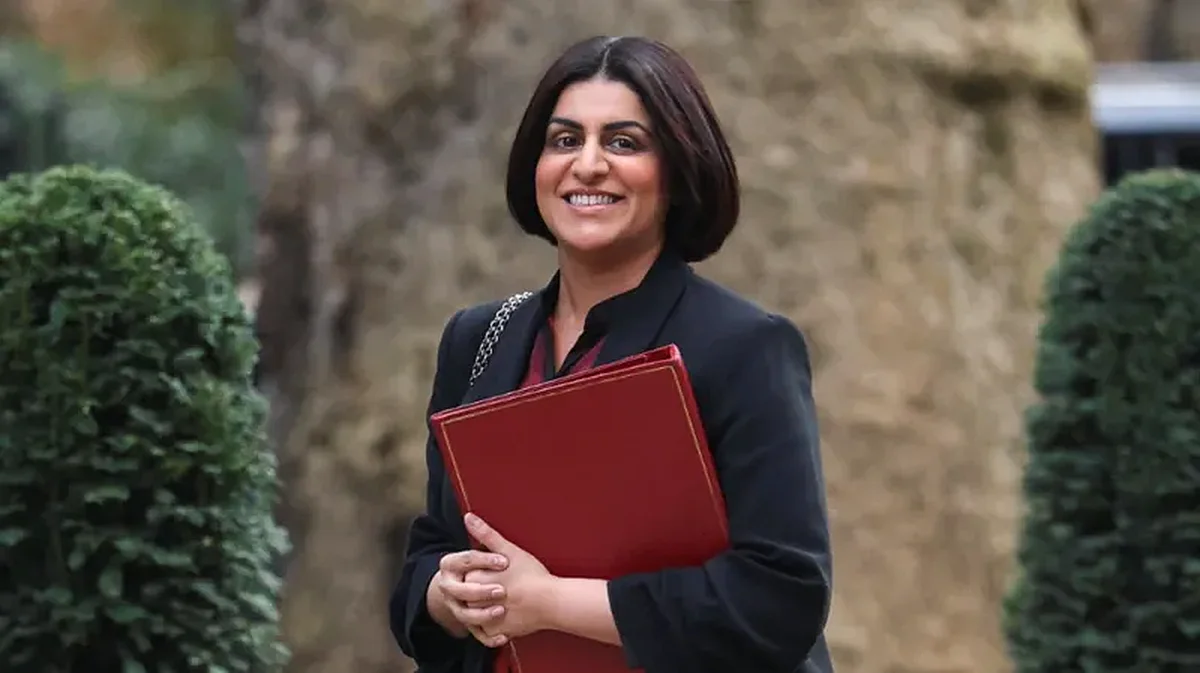
Home Secretary Shabana Mahmood said the government was acting to prevent what it termed systematic abuse of the visa system. According to official data, nationals from Afghanistan, Cameroon, Myanmar and Sudan have been among the most likely to claim asylum after entering Britain on study visas.
Government figures cited by the Home Office indicate that a notable proportion of individuals arriving from these countries under educational routes subsequently applied for asylum, raising questions about the integrity of the student visa framework. Officials argue that while the majority of international students comply with visa conditions, specific trends from high-risk regions required targeted action.
The UK has long promoted itself as a global education hub, with universities contributing billions of pounds annually to the economy. Data from the Higher Education Statistics Agency shows that international students form a critical component of university revenues, particularly at postgraduate level. However, rising asylum applications linked to student routes have intensified calls within the ruling establishment to recalibrate policy.
Under the new measures, applications for study visas from citizens of the four named countries will no longer be processed. Afghan nationals will additionally be barred from applying for work visas, further narrowing legal migration pathways. The Home Office said the objective was to “preserve the integrity of the system” while ensuring that protection is available for those in genuine need.
Officials stress that asylum remains a separate legal right under international conventions, including the 1951 Refugee Convention. However, they contend that using student visas as a de facto asylum route undermines orderly migration management. The government maintains that the changes are designed to deter misuse rather than close the door to legitimate refugees.
The policy shift comes against the backdrop of sustained political pressure to reduce net migration. Recent Home Office statistics show that asylum applications have remained elevated compared to pre-pandemic levels, driven in part by instability in conflict-affected regions. Afghanistan and Sudan, in particular, have experienced prolonged violence and humanitarian crises, factors that often influence migration flows.
Critics, including refugee advocacy groups, warn that blanket suspensions risk penalising genuine students and professionals seeking lawful entry. They argue that individuals fleeing conflict zones may face limited safe pathways if educational and employment routes are curtailed simultaneously. Some analysts caution that restrictions could inadvertently increase irregular migration attempts.
The government, however, maintains that it is balancing humanitarian obligations with enforcement priorities. A spokesperson said Britain would continue to honour its “proud tradition” of offering sanctuary to those who qualify under refugee law, while ensuring that visa categories are not exploited for unintended purposes.
For universities, the immediate impact may be limited in scale given that students from the four countries represent a small fraction of total international enrolments. Yet sector leaders are closely monitoring the broader implications. The UK’s education export model relies heavily on overseas confidence, and policy unpredictability can influence long-term recruitment strategies.
Migration experts note that similar patterns have emerged in other European states, where asylum claims lodged by individuals entering on short-term or study visas have prompted tighter screening procedures. The British approach, however, stands out for its country-specific suspension rather than a universal overhaul of eligibility criteria.
The suspension also underscores the increasing securitisation of migration policy in advanced economies. Governments facing domestic political pressures often frame visa reforms as protective measures aimed at preserving public trust. In Britain’s case, the narrative emphasises system integrity, fairness to taxpayers and prioritisation of skilled migration aligned with labour market needs.
While detailed operational guidance is expected in the coming weeks, immigration lawyers anticipate a surge in last-minute applications before the policy formally takes effect. They also expect potential legal challenges if affected individuals argue discriminatory treatment based on nationality.
For now, the announcement marks one of the most explicit acknowledgements by British authorities that asylum-linked visa misuse has become a defining issue in immigration management. Whether the move reduces asylum claims or merely shifts migration patterns elsewhere remains to be seen.
As global displacement reaches record levels, policy responses among destination countries continue to evolve. Britain’s latest decision signals a preference for targeted restrictions over systemic reform, reflecting a broader recalibration of migration governance in an era defined by conflict, economic disparity and political contestation.