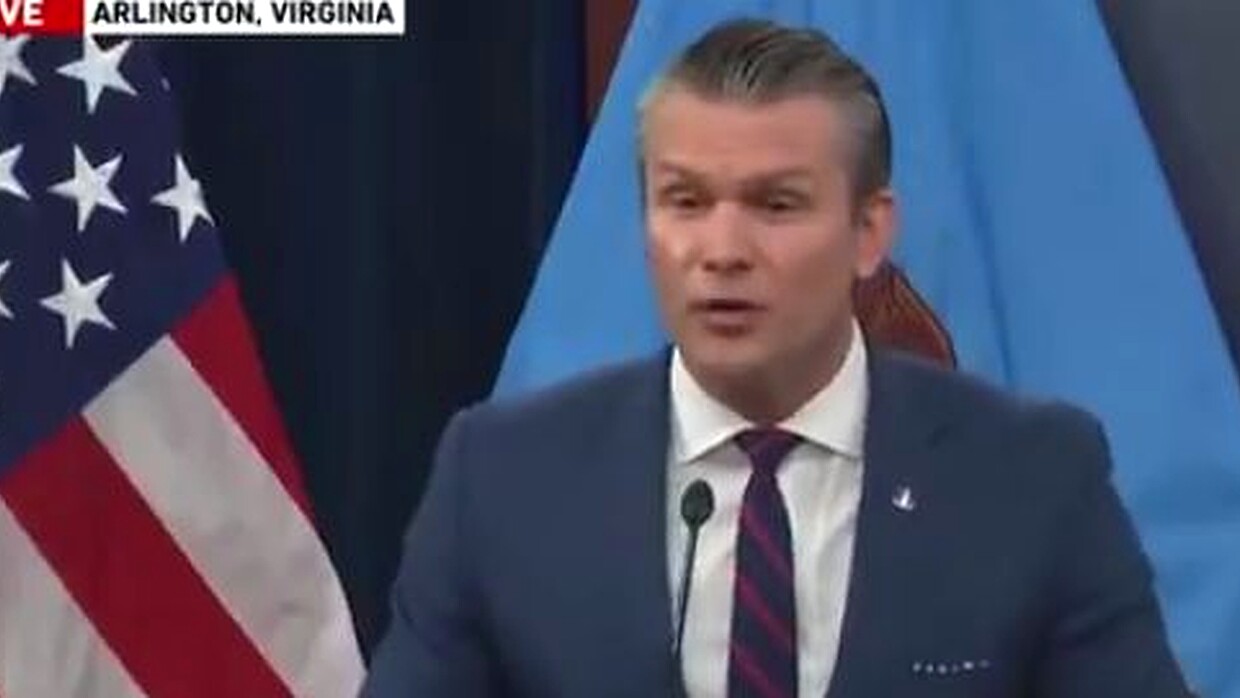




ISLAMABAD: US Defense Secretary Pete Hegseth has declined to rule out the possibility of deploying American ground troops in Iran amid the ongoing military operation against the Islamic Republic.
In a high-profile Pentagon press conference, Hegseth confirmed that no US troops are currently inside Iranian territory. He emphasized that the administration maintains strategic ambiguity on future actions to avoid signaling intentions to adversaries.
When directly questioned about potential ground deployments, Hegseth stated that the United States would go “as far as we need to go” to achieve its core objectives. These include the complete neutralization of Iran’s conventional military capabilities and its nuclear program.
The remarks come against the backdrop of escalating conflict that began with joint US-Israeli strikes over the weekend. Operation Epic Fury has targeted Iranian ballistic missile sites, production facilities, naval assets, and remnants of nuclear infrastructure.
Hegseth described the campaign as the most lethal and precise air power operation in history. He insisted it differs fundamentally from past US engagements in the Middle East, particularly the 2003 Iraq invasion.
This is not an endless war, Hegseth asserted repeatedly. He rejected notions of nation-building or prolonged occupation, framing the mission as focused and decisive.
The primary goals remain destroying Iran’s offensive missile arsenal, crippling its navy, and ensuring no nuclear weapons capability emerges. Hegseth accused Tehran of using powerful missiles and drones as a conventional shield for nuclear ambitions.
He portrayed Iran as holding a “gun to our head” through its arsenal. Previous administrations, he argued, had allowed such threats to persist by telegraphing military limits.
The Trump administration, by contrast, prioritizes operational secrecy. Hegseth criticized past policies for tipping off enemies through public disclosures.
Casualties have already mounted on both sides. Four American service members have been killed, including losses from an Iranian ballistic missile that penetrated defenses in Kuwait.
Additional US forces continue flowing into the Middle East. Joint Chiefs Chairman Gen. Dan Caine confirmed reinforcements, including fighter jets and personnel, to sustain the campaign.
President Donald Trump has suggested the operation could span four to five weeks, with flexibility for extension. He has separately declined to rule out ground troops if deemed necessary.
Hegseth echoed this stance, avoiding hypotheticals. He stressed fighting to win without wasting lives or time.
Iran’s retaliation has widened the conflict. Strikes have affected neighboring states, drawing in regional actors and prompting further Israeli responses against allied groups.
The death of Iran’s supreme leader and senior officials in initial strikes has reshaped the regime’s structure. Hegseth noted that while not a regime change war, the leadership shift benefits global security.
Analysts highlight Iran’s terrain and population of over 90 million as barriers to any large-scale ground invasion. Logistical challenges mirror those in Afghanistan, raising concerns about escalation.
Public appetite in the United States for another prolonged ground commitment remains low. Polls and historical precedents underscore war fatigue from Iraq and Afghanistan.
Hegseth’s comments aim to project resolve while managing domestic expectations. He portrayed the action as retribution for decades of Iranian attacks on American interests.
The operation follows failed negotiations. Iran reportedly stalled on missile replenishment and nuclear curbs.
International reactions vary. Some allies express concern over broader regional instability, while others support efforts to curb Iran’s military reach.
The conflict has disrupted global energy markets. Oil prices fluctuate amid fears of Strait of Hormuz threats.
Hegseth vowed continued pressure until objectives are met. He warned that any Iranian attempts to rebuild missile or nuclear capabilities would face decisive response.
The Pentagon briefing marks the administration’s first detailed public accounting since hostilities commenced. It signals a commitment to transparency on goals but not on tactics.
As reinforcements arrive and strikes persist, the possibility of ground involvement lingers. Hegseth’s refusal to foreclose options keeps strategic pressure on Tehran.
The coming days will test whether air and naval operations suffice or if deeper intervention becomes unavoidable. The administration insists the path leads to a neutralized threat without open-ended entanglement.