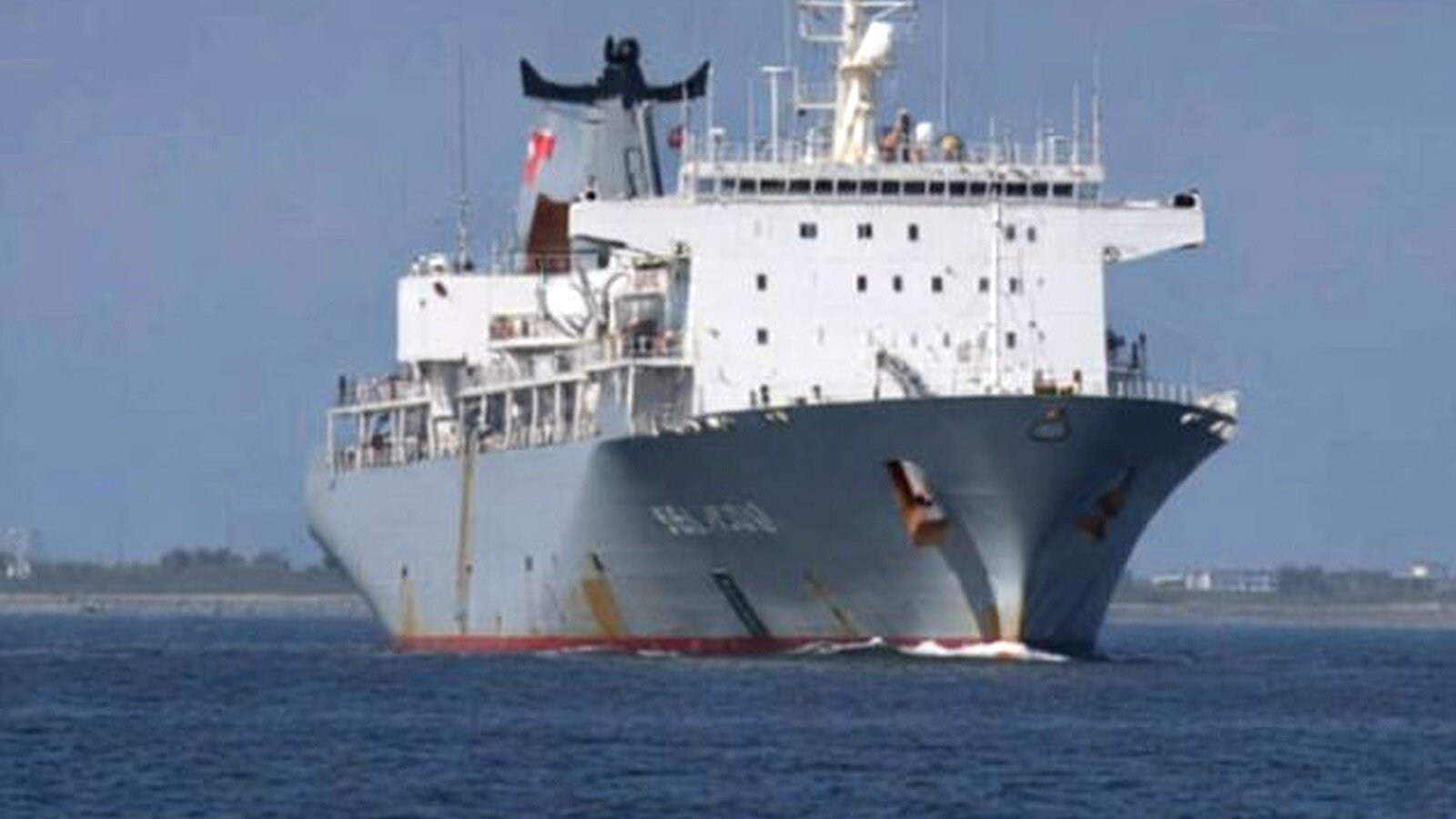




ISLAMABAD: A US-flagged products tanker berthed at the Port of Bahrain came under attack early on Monday when it was struck by two unknown projectiles, triggering a fire onboard that was later brought under control, according to the United Kingdom Maritime Trade Operations (UKMTO).
The incident occurred at approximately 0257 UTC, or around 5:57 am local time in Bahrain, as confirmed by UKMTO Advisory 008-26. The British agency, which monitors maritime security in the region on behalf of the UK government, received the report directly from the vessel’s Company Security Officer.
The affected vessel has been identified as the Stena Imperative, a 183-metre-long oil and chemical tanker built in 2016. It flies the US flag and is enrolled in the US Maritime Administration’s Tanker Security Program, designed to support military logistics needs. The ship is owned by Swedish company Stena Bulk and managed by US-based Crowley Maritime.
Joint statements from Stena Bulk and Crowley confirmed that the tanker sustained damage from aerial impacts shortly after 2:00 am local time. A fire broke out following the strikes but was quickly extinguished by onboard response teams. The vessel remains alongside the pier in the port, with no further movement reported.
All crew members aboard the Stena Imperative are safe and have been evacuated as a precautionary measure. No injuries were reported among the seafarers, who number in the typical range for such a vessel.
However, the attack claimed a civilian life onshore. One shipyard worker was killed, and two others were injured, according to multiple maritime security sources and joint operator statements. The casualties occurred due to debris or secondary effects from the impacts while work was underway at the facility.
UKMTO did not identify the vessel in its initial advisory or attribute responsibility for the strikes, focusing instead on safety guidance. It urged vessels in the vicinity to exercise caution, maintain heightened vigilance, and report any suspicious activity immediately.
The Port of Bahrain, also known as Mina Salman or Khalifa Bin Salman Port, serves as a key hub for commercial shipping in the Persian Gulf. It is located near the US Navy’s Fifth Fleet headquarters, heightening its strategic sensitivity amid regional volatility.
This event unfolded against the backdrop of intensified conflict involving US and Israeli military operations against Iran, referred to in some reports as Operation Epic Fury. Iranian retaliatory actions have targeted maritime assets across the Gulf, including the Strait of Hormuz approaches.
In the preceding 24 hours, UKMTO documented multiple incidents involving commercial vessels in nearby waters. These included projectile strikes off the UAE coast, near Oman, and other locations in the Gulf of Oman, resulting in additional damage, crew evacuations, and at least one seafarer fatality on another tanker.
Maritime security firms such as Vanguard Tech described the projectiles as potentially drones or missiles launched from Iranian sources in several accounts. Bahraini authorities suggested that some damage in related incidents may have stemmed from intercepted missile debris.
The Joint Maritime Information Centre has elevated the regional threat level to critical, indicating that further attacks on merchant shipping are considered almost inevitable in the current environment.
The Stena Imperative had previously faced challenges in the region. Earlier reports noted an attempted interception by Iranian gunboats in the Strait of Hormuz in February, though the vessel evaded boarding and continued its transit under US warship escort.
Experts warn that such incidents risk broader disruption to global energy supplies. The Persian Gulf remains a vital artery for oil and gas exports, with any escalation potentially affecting tanker insurance rates, routing decisions, and freight costs worldwide.
Shipping companies are advised to reroute vessels away from high-risk zones where feasible, as urged by US maritime advisories and the International Maritime Organization. Crew welfare, rapid incident response, and international coordination are now paramount priorities.
Investigations by Bahraini authorities, supported by regional partners, continue to determine the precise origin and nature of the projectiles. No official claim of responsibility has emerged, though the pattern aligns with ongoing tit-for-tat exchanges in the wider Middle East crisis.
As the situation develops, maritime operators are closely monitoring UKMTO alerts and other security channels for real-time updates to ensure safe passage through these congested and contested waters.