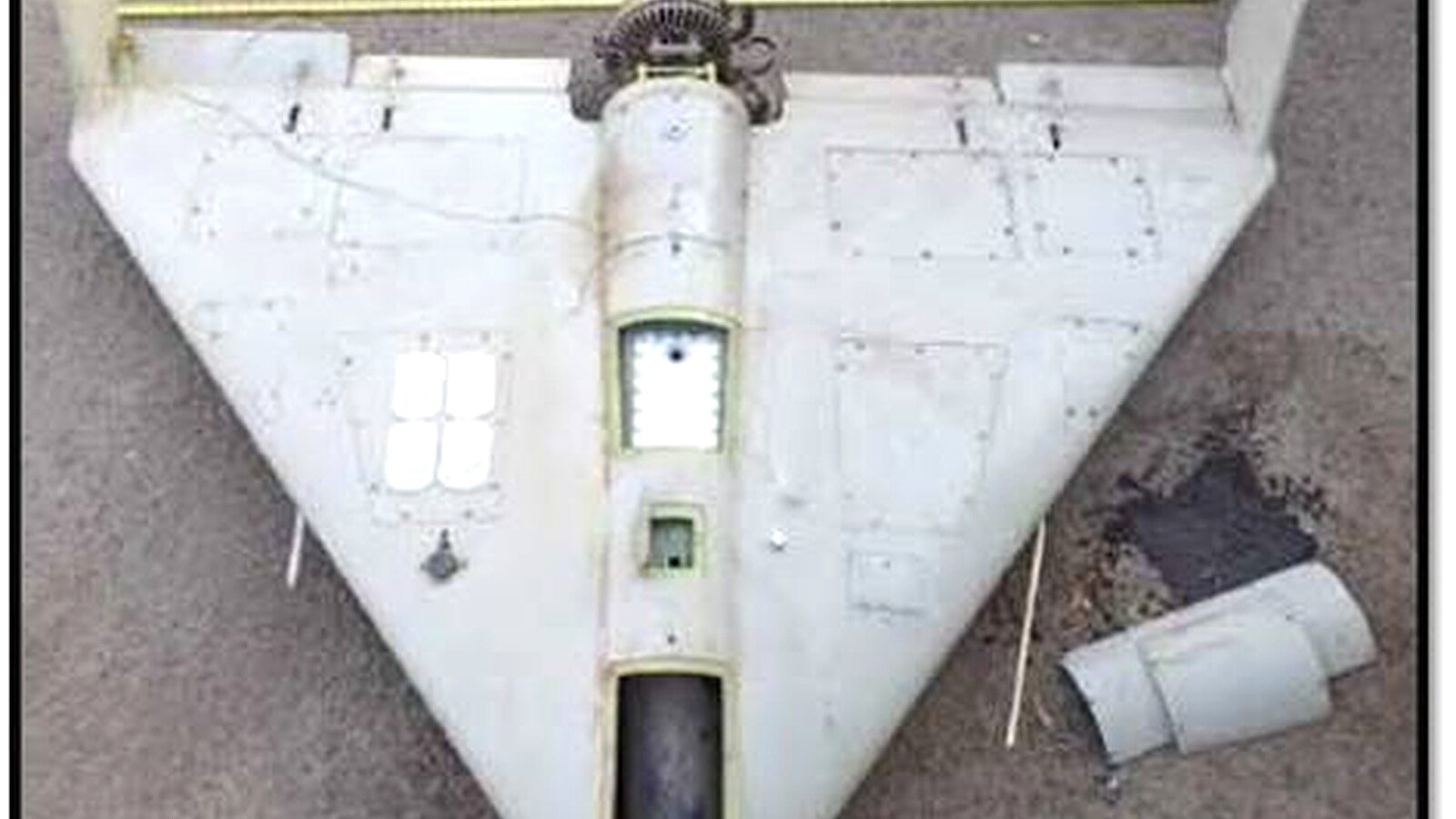




ISLAMABAD: Iran’s adoption of a sustained attrition warfare doctrine, emphasizing low-cost drones and missiles to exhaust expensive adversary defenses, has emerged as a profoundly dangerous development for the United States, Israel, and Gulf allies.
This shift, evident in recent retaliatory operations following United States and Israeli strikes on Iranian targets, represents a deliberate recalibration of Tehran’s military posture.
Analysts observe that Tehran now prioritizes prolonged, resource-draining engagements over concentrated, high-visibility salvos.
The strategy exploits significant cost asymmetries in modern warfare.
Iran deploys platforms such as the Shahed-136 drone, priced at approximately twenty thousand to fifty thousand dollars each, compelling defenders to expend interceptors costing millions per unit.
Recent barrages have targeted United States military installations and civilian infrastructure across Gulf states, including Bahrain, Kuwait, Qatar, the United Arab Emirates, and Saudi Arabia.
Defense authorities in these nations report intercepting hundreds of incoming projectiles, yet the volume strains finite stockpiles and operational readiness.
This approach follows lessons from the June 2025 twelve-day conflict with Israel, where large-scale Iranian launches faced heavy interception and resulted in substantial damage to launch infrastructure.
Post-conflict assessments prompted Tehran to refine its doctrine toward intermittent, multi-front operations designed to impose cumulative pressure.
By expending lower-value munitions first, Iran preserves advanced systems while forcing adversaries into repeated, costly engagements.
The current escalation, triggered by coordinated United States-Israeli operations against Iranian leadership, military sites, and missile facilities, has seen Iran launch waves of ballistic missiles and drones not only toward Israel but also across the Persian Gulf.
Reports confirm strikes impacting areas near United States bases, with occasional penetrations causing limited but symbolic damage to airports, ports, and other civilian facilities.
Such actions extend beyond military objectives, disrupting aviation, commerce, and public safety in regional capitals.
The doctrine’s emphasis on saturation attacks challenges integrated air defense networks, including Patriot, THAAD, and allied systems.
United States Central Command has acknowledged successful interceptions of numerous threats, but sustained operations raise concerns regarding long-term interceptor sustainability and logistical burdens.
For Israel, the strategy amplifies vulnerabilities in multilayered defenses already tested in prior exchanges.
Gulf Cooperation Council members face heightened risks, as strikes internationalize the battlefield and impose direct costs on sovereign territories hosting American assets.
This development hardens regional condemnation and may strengthen support for United States-led efforts, yet it underscores the peril of miscalculation leading to broader confrontation.
Iran’s production capacity for drones and short-range missiles enables this persistent threat profile.
Facilities manufacturing Shahed-series platforms allow mass deployment, overwhelming sensors and response mechanisms through quantity rather than individual sophistication.
The Islamic Revolutionary Guard Corps has framed ongoing operations as necessary for regime survival, vowing continuation until decisive outcomes.
This posture signals an existential framing of the conflict, reducing incentives for restraint.
The economic dimension proves particularly alarming.
Adversaries must balance immediate defense requirements against depleting reserves, potentially necessitating costly replenishment amid global supply constraints.
Disruption to critical infrastructure, including energy facilities and maritime routes, threatens broader economic stability.
The Strait of Hormuz remains a latent flashpoint, where Iranian asymmetric capabilities could further escalate tensions.
For Washington, the strategy complicates force posture in the region, demanding enhanced deterrence while managing escalation risks.
Allied coordination faces strain as Gulf states grapple with direct exposure.
Israel confronts a multi-axis threat requiring sustained vigilance across domains.
The overall trajectory points to a prolonged war of attrition, where endurance and resource management determine outcomes.
Iran’s doctrine exploits these dynamics to maximum effect, imposing disproportionate burdens on technologically superior opponents.
As hostilities persist, the recalibration underscores the evolving challenges of regional security, with Tehran’s approach sending profound shockwaves through strategic calculations in Washington, Tel Aviv, and Gulf capitals.