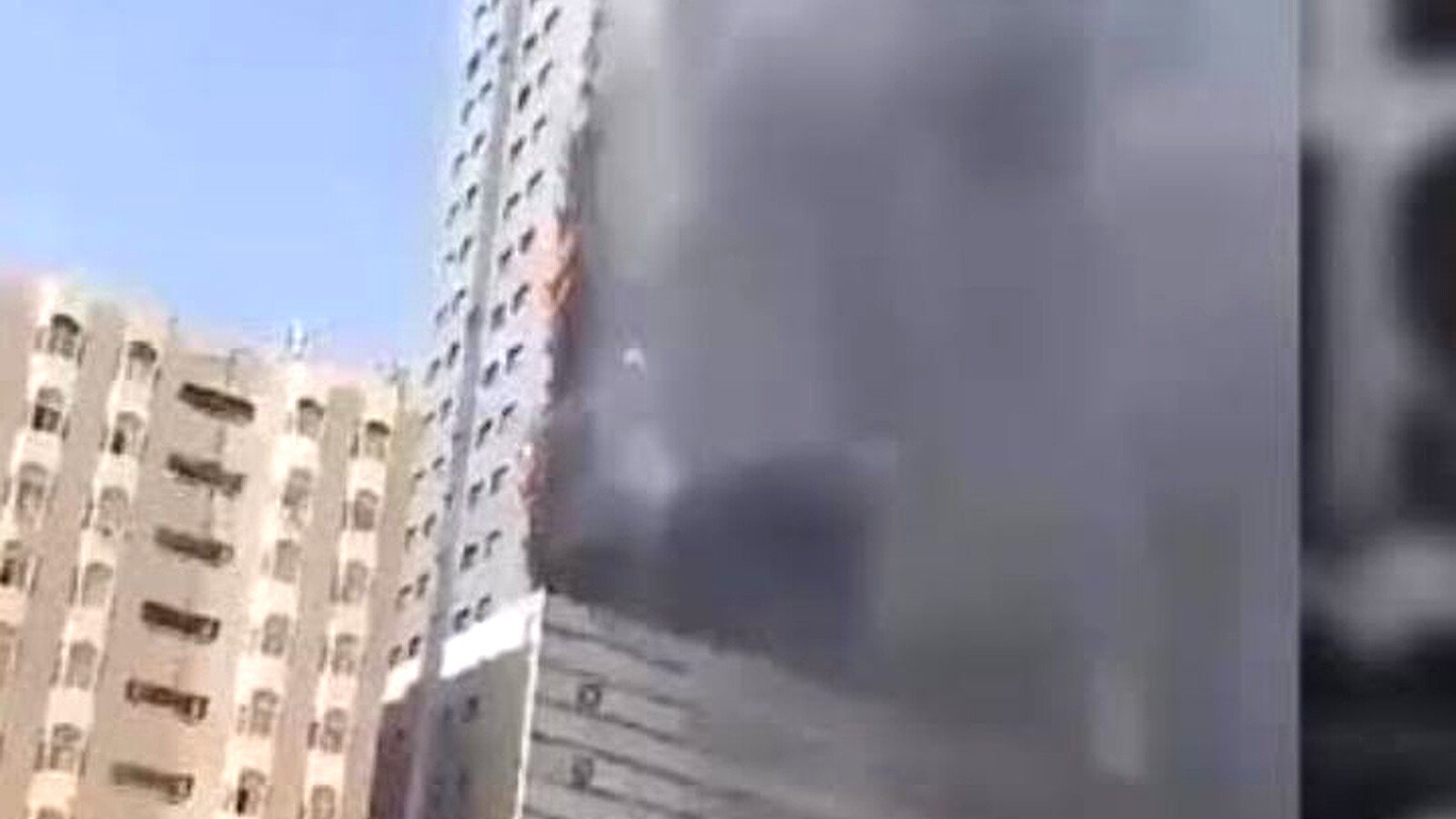




ISLAMABAD: Israeli media outlets have reported that debris from an intercepted Iranian drone struck a prominent complex in Abu Dhabi, severely damaging part of the structure that houses the Israeli embassy and residences for diplomatic personnel.
The incident occurred on Sunday amid a broader wave of Iranian retaliatory strikes across the Gulf region, following extensive United States and Israeli military operations against targets inside Iran that resulted in the death of Iran’s Supreme Leader and numerous senior officials.
According to reports from Yedioth Ahronoth and other Israeli sources, the debris impact caused light injuries to two Israeli nationals serving as emissaries within the embassy compound, primarily from the blast wave generated by the falling fragments.
The Abu Dhabi Government Media Office confirmed that debris fell against the facade of the Etihad Towers complex after UAE air defenses successfully intercepted the incoming drone, producing loud explosions audible throughout the emirate.
A woman and her child sustained minor injuries in the same event, highlighting the spillover risks to civilian areas even when defensive measures prove effective.
This development forms part of Iran’s declared response to the large-scale strikes launched by the US and Israel on February 28, 2026, which targeted Iranian ballistic missile sites, air defense systems, command centers, and headquarters of the Islamic Revolutionary Guard Corps.
Iranian authorities have maintained that their missile and drone barrages primarily aim at US military installations in the region, though impacts have affected civilian infrastructure in multiple Gulf states.
In the United Arab Emirates alone, official statements indicate that Iranian forces launched 137 missiles and 209 drones toward UAE territory, with the vast majority intercepted by advanced air defense systems.
Despite these interceptions, the attacks have caused significant casualties and damage, including three deaths—nationals of Pakistan, Nepal, and Bangladesh—and at least 58 injuries reported by the UAE Defense Ministry.
Additional incidents in Abu Dhabi involved two Iranian drones striking the Al Salam naval base, igniting fires in storage containers, while other fragments affected residential zones in Dubai.
The Etihad Towers incident underscores the vulnerability of diplomatic facilities in Gulf capitals during the current escalation, as the complex accommodates multiple international missions alongside the Israeli embassy.
Israeli media emphasized the symbolic nature of the strike on a site linked to Israeli diplomatic presence, established following the Abraham Accords normalization agreement between Israel and the UAE in 2020.
The UAE has responded decisively by closing its embassy in Tehran, recalling its ambassador, and withdrawing all diplomatic personnel, condemning the Iranian actions as a flagrant violation of sovereignty and an irresponsible escalation targeting civilian sites.
Airports in Abu Dhabi and Dubai sustained damage from related strikes, contributing to widespread disruptions in regional aviation and trade hubs.
Explosions were reported over Dubai, Doha, and other cities for a second consecutive day, with witnesses describing blasts and interceptor activity that rattled populations unaccustomed to such direct threats.
The broader conflict has prompted closures of regional airspaces and heightened security alerts at diplomatic compounds across the Middle East.
Analysts note that while UAE defenses performed robustly, the penetration of some projectiles and resulting debris demonstrate the challenges of countering saturation attacks involving hundreds of munitions.
Iranian state media has framed the operations as defensive retaliation against aggression on its soil, while denying intent to target Gulf civilian populations directly.
The involvement of Israeli embassy staff in the Abu Dhabi incident adds a direct Israeli dimension to the Gulf theater of the conflict, potentially complicating diplomatic efforts to contain the crisis.
Regional mediators, including Oman, have reported attacks on their own infrastructure, further illustrating the widening geographic scope of the hostilities.
Casualties in the UAE include foreign workers at key facilities, underscoring the human cost borne by expatriate communities in the Gulf economies.
The UAE Foreign Ministry has described the Iranian strikes as endangering innocent civilians and constituting a serious breach of international norms.
This event marks a notable escalation in spillover effects from the Iran-focused military campaign, raising concerns about prolonged instability in energy-rich regions critical to global markets.
Diplomatic sources indicate increased coordination among Gulf states and Western allies to bolster defenses and explore de-escalation pathways amid the intensifying exchanges.