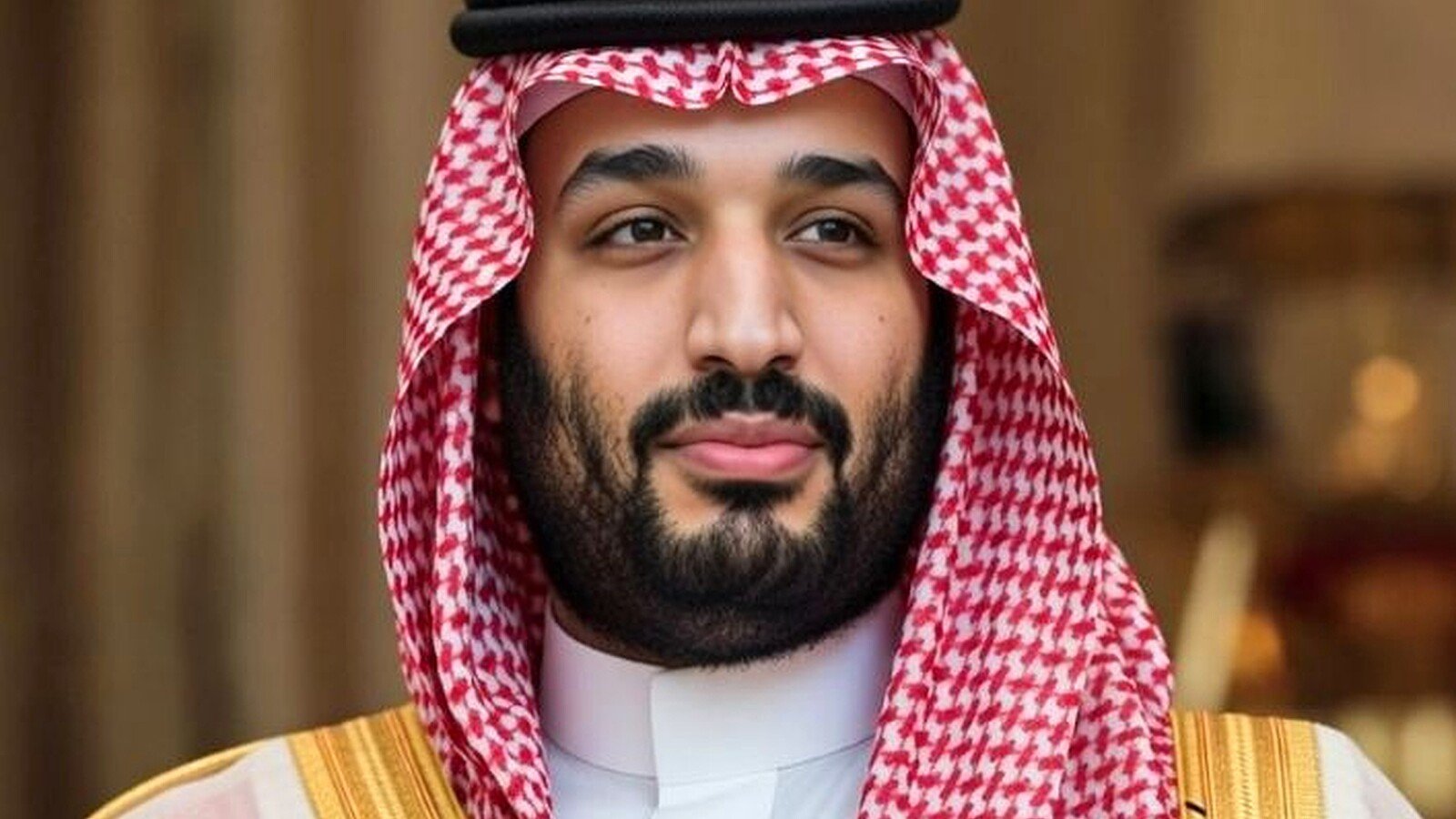




Crown Prince Mohammed bin Salman authorises military response amid escalating regional conflict following US-Israeli strikes on Tehran.
ISLAMABAD: Saudi Arabia has authorised its armed forces to launch strikes against Iran if deemed necessary, marking a significant escalation in the kingdom’s posture amid the ongoing regional conflict.
Crown Prince Mohammed bin Salman, the de facto ruler, issued the authorisation in response to Iranian missile and drone attacks targeting Saudi territory, according to reports from CNN and other international sources.
The decision comes as Iran retaliated fiercely after US and Israeli strikes killed Supreme Leader Ayatollah Ali Khamenei on February 28, 2026.
Blasts rocked Riyadh and the Eastern Province, alongside similar incidents in the United Arab Emirates, Qatar, Bahrain, Kuwait and Jordan.
Saudi officials condemned the Iranian actions as blatant aggression and vowed to defend national sovereignty with all available means.
The authorisation represents the first explicit permission for offensive action against Iran, shifting from previous defensive stances.
Historically, Riyadh and Tehran have engaged in proxy conflicts across Yemen, Syria and Lebanon, avoiding direct confrontation.
Recent events have altered this dynamic dramatically.
Iran launched hundreds of missiles and drones at Gulf states hosting US military facilities, aiming to deter further Western involvement.
Saudi Arabia intercepted many incoming threats using advanced air defence systems, including Patriot batteries acquired from the United States.
Casualties remain limited in the kingdom so far, though infrastructure damage has been reported in oil-rich eastern regions.
The kingdom’s oil facilities remain a prime concern for global markets.
Analysts warn that any sustained disruption could spike crude prices beyond $100 per barrel, exacerbating worldwide inflation.
Crown Prince Mohammed bin Salman has long viewed Iran as the primary regional threat, accusing Tehran of sponsoring terrorism and destabilising Arab states.
In private communications, reports suggest the crown prince urged US President Donald Trump to act decisively against Iranian nuclear and military capabilities.
Publicly, Riyadh maintained calls for diplomacy until Iranian retaliation crossed its borders.
The authorisation aligns Saudi policy with broader Gulf Cooperation Council efforts to counter Iranian influence.
The UAE, Bahrain and Qatar have also condemned Tehran’s strikes and signalled readiness for coordinated responses.
This unity contrasts with past divisions among Arab states on Iran policy.
The conflict originated from US-Israeli operations targeting Iranian nuclear sites and leadership, following failed nuclear negotiations.
US officials demanded dismantlement of key facilities like Fordow and Natanz, alongside shipment of enriched uranium abroad.
Iran rejected these terms, leading to military action.
Tehran’s retaliation extended beyond Israel to US allies in the Gulf, drawing in Saudi Arabia directly.
Experts assess that Saudi involvement could broaden the theatre, potentially involving ground operations or further airstrikes.
The Royal Saudi Air Force possesses F-15 fighters and Typhoon jets capable of long-range precision strikes.
Intelligence sharing with the United States and Israel has strengthened Saudi targeting capabilities.
Economic implications loom large for Pakistan and other South Asian nations reliant on Gulf remittances and stable oil supplies.
Diplomatic channels remain strained, with Iranian Foreign Minister Abbas Araghchi contacting Gulf counterparts to frame retaliation as limited to US assets.
Saudi officials dismissed this characterisation, emphasising attacks on sovereign territory.
International observers express concern over escalation into a wider war involving multiple powers.
The United Nations Security Council has yet to convene an emergency session, amid divisions among permanent members.
Oil markets reacted sharply, with Brent crude rising amid fears of supply interruptions through the Strait of Hormuz.
Saudi Arabia produces over 10 million barrels daily, making its stability critical to global energy security.
The crown prince’s authorisation underscores Riyadh’s determination to restore deterrence after years of Iranian-backed assaults via proxies.
Whether this leads to immediate strikes remains unclear, as Saudi strategy emphasises calibrated responses.
The kingdom has mobilised reserves and placed forces on high alert along its southern and eastern borders.
Regional analysts predict that continued Iranian provocations could force Riyadh’s hand.
The conflict tests longstanding alliances and redrawn power balances in the Middle East.
Global powers watch closely as the risk of broader involvement grows.