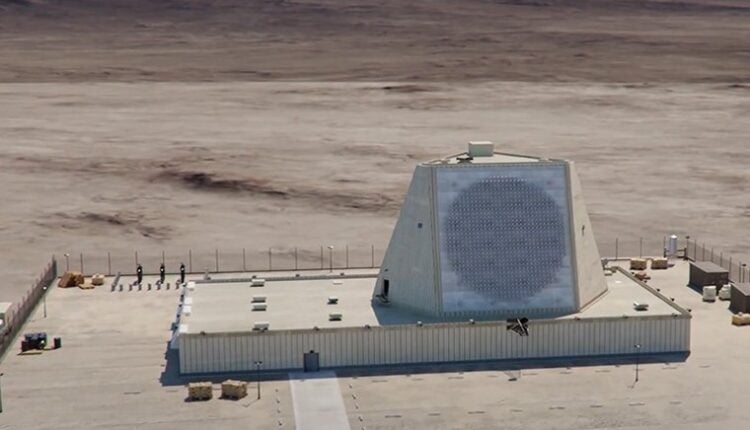




ISLAMABAD: A senior official from the Qatari Ministry of Defence has confirmed that an Iranian missile struck a long-range early warning radar facility in northern Qatar on Saturday.
The targeted system is identified as the AN/FPS-132 Block 5, a sophisticated United States-operated early warning radar with an estimated cost of $1.1 billion.
This development comes amid escalating regional tensions following joint United States and Israeli airstrikes on Iranian nuclear, missile, and command infrastructure earlier in the day.
The confirmation to Al Jazeera marks the first official Qatari acknowledgment of damage from Iran’s retaliatory barrage.
Qatar’s air defence systems, including Patriot batteries supported by United States forces, intercepted several incoming Iranian missiles over Doha and other areas.
Debris from intercepted projectiles fell in residential zones near the capital, triggering explosions and prompting residents to seek shelter.
No casualties have been reported from the radar strike or related interceptions so far.
The Islamic Revolutionary Guard Corps claimed responsibility for the operation, describing the radar as completely destroyed.
Iran’s military statement highlighted the AN/FPS-132’s 5,000-kilometre detection range for ballistic missiles, positioning it as a critical component of United States missile defence architecture in the Gulf.
The system, first notified for export to Qatar in 2013 by the United States Defence Security Cooperation Agency, forms part of integrated defences at Al Udeid Air Base.
Al Udeid serves as the forward headquarters for United States Central Command and hosts thousands of American troops.
Iran framed the strike as part of a broader response dubbed Operation True Promise 4, targeting United States bases across the region.
Similar claims emerged regarding strikes on facilities in Bahrain, including the United States Navy Fifth Fleet headquarters.
Iranian missiles and drones also reportedly targeted positions in the United Arab Emirates, Kuwait, and other Gulf states hosting American assets.
Qatar’s Ministry of Defence earlier stated that multiple attacks were thwarted, emphasising the effectiveness of its layered air defence network.
Damage assessment at the northern radar site remains ongoing, with Qatari authorities withholding further operational details.
The incident underscores vulnerabilities in regional missile early warning capabilities despite advanced interception systems.
Analysts note that penetration of such a high-value asset could temporarily degrade United States and allied monitoring of ballistic threats from Iran.
The radar’s phased-array technology enables long-range surveillance, contributing to broader missile defence coordination involving Israel and Gulf partners.
Iran’s ability to evade or overwhelm defences in this instance highlights advancements in its ballistic missile precision and saturation tactics.
Regional airspace closures followed swiftly, affecting major hubs including Doha and Dubai.
Commercial flights faced widespread cancellations and diversions as airlines navigated the volatile environment.
Qatar condemned the Iranian strikes as an unacceptable escalation threatening Gulf stability.
The Ministry of Foreign Affairs called for de-escalation while reserving the right to respond under international law.
Broader international reactions remain muted pending further verification, though Gulf states expressed solidarity against attacks on sovereign territory.
The episode fits into a pattern of tit-for-tat operations that began with United States and Israeli pre-emptive actions against Iranian targets.
Tehran vowed continued operations until perceived aggressions cease.
No immediate United States confirmation of the radar’s status has emerged, though events continue to unfold rapidly.
Observers warn that sustained exchanges risk drawing in additional actors and expanding the conflict beyond current boundaries.
The strike on this billion-dollar asset represents a significant symbolic and operational blow to United States forward presence in the Middle East.
Qatar, balancing strong defence ties with Washington and diplomatic relations elsewhere, now faces heightened security challenges.
Regional missile defence cooperation may undergo urgent review in light of this penetration.
The full implications for strategic stability in the Gulf will depend on subsequent military and diplomatic moves.
Iran maintains that its actions constitute legitimate self-defence under international norms.
Qatar’s measured response prioritises containment while protecting national interests.
As assessments continue, the incident adds another layer to the complex web of regional rivalries and proxy confrontations.