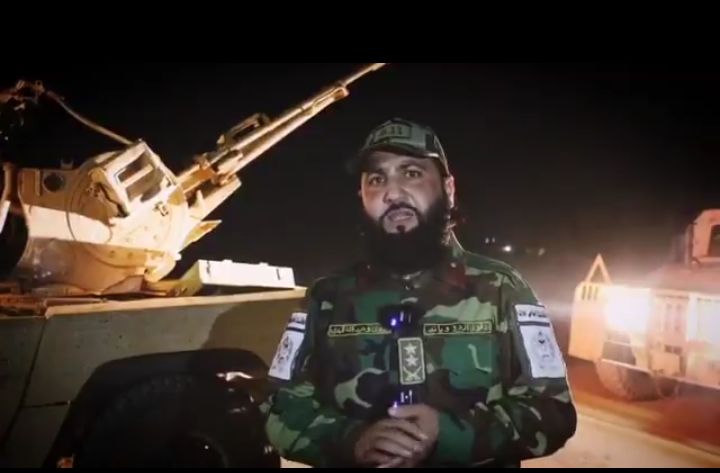




ISLAMABAD: The Afghan Taliban’s 201 Khalid bin Walid Corps has announced the initiation of large-scale military operations against Pakistani border positions, describing the actions as retaliation for recent Pakistani airstrikes inside Afghan territory.
Spokesperson Wahidullah Mohammadi stated that heavy fighting commenced at 8pm on Friday night along the Durand Line in the border regions of Kunar and Nangarhar provinces. He claimed that Taliban forces launched coordinated attacks on Pakistani posts in the Dur Baba and Goshta areas, asserting that three posts have been captured so far amid intense clashes.
The announcement follows a sharp escalation triggered by Pakistani airstrikes conducted on February 22 in Afghanistan’s eastern Nangarhar and Paktika provinces. Pakistan’s military described those operations as intelligence-based and selective, targeting seven camps and hideouts linked to the Tehreek-e-Taliban Pakistan (TTP) and the Islamic State Khorasan Province (ISKP).
Pakistani authorities reported that the strikes eliminated over 80 militants responsible for recent terrorist incidents inside Pakistan, including suicide bombings in Islamabad, Bajaur, and Bannu during the early days of Ramadan. The Ministry of Information and Broadcasting emphasized that these actions responded to attacks claimed by TTP elements operating from Afghan soil.
In contrast, the Taliban-led administration condemned the airstrikes as a grave violation of Afghan sovereignty. Taliban officials reported that the bombings struck civilian areas, including homes and a religious seminary, resulting in at least 18 deaths, including women and children. The United Nations Assistance Mission in Afghanistan (UNAMA) confirmed credible reports of at least 13 civilian fatalities and seven injuries in Nangarhar’s Behsud and Khogyani districts.
The cross-border tensions have persisted since the Taliban takeover in 2021, with recurring accusations that Afghanistan harbors TTP fighters who launch attacks into Pakistan. Islamabad has long demanded action against these groups, while Kabul has denied providing safe havens and accused Pakistan of repeated incursions.
Earlier border skirmishes occurred in districts such as Nazyan, Achin, and Torkham in Nangarhar, where local sources described intense exchanges of fire using light and heavy weapons. Taliban officials in Nangarhar, including information head Zabihullah Noorani, maintained that Pakistani forces initiated the gunfire in areas like Shahkot, prompting defensive responses with no Taliban casualties reported in some incidents.
Analysts note that the latest developments risk unraveling fragile understandings reached through mediation by regional powers. Previous clashes in October 2025 led to dozens of casualties on both sides and prompted diplomatic interventions. The current offensive marks one of the most direct Taliban acknowledgments of operations against Pakistani positions since those events.
Pakistan’s military has yet to provide a detailed response to the Friday night claims, though officials have historically described similar Taliban actions as unprovoked aggression. Security sources indicated ongoing monitoring along the frontier, with reinforcements deployed to vulnerable checkposts.
The Durand Line remains a flashpoint, disputed by Afghanistan and unmarked in many rugged sections, facilitating militant movements but also leading to frequent miscalculations. Civilian populations in border villages bear the brunt, facing displacement and disruptions to trade routes like Torkham.
Regional observers express concern over the potential for broader escalation, particularly as both sides reinforce positions and exchange accusations. The Taliban has vowed a measured but firm response to perceived violations, while Pakistan insists on addressing security threats originating from across the border.
Diplomatic channels have remained strained, with limited high-level engagement. The latest fighting underscores the challenges in stabilizing the region amid mutual distrust and the persistent threat from militant networks.
As clashes continue, international calls for restraint have emerged to prevent a cycle of retaliation that could further destabilize an already volatile area. The situation along the Pakistan-Afghanistan border remains fluid, with both militaries on high alert.