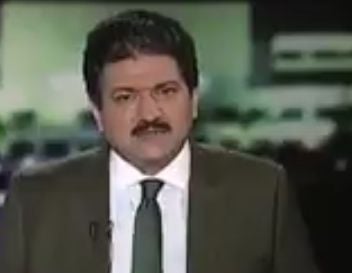




ISLAMABAD: In a startling revelation, senior Pakistani anchor Hamid Mir has claimed that during Imran Khan’s tenure as prime minister, discussions on recognizing Israel were initiated twice, despite strong opposition rooted in the founding principles of Pakistan.
This assertion comes amid ongoing debates about Pakistan’s foreign policy stance on the Palestinian issue, highlighting a consistent resistance to external pressures that could deviate from Quaid-e-Azam Muhammad Ali Jinnah’s ideologies.
Mir, known for his forthright commentary, emphasized that his own position against friendship with Israel remains unchanged, labeling it a betrayal of Jinnah’s vision.
He accused certain individuals who previously supported such ties of now posing as defenders of national principles, calling them “fake heroes.”
The claims shed light on internal dynamics within the Pakistan Tehreek-e-Insaf (PTI) government from 2018 to 2022, a period marked by geopolitical shifts in the Middle East.
The Abraham Accords, brokered by the United States in 2020, saw several Arab nations normalize relations with Israel, prompting speculation about Pakistan’s potential involvement.
According to Mir, these accords intensified pressures on Pakistan, with inquiries from influential quarters about the country’s reluctance to establish ties.
Historical data shows Pakistan has never recognized Israel since its inception in 1948, aligning with Jinnah’s explicit opposition.
In a 1947 letter to U.S. President Harry Truman, archived in the U.S. State Department, Jinnah rejected UN Resolution 181, which partitioned Palestine, deeming it unjust and unacceptable.
He argued that the resolution would not bring peace and could harm Jewish interests in the long term.
This stance was influenced by Allama Muhammad Iqbal’s earlier warnings in the 1930s against trusting Arab monarchs on Palestinian matters.
Iqbal’s poetry and writings underscored solidarity with Palestine, shaping Pakistan’s foundational foreign policy.
During General Pervez Musharraf’s regime in the early 2000s, there were tentative overtures, including a 2005 meeting between Pakistani and Israeli foreign ministers in Istanbul.
However, public backlash and adherence to traditional policy prevented formal recognition.
Under Imran Khan, similar pressures resurfaced, as per multiple accounts.
Mir detailed a specific incident around 2019-2020 in the Prime Minister’s Secretariat, where 10-15 TV anchors were summoned to persuade Khan.
These anchors, allegedly briefed beforehand, urged Khan to make a unilateral decision on relations with Israel, bypassing parliamentary debate.
When Khan sought Mir’s opinion, the journalist invoked Jinnah’s legacy, asking if Khan considered himself greater than the founder.
Khan affirmed Jinnah’s supremacy and reiterated commitment to his policies, effectively ending the discussion.
Post-meeting, Mir received warnings from powerful figures, indicating displeasure over his intervention.
This episode, Mir claims, was one of two instances where such debates were started during Khan’s government.
Reports suggest the second push may have involved internal cabinet pressures and military influences.
Senior journalist accounts point to former army chief General Qamar Javed Bajwa as a key figure advocating for engagement with Israel.
Bajwa reportedly undermined Khan’s resistance, pushing for diplomatic relationships.
When these efforts failed, allegations emerged of media campaigns to build pro-Israel narratives.
Khan publicly stated in 2020 that Pakistan was under pressure to recognize Israel but would not do so until Palestinians achieved a viable state.
He emphasized that any decision must respect the Palestinian right to self-determination.
Data from international relations analyses indicate U.S. involvement in these pressures, linked to broader Middle East peace initiatives.
The Trump administration’s push for the Abraham Accords included outreach to Muslim-majority nations like Pakistan.
Khan’s neutral stance on issues like the Russia-Ukraine conflict and his visits to Moscow were cited as reasons for external discontent.
In 2022, following his ouster via a no-confidence vote, Khan alleged a U.S.-backed conspiracy, partly tied to his independent foreign policy.
This included resistance to demands on Israel recognition and downgrading ties with China and Russia.
Human rights and journalism bodies have noted pressures on media during this period.
In 2021, Mir was temporarily taken off air after criticizing military interference in politics.
Such incidents underscore the challenges faced by journalists addressing sensitive topics.
Pakistan’s population, largely supportive of Palestine, has historically opposed recognition of Israel.
Polls from the Pew Research Center in the 2010s showed over 80 percent of Pakistanis holding unfavorable views of Israel.
Public sentiment is fueled by religious solidarity and perceptions of Israeli actions in Gaza and the West Bank.
Recent events, including Israel’s military operations in Gaza since October 2023, have reignited protests in Pakistan.
Khan, now imprisoned on various charges, continues to command significant support, with his party performing strongly in the 2024 elections despite allegations of rigging.
Mir’s revelations align with broader narratives of establishment interference in civilian governance.
Analysts argue that any move toward recognizing Israel would face massive public backlash, potentially destabilizing the government.
Previous leaders like Benazir Bhutto and Nawaz Sharif also resisted similar pressures, citing Jinnah’s principles.
Bhutto, in the 1990s, maintained support for Palestine amid U.S. overtures.
Sharif’s governments in the 2010s echoed this stance, focusing on economic ties elsewhere.
Under the current Shehbaz Sharif administration, formed in 2024, there are whispers of renewed pressures.
However, official statements reaffirm commitment to a two-state solution and non-recognition until Palestinian rights are secured.
Economic data reveals Pakistan’s trade with Israel is negligible, often routed through third countries.
Unofficial estimates suggest minimal indirect imports, contrasting with growing ties between Israel and other Muslim nations.
The UAE and Bahrain’s normalization has boosted their economies, with trade volumes rising by billions.
Yet, for Pakistan, strategic alliances with China and Saudi Arabia, both cautious on Israel, complicate any shift.
Saudi Arabia, a key ally, has conditioned its own recognition on Palestinian statehood.
Pakistan’s military aid from the U.S. and participation in Islamic coalitions further tie its hands.
Mir warns that deviating from Jinnah’s path would betray Pakistan’s ideological foundations.
He calls for transparency, urging Khan to name those exerting pressure.
In a tweet, Mir questioned why Khan withheld names, implying internal figures like Bajwa.
This opacity fuels conspiracy theories, eroding trust in institutions.
Journalistic integrity, as exemplified by Mir, plays a crucial role in uncovering such dynamics.
His career, spanning decades, includes interviews with global leaders and coverage of conflicts in Palestine.
Mir’s consistent advocacy for press freedom has earned him awards, including the Hilal-i-Imtiaz.
Despite assassination attempts and bans, he persists in highlighting truths.
The debate on Israel recognition reflects deeper tensions between civilian leadership and the establishment.
Khan’s resistance, per Mir, preserved national sovereignty but contributed to his downfall.
As Pakistan navigates economic crises and political instability, foreign policy on Israel remains a litmus test for adherence to founding ideals.
Public discourse, amplified by social media, ensures vigilance against any perceived betrayal.
Mir’s claims invite scrutiny, potentially reshaping narratives around Khan’s legacy.
They underscore the enduring influence of Jinnah’s vision in shaping Pakistan’s global stance.
Ultimately, any policy shift would require broad consensus, unlikely in the current polarized climate.