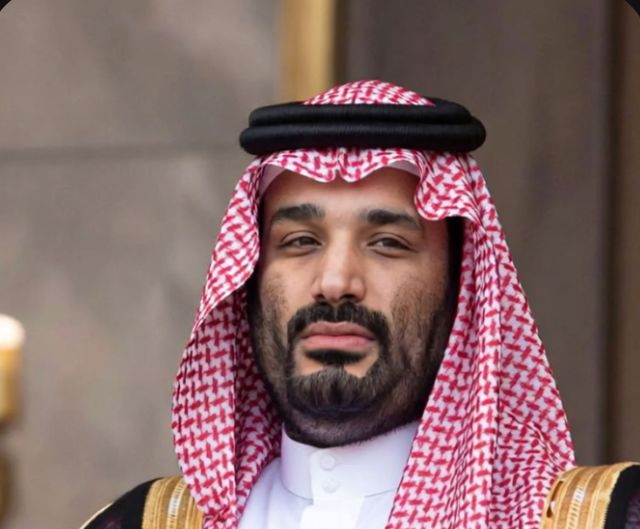




ISLAMABAD: Saudi Arabia’s reported decision to begin domestic uranium enrichment under a civilian nuclear cooperation agreement with the United States has triggered intense debate among non-proliferation experts, raising a critical question: could the move serve as a future stepping stone toward a Saudi nuclear weapon if the political decision is ever made?
While the proposed arrangement is framed as part of a peaceful nuclear energy programme, analysts argue that the strategic implications extend far beyond electricity generation. The development comes at a time of deep regional uncertainty, heightened tensions with Iran, and growing geopolitical competition among major powers.
Under the Nuclear Non-Proliferation Treaty, to which Saudi Arabia is a signatory, states are permitted to pursue civilian nuclear energy under international safeguards. Uranium enrichment for power reactors typically requires fuel enriched to between three and five per cent of uranium-235. By contrast, weapons-grade uranium requires enrichment levels of around 90 per cent.
The distinction is technical but politically sensitive.
Civilian enrichment infrastructure, even under international monitoring, provides a country with expertise, facilities and trained personnel that significantly reduce the time required to move toward weapons capability, should a future government decide to do so. This concept, often referred to as “latent nuclear capability,” has long been a source of concern in global non-proliferation circles.
Saudi Arabia has for years expressed interest in diversifying its energy mix under Vision 2030, citing rising domestic electricity demand and the need to preserve oil exports. Official Saudi statements maintain that the nuclear programme is intended solely for peaceful purposes.
However, regional security dynamics complicate the picture.
Crown Prince Mohammed bin Salman previously stated in a televised interview that if Iran developed a nuclear bomb, Saudi Arabia would follow suit “as soon as possible.” That declaration was widely interpreted as a warning that Riyadh views nuclear capability through a strategic lens linked directly to Tehran’s actions.
Iran, for its part, has enriched uranium to levels as high as 60 per cent in recent years, according to international inspectors, significantly exceeding the limits set under the 2015 nuclear agreement with world powers. Although Tehran denies seeking a nuclear weapon, Western governments argue that enrichment at such levels has limited civilian justification.
In this context, Saudi enrichment carries broader regional implications.
The United States has historically required partner countries to forgo domestic enrichment and reprocessing in so-called “gold standard” nuclear agreements, as seen in its 2009 accord with the United Arab Emirates. If Washington now permits enrichment on Saudi soil, it would mark a significant policy adjustment, potentially driven by strategic competition with China and Russia, both of which are active exporters of nuclear technology.
Any US-Saudi agreement would likely include strict safeguards under the International Atomic Energy Agency, including inspections, monitoring systems and limits on enrichment levels. Yet experts caution that safeguards can only verify declared activities; they cannot eliminate future political shifts.
The key variable, analysts note, is not technological feasibility but political intent.
Building enrichment facilities requires advanced centrifuge technology, secure fuel cycle infrastructure and regulatory oversight. Once operational, however, such facilities shorten what is known as “breakout time” — the period needed to produce sufficient weapons-grade material if a state withdraws from international commitments.
For Saudi Arabia, the calculus appears linked to deterrence and regional balance.
Riyadh and Tehran remain strategic rivals across multiple theatres, from Yemen to Lebanon. The restoration of diplomatic ties in 2023 eased tensions, but mistrust persists. Should Iran cross the nuclear weapons threshold, Saudi policymakers may face intense domestic and regional pressure to respond in kind.
At present, there is no evidence that Saudi Arabia is pursuing a weapons programme. The kingdom lacks publicly known reprocessing facilities, weapons design infrastructure or missile systems explicitly configured for nuclear delivery. Nevertheless, its growing missile cooperation and defence modernisation efforts are closely watched by regional observers.
The broader Middle East context adds further complexity.
Israel is widely believed to possess nuclear weapons, though it maintains a policy of deliberate ambiguity. The existence of one undeclared arsenal, combined with Iran’s advancing enrichment capabilities and a potential Saudi fuel cycle, could reshape deterrence calculations across the region.
Non-proliferation experts warn of a cascading effect. If Saudi Arabia acquires enrichment capability, other regional powers may reconsider their own nuclear policies. Egypt and Turkey have both expanded civilian nuclear cooperation in recent years, and questions of technological sovereignty are increasingly linked to national prestige.
For Washington, the challenge lies in balancing strategic partnerships with non-proliferation principles. A tightly structured agreement with Saudi Arabia could strengthen oversight and prevent Riyadh from seeking assistance elsewhere. Conversely, critics argue that allowing enrichment weakens global norms designed to limit the spread of sensitive fuel cycle technologies.
Ultimately, the enrichment decision does not in itself equate to a bomb programme.
It does, however, narrow the technical distance between civilian and military capability. Should a future Saudi government conclude that regional security conditions demand a nuclear deterrent, a domestic enrichment base would significantly ease that transition.
The debate therefore centres less on immediate intentions and more on long-term structural consequences.
In a region already marked by fragile security arrangements and unresolved rivalries, even incremental shifts in nuclear capability carry weighty strategic implications. Whether Saudi enrichment becomes a cornerstone of peaceful energy development or a latent deterrent option will depend not only on Riyadh’s choices, but on the trajectory of Iran’s programme and the broader geopolitical landscape.
The coming years will determine whether this development stabilises the Middle East through regulated oversight — or quietly seeds a new phase of nuclear competition.