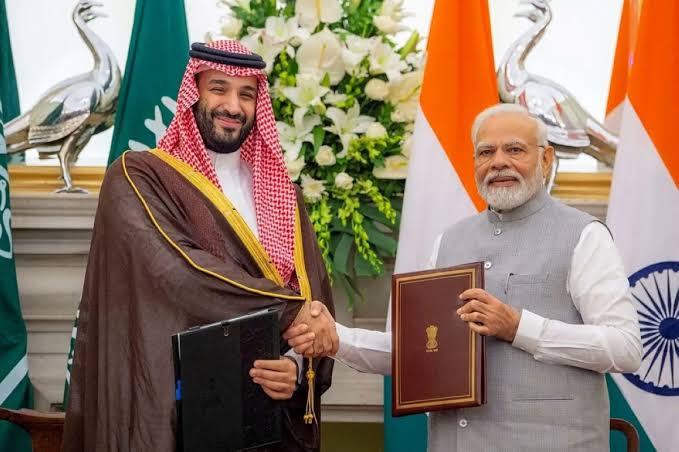




India surges Saudi crude purchases to six-year high, signaling strategic pivot and deepening energy partnership amid global shifts.
ISLAMABAD: India is set to import between one million and 1.1 million barrels per day of crude oil from Saudi Arabia in February 2026, the highest volume in more than six years, according to ship-tracking data from Kpler.
This development represents a breakthrough in India-Saudi Arabia energy relations, as Saudi Arabia rapidly regains its position as a dominant supplier following years of reduced share due to discounted Russian alternatives.
The surge narrows the gap with Russia, whose supplies to India have declined under sustained US pressure and secondary sanctions enforcement.
Kpler lead research analyst Sumit Ritolia confirmed that Saudi shipments are on track for levels not seen since November 2019, driven by competitive pricing, shorter shipping routes, and reliable delivery.
In the first half of February, Saudi flows reached 1.13 million barrels per day in some tracking periods, occasionally surpassing Russia’s 1.09 million barrels per day.
This positions Saudi Arabia to potentially become India’s outright top supplier in the near term, especially as Russian volumes are projected to fall to 800,000 to one million barrels per day in March.
The shift stems from geopolitical realignments, with the United States imposing tariffs on Indian goods in 2025 linked to continued Russian oil purchases.
An interim US-India trade agreement reduced tariffs to 18 percent on Indian exports, contingent on New Delhi’s commitments to diversify away from sanctioned Russian crude.
Indian refiners have responded by pivoting toward traditional Middle Eastern partners, with Saudi Arabia benefiting most from this strategic rebalancing.
Historically, Saudi Arabia was a primary supplier before 2022, when Russia’s invasion of Ukraine led to massive discounts that propelled its share to over 35 percent in recent years.
At peak periods, Russian imports exceeded two million barrels per day, but tightening sanctions, shadow fleet risks, and insurance hurdles have eroded that advantage.
Imports from Iraq and the United Arab Emirates have also increased, elevating OPEC’s overall share in India’s crude basket to an 11-month high in January.
Middle Eastern oil now constitutes about 55 percent of India’s total imports, up significantly from lower levels during Russian dominance.
India, the world’s third-largest oil importer, depends on foreign supplies for nearly 87 percent of its crude needs, underscoring the importance of diversified, geopolitically stable sources.
Saudi grades like Arab Light and Arab Medium align well with Indian refinery configurations and offer logistical efficiencies compared to longer-haul Russian cargoes.
This resurgence strengthens bilateral ties that have evolved beyond mere trade volumes.
In recent years, India and Saudi Arabia have deepened cooperation through agreements on crude and liquefied petroleum gas supplies, green hydrogen initiatives, and potential joint refinery projects.
A 2025 visit by Indian leadership to Riyadh resulted in commitments to boost energy collaboration, including electrical interconnection and renewable energy investments.
Saudi Arabia’s Public Investment Fund received exemptions in India to expand holdings in energy firms, facilitating greater capital flows.
These layered engagements transform the current oil surge into part of a broader strategic partnership focused on energy security, sustainability, and mutual economic resilience.
For Saudi Arabia, increased demand from India supports export diversification amid OPEC+ adjustments and global competition.
Indian policymakers emphasize flexibility in sourcing to balance cost, compliance, and long-term reliability.
The development illustrates how geopolitical factors increasingly shape energy trade flows, moving beyond pure market economics.
As trends solidify, they may influence global oil pricing, supply chain configurations, and bilateral relations in the energy domain.
India’s refiners maintain a multi-supplier approach to mitigate risks from any single origin.
The breakthrough underscores evolving dynamics in Asia’s energy landscape, where traditional alliances regain prominence amid shifting sanctions and trade pressures.