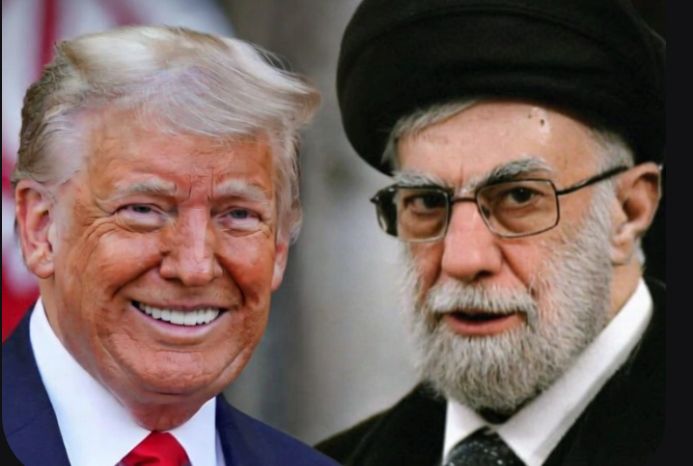




ISLAMABAD: The United States and Israel have intensified threats of imminent military strikes against Iran following two rounds of indirect nuclear negotiations that failed to bridge deep divides, with President Donald Trump appearing to set a roughly 10-day window for Tehran to accept core demands or face severe consequences including targeted attacks on nuclear facilities, ballistic missile infrastructure, and possibly leadership targets.
The rapid escalation comes as the U.S. has assembled one of its largest military concentrations in the Middle East since the 2003 Iraq invasion, deploying two aircraft carrier strike groups, additional warships, fighter jets such as F-35s and F-22s, refueling aircraft, guided-missile destroyers, and submarines capable of sustained operations.
Pentagon officials have indicated that these forces position the U.S. to launch strikes as early as this weekend if Trump authorizes action, though no final decision has been made. The buildup includes repositioning personnel from vulnerable sites as a precaution and transporting substantial munitions via airlift.
Trump, speaking at the inaugural meeting of his Board of Peace, warned Iran that it must reach a meaningful deal or “bad things will happen,” hinting at a decision within the next 10 days. He reiterated that Iran cannot possess a nuclear weapon and referenced prior U.S. strikes that decimated parts of Iran’s nuclear capabilities, suggesting the need to “take it a step further” if necessary.
Vice President JD Vance emphasized that Iran has ignored core U.S. red lines, including zero uranium enrichment, restrictions on ballistic missiles, and limits on regional proxy support. White House statements have kept “all options on the table,” with officials describing the military posture as both deterrent and preparatory for potential weeks-long campaigns.
Israel, viewing Iran’s missile arsenal and nuclear advancements as existential threats, has aligned closely with U.S. efforts. Prime Minister Benjamin Netanyahu stated that Israel operates side by side with its major ally and warned that any Iranian attack would trigger a response “they can’t even imagine.” Israeli forces remain on heightened alert, with preparations for possible coordinated action.
Recent satellite imagery shows Iran fortifying sensitive military sites, including concrete shields over facilities at locations previously targeted, amid fears of renewed strikes. Tehran has conducted naval exercises in the Strait of Hormuz, temporarily closing parts for live-fire drills involving fast attack craft, missiles, and drones to demonstrate readiness.
Iranian Supreme Leader Ali Khamenei rejected U.S. demands during the Geneva talks, affirming Iran’s right to uranium enrichment for its peaceful nuclear industry and describing ballistic missiles as essential for national deterrence, unrelated to American concerns. Foreign Minister Abbas Araghchi noted some procedural progress but acknowledged wide gaps, with Iran promising written proposals soon.
The impasse follows a 12-day war in 2025 involving Israel and the U.S. that damaged two-thirds of Iran’s missile launchers and delayed its nuclear program by years, though reconstitution efforts continue. Iran insists negotiations cover only nuclear civilian aspects and sanctions relief, rejecting inclusion of missiles or proxies as sovereignty violations.
Oil markets have responded to the heightened risks, with crude prices rising on concerns over potential disruptions in the Strait of Hormuz, through which 20 percent of global oil passes. Regional allies have raised alerts, and Russia has urged restraint amid the U.S. buildup described as unprecedented escalation.
Analysts assess that the military preparations serve dual purposes: pressuring Iran at the negotiating table while providing credible options for action if diplomacy collapses. Trump has polled advisers on scenarios ranging from limited strikes on nuclear and missile sites to broader campaigns targeting leadership to destabilize the regime.
Iranian officials have warned that any aggression would not remain limited, potentially sparking a regional conflict involving proxies and retaliatory strikes on U.S. bases or Israel. Despite the threats, both sides have indicated willingness to continue talks, though substantive breakthroughs appear distant.
The coming days hold critical implications, as Trump’s hinted deadline approaches and military assets remain poised. Failure to resolve differences could push the region toward another major confrontation, with profound consequences for global energy security and stability.