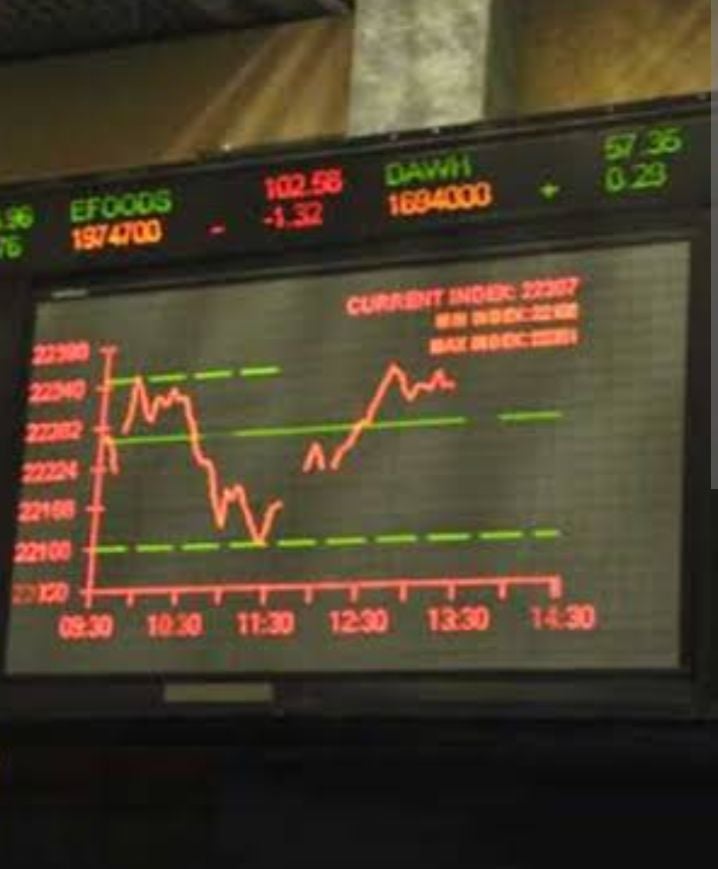




ISLAMABAD: A wave of panic selling swept through the Pakistan Stock Exchange this week, erasing billions in market capitalisation within hours and reigniting fears that the recent historic rally may have been built on fragile foundations. The benchmark KSE-100 Index, which had surged to unprecedented highs in recent months, suffered one of its sharpest single-session declines, leaving investors questioning whether the earlier hike reflected genuine economic recovery or an artificial bubble fuelled by speculation.
The dramatic downturn did not emerge in isolation. Analysts describe it as the culmination of mounting political uncertainty, tightening economic conditions, and adverse international developments that collectively shook investor confidence. What initially appeared to be a technical correction quickly intensified into a broad-based sell-off as leveraged positions were unwound and retail investors rushed to exit.
Political instability remains at the centre of the crisis. Ongoing tensions between government and opposition factions, policy uncertainty regarding fiscal reforms, and speculation about administrative changes created an environment of heightened risk perception. Markets are inherently sensitive to governance signals, and any ambiguity regarding continuity of economic policy often triggers capital flight.
Economic factors have compounded the volatility. Pakistan’s inflation rate, though easing from previous peaks, continues to exert pressure on household consumption and corporate margins. The tight monetary stance maintained by the State Bank of Pakistan, aimed at stabilising the rupee and curbing inflation, has elevated borrowing costs. High interest rates have dampened industrial expansion and squeezed earnings projections for key listed sectors including cement, textiles, and consumer goods.
Foreign exchange reserves and external financing concerns have also influenced market sentiment. Investors remain cautious about the sustainability of Pakistan’s balance of payments position, particularly amid fluctuating oil prices and the need for continued engagement with multilateral lenders. Any delay in external disbursements or reform implementation can immediately reflect in equity valuations.
International dynamics have further intensified the sell-off. Global markets have been grappling with uncertainty over US monetary policy. Minutes from the Federal Reserve’s recent meeting indicated policymakers are in no rush to cut interest rates, strengthening the dollar and reducing risk appetite for emerging markets. A firm dollar often pressures the Pakistani rupee, increasing import costs and unsettling investors.
Geopolitical tensions, including regional conflicts and US-Iran frictions, have kept oil prices elevated. For an energy-importing country like Pakistan, higher oil prices translate into a larger import bill, renewed inflationary risks, and fiscal strain. These factors directly impact corporate profitability, particularly in energy-intensive industries.
Market data suggests that the preceding rally may have outpaced underlying economic fundamentals. Over the past year, the KSE-100 delivered exceptional returns, attracting significant retail participation. Trading volumes surged, and speculative activity intensified in mid-cap and penny stocks. While banking and energy sector earnings supported part of the rise, certain counters experienced sharp price escalations disconnected from earnings growth.
Brokerage analysts argue that leverage played a critical role. As prices climbed rapidly, margin financing increased, amplifying both upward momentum and subsequent declines. When political and global triggers emerged, margin calls accelerated the fall, transforming a manageable correction into a cascading crash.
Yet the narrative of an artificial bubble is contested. Institutional investors maintain that several blue-chip stocks remain fundamentally sound, backed by strong profitability in commercial banks and improved performance in the oil and gas sector. They point to relatively moderate price-to-earnings ratios compared to regional peers as evidence that the broader market is not excessively overvalued.
However, the speed and magnitude of the previous rally have prompted scrutiny. Rapid inflows from retail investors, influenced by social media-driven optimism and short-term trading strategies, may have inflated prices beyond intrinsic values in select sectors. Such dynamics often create temporary distortions that correct sharply once confidence falters.
Regulatory authorities are closely monitoring developments. The Securities and Exchange Commission of Pakistan has mechanisms in place to curb excessive volatility, including circuit breakers and enhanced disclosure requirements. Market observers stress that regulatory vigilance is essential to prevent systemic risk while allowing natural price discovery.
The psychological dimension of markets cannot be ignored. Investor sentiment, shaped by political headlines and international cues, often outweighs pure economic data in the short term. Fear-driven sell-offs can become self-fulfilling, even when long-term fundamentals remain intact.
Looking ahead, analysts believe stabilisation will depend on clarity in political direction, consistent economic management, and constructive engagement with international partners. Transparent fiscal policies, steady monetary guidance, and progress in structural reforms could gradually restore confidence.
Whether the recent hike was an artificial bubble or a reflection of improving macroeconomic indicators remains a subject of debate. Evidence suggests that while core sectors had fundamental support, speculative excess in peripheral stocks contributed to unsustainable price levels.
For now, the Pakistan Stock Exchange stands at a crossroads. The recent crash underscores the fragility of sentiment-driven rallies but also highlights the market’s capacity for rapid correction. If policymakers manage to reassure investors and sustain reform momentum, the turbulence may prove to be a temporary setback rather than a structural breakdown.
In volatile times, markets often overreact before recalibrating. The coming weeks will determine whether the PSX’s dramatic fall marks the bursting of a bubble or simply the painful adjustment of a market navigating political complexity and global uncertainty.