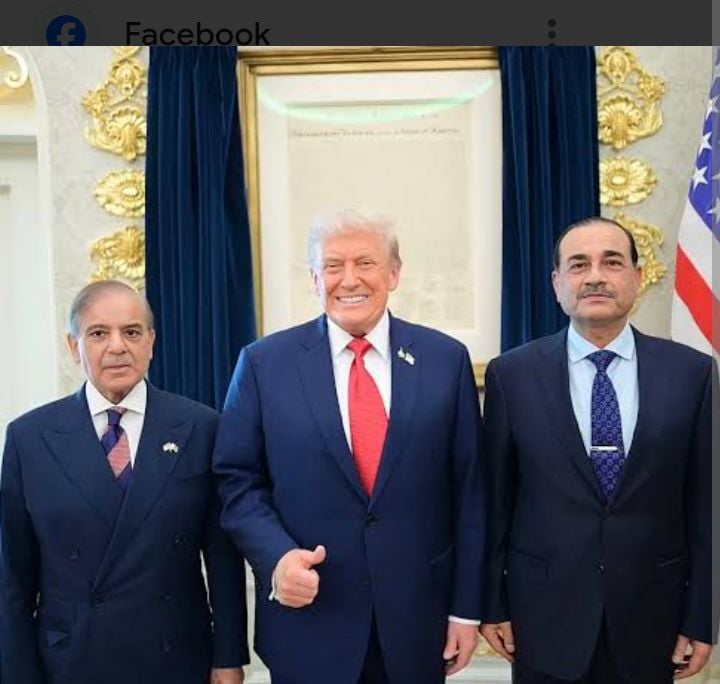




ISLAMABAD: Pakistan has conditioned its potential deployment of troops to the International Stabilization Force in Gaza on firm assurances from the United States that the mission will remain strictly peacekeeping in nature and will not involve disarming Hamas, according to three reliable government sources.
Prime Minister Shehbaz Sharif is scheduled to attend the inaugural formal meeting of President Donald Trump’s Board of Peace in Washington on Thursday. Delegations from at least 20 countries are expected to participate in the session, chaired by Trump himself.
The meeting is anticipated to feature the announcement of a multi-billion dollar reconstruction plan for Gaza. Trump is also set to outline detailed arrangements for a United Nations-authorised stabilisation force intended to support post-conflict stability in the Palestinian enclave.
Sources close to the Pakistani leadership indicated that during the Washington visit, Sharif intends to seek comprehensive details on the objectives of the International Stabilization Force, its operational authority, and the established chain of command. These clarifications are deemed essential prior to any formal commitment on troop contributions.
One source, described as a close aide to the prime minister, emphasised Pakistan’s preparedness to contribute forces under specific parameters. “We are ready to send troops. Let me make it clear that our troops could only be part of a peace mission in Gaza,” the aide stated. He added that participation in any role involving the disarmament of Hamas remains unacceptable and entirely out of consideration.
The International Stabilization Force forms a core component of Trump’s broader 20-point comprehensive plan to end the Gaza conflict, which has garnered support from various Arab and Muslim-majority nations. The force is designed to secure borders, protect civilians, facilitate humanitarian access, and enable reconstruction efforts without engaging in direct combat against militant groups.
Recent developments highlight growing momentum toward the force’s deployment. United States officials have previously indicated that international troops could begin operations in Gaza as early as early 2026, following authorisation by the United Nations Security Council in late 2025.
Board of Peace members, including Pakistan as the sole South Asian participant, have reportedly pledged over USD 5 billion collectively toward Gaza’s humanitarian and reconstruction needs. Trump has publicly affirmed these commitments, underscoring the involvement of thousands of personnel from member states for stabilisation and local policing duties.
Pakistan’s cautious approach reflects a strategic balancing act. The country maintains strong public sympathy for the Palestinian cause, with surveys indicating substantial domestic support for contributing to a peacekeeping effort in Gaza. A Gallup Pakistan poll revealed that nearly three-quarters of respondents favour troop deployment under appropriate conditions.
Nevertheless, concerns persist regarding potential domestic backlash if the mission’s scope deviates from pure peacekeeping. Analysts note that Pakistan’s participation could strengthen bilateral ties with the United States, potentially unlocking increased investment and security assistance amid economic pressures.
The Board of Peace, launched in January 2026, extends beyond Gaza to envision a wider platform for global conflict resolution. Trump has positioned it as a more effective alternative to existing international mechanisms, though its immediate priority remains consolidating the fragile ceasefire in Gaza and advancing reconstruction.
A transitional governance structure for Gaza, comprising Palestinian technocrats under international oversight, is also progressing. This arrangement aims to restore essential services and lay foundations for long-term stability, separate from Hamas administration.
Pakistan’s military leadership, including Field Marshal Asim Munir, has engaged in prior discussions with senior US officials on the stabilisation force. These exchanges underscore Islamabad’s interest while highlighting the need for precise mandate definitions to align with national policy and public sentiment.
The forthcoming Washington meeting represents a pivotal moment for Pakistan’s foreign policy. Clarity on the force’s non-combat role could pave the way for meaningful contribution, enhancing Pakistan’s standing in international peace efforts while safeguarding core principles.
As deliberations unfold, the emphasis remains on ensuring that any Pakistani involvement promotes genuine stability and humanitarian relief in Gaza without entangling forces in enforcement actions against Palestinian factions.