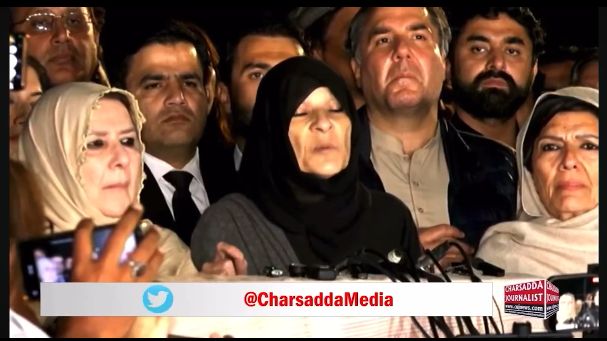




ISLAMABAD: Dr Uzma Khan, sister of Pakistan Tehreek-e-Insaf founder Imran Khan, has revealed that during her last meeting with him in Adiala Jail, he insisted she publicly disclose a grave concern, which she initially declined but has now decided to share amid escalating worries over his treatment and health.
Dr Uzma Khan stated that Imran Khan repeatedly urged her to convey a specific message after leaving the prison premises. She explained that at the time, she refused to do so, but recent developments have prompted her to speak out.
According to Dr Uzma Khan, Imran Khan expressed during that encounter that authorities were gradually harming him. He reportedly said they were killing him slowly through deliberate actions.
He explicitly held Chief of Army Staff General Asim Munir responsible for any harm that might befall him. This accusation was made in the context of his prolonged solitary confinement and restricted access.
The revelation comes amid ongoing concerns about Imran Khan’s medical condition, particularly issues related to his eyesight. Family members have repeatedly questioned official medical reports and demanded independent examination by trusted physicians.
Dr Uzma Khan addressed a press conference alongside her sister Aleema Khan, where she detailed difficulties in securing reliable medical access for Imran Khan. Authorities have insisted on using designated doctors, leading to distrust from the family.
She described official reports as inadequate, noting they lacked comprehensive diagnostic details and treatment plans. This has fueled suspicions regarding the transparency of his care while in custody.
Imran Khan has been detained in Adiala Jail since 2023 on multiple charges, including corruption and other cases that his party claims are politically motivated. His supporters argue that restrictions on family and legal visits constitute undue pressure.
The Pakistan Tehreek-e-Insaf has consistently maintained that Imran Khan faces systematic mistreatment aimed at weakening his political influence. Recent statements from family members amplify these allegations.
Dr Uzma Khan emphasized that Imran Khan appeared physically stable during earlier interactions but showed visible anger over what he described as mental torment. He was reportedly kept in isolation with limited human contact.
She reiterated his warning that any adverse outcome in jail would directly implicate General Asim Munir. This claim has circulated widely on social media and in party circles.
The army leadership has not issued a formal response to these specific accusations. Official statements on Imran Khan’s detention have focused on adherence to legal processes.
Observers note that such public claims by family members highlight deepening tensions between the former prime minister’s supporters and state institutions. The situation continues to draw attention from domestic and international quarters.
Imran Khan’s party has called for greater transparency in his prison conditions and medical oversight. Demands include allowing independent doctors and unrestricted family access.
Dr Uzma Khan’s disclosure adds to a series of family statements expressing fear for Imran Khan’s safety. She mentioned that he had foreseen gradual harm and attributed it to specific directives.
The context includes periodic restrictions on meetings, which the family attributes to security or administrative reasons. However, they insist these measures exacerbate concerns about his well-being.
Political analysts suggest these revelations could intensify public discourse on accountability within the judicial and security systems. Imran Khan remains a central figure in opposition politics despite incarceration.
The government maintains that all procedures comply with established laws and prison regulations. No independent verification of the latest claims has been provided by neutral sources.
Dr Uzma Khan’s decision to publicize the earlier conversation reflects growing frustration within the family. She indicated that current handling of Imran Khan’s case aligns with his prior apprehensions.
This development occurs against a backdrop of broader political polarization in Pakistan. Imran Khan’s supporters view his detention as part of a larger effort to suppress dissent.
The army chief, General Asim Munir, continues to lead the institution amid various national security challenges. Allegations against him in this context remain unproven and highly contentious.
Family members have urged the public to raise voices in support of fair treatment for Imran Khan. They stress the need for impartial medical evaluation to address health concerns.
The situation in Adiala Jail remains under close scrutiny, with periodic updates from PTI leaders and family. Imran Khan’s case continues to symbolize key divisions in Pakistan’s political landscape.