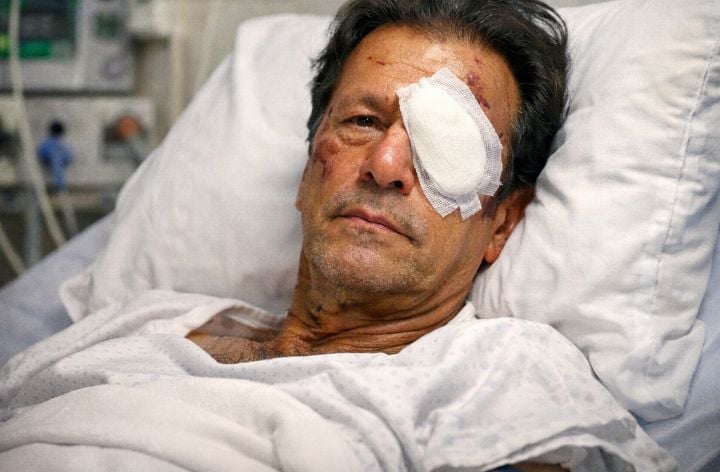




ISLAMABAD: Jailed former prime minister Imran Khan’s health has raised serious alarm following recent medical examinations revealing severe deterioration in his vision due to central retinal vein occlusion (CRVO) in his right eye.
Reports indicate that the 73-year-old PTI founder now retains only about 15 percent vision in the affected eye, equivalent to an 85 percent loss. This condition emerged after months of reportedly ignored complaints starting in October 2025, when Khan had normal 6/6 vision in both eyes.
Medical assessments, including a report dated February 6, 2026, confirmed the diagnosis of right central retinal vein occlusion. This involves a blockage in the central vein draining blood from the retina, often caused by a blood clot leading to retinal damage and rapid vision impairment if not addressed promptly.
A court-appointed lawyer, who visited Khan in Adiala Jail, described him as visibly distressed by the sudden and substantial vision decline over the past three months. The lawyer noted that despite eventual treatment, including an injection, the damage proved extensive.
A five-member team of specialist doctors conducted a detailed eye examination at Adiala Jail on Sunday, lasting around one hour. The team collected vital signs and samples, with initial reports forwarded to Punjab authorities amid ongoing concerns.
The Supreme Court intervened, directing the formation of a medical board for thorough evaluation and treatment. This followed petitions highlighting the urgency of specialized care and independent oversight in custodial settings.
CRVO is recognized as a serious vascular event in the eye. Medical literature links it to underlying systemic issues such as hypertension, diabetes, and cardiovascular risk factors common in older adults.
Studies show patients with CRVO face elevated risks of broader vascular complications. A recent meta-analysis of over 371,000 participants found CRVO associated with a 69.1 percent increased hazard of myocardial infarction compared to controls.
The condition shares pathways with thromboembolic diseases. Retinal vein blockages can signal systemic vascular fragility, where clots or poor blood flow affect multiple organs.
Research indicates RVO patients experience higher incidences of stroke, with some analyses showing up to 37 percent greater likelihood post-diagnosis. Post-stroke mortality in such cases has been reported as high as 69 percent in aggregated data.
While primarily an ocular issue, CRVO prompts recommendations for cardiology and neurology referrals. The blockage in retinal veins often mirrors risks for cerebral or coronary events, underscoring the need for holistic monitoring.
In Khan’s case, the progression from blurred vision to severe loss has fueled debates over timely intervention during incarceration. Authorities transferred him briefly for a procedure earlier, but PTI claims persist regarding inadequate follow-up and transparency.
The party criticized the jail-based examination as insufficient, questioning the exclusion of family-nominated or personal physicians. Calls continue for independent medical documentation and access to ensure accountability.
Khan has been detained at Adiala Jail since August 2023 on multiple charges. Prolonged isolation and restricted family contact have compounded health worries, as noted in court filings.
The Supreme Court also directed facilitation of communication between Khan and his sons abroad, recognizing the psychological toll alongside physical concerns.
Medical experts emphasize that early detection and management of CRVO can mitigate vision loss and systemic risks. Delays exacerbate retinal ischemia, potentially leading to permanent impairment.
Broader data from cohort studies reveal RVO patients face increased mortality risks over time, with elevated rates of death, stroke, and heart attack compared to matched populations without the condition.
For instance, long-term follow-up shows relative risks persisting up to 10 years post-diagnosis, though strongest in the initial periods. This highlights CRVO as a marker for cardiovascular vigilance.
In Pakistan’s context, the case draws attention to medical protocols in high-profile detentions. Transparent care remains essential to address both immediate symptoms and potential life-threatening associations.
As evaluations proceed, the focus stays on preventing further deterioration. Khan’s condition serves as a reminder of how ocular vascular events can reveal deeper health vulnerabilities requiring urgent, coordinated response.