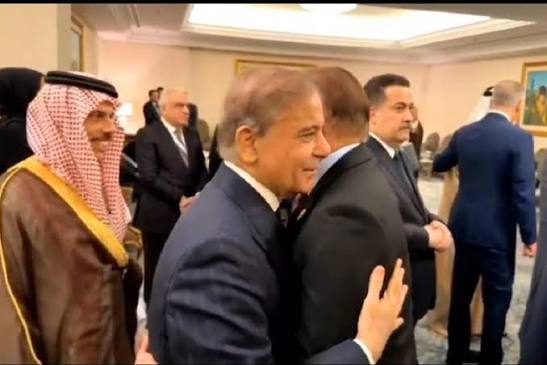




ISLAMABAD: A renewed debate over the possibility of an “Islamic NATO” has resurfaced in diplomatic and strategic circles across the Muslim world, driven by shifting regional alignments, deepening defence cooperation among key states, and a widening perception of shared security threats. While proponents argue that such a platform could recalibrate the geopolitical balance and provide collective security autonomy, critics caution that structural divisions and external pressures may limit its viability.
The idea of a coordinated Muslim security bloc is not new. However, recent diplomatic signals from , , , and have revived discussions about structured defence cooperation. The debate gained particular traction after senior Turkish officials publicly advocated a “regional stability platform” designed to enhance trust and reduce dependency on external powers.
In late January, Turkish Foreign Minister called for collective responsibility among regional states, emphasizing that no single power should dominate the Muslim world. Drawing a comparison with the , he questioned why Muslim-majority countries could not gradually build a framework rooted in economic, political and defence cooperation.
Turkish government-aligned think tanks and media outlets described the potential bloc as a “game changer,” suggesting it could counterbalance Israel’s expanding regional footprint and provide strategic leverage amid intensifying geopolitical competition. Analysts noted that recent diplomatic statements from Ankara, Riyadh and Cairo displayed unusual tonal convergence on issues such as Gaza, Syria and regional stability.
The concept has been loosely described as an “Islamic NATO,” referencing the model of collective defence. Yet Turkish officials have avoided framing it as an anti-Western military alliance, instead emphasizing coordination, defence industrial integration and political alignment.
At the heart of the discussion lies a broader transformation in Turkey’s foreign policy. Researchers at the Ankara-based argue that Turkey is moving away from its traditional role as a bridge between East and West toward more proactive alliance-building that places Ankara at the center of a new regional architecture.
Concrete defence cooperation appears to be deepening. Reports indicate that Turkey has agreed to export military equipment worth approximately $350 million to Egypt and assist in establishing local arms production lines. Meanwhile, Saudi Arabia has reportedly shown interest in Turkey’s fifth-generation fighter jet project, the KAAN program, both as a potential investor and buyer.
For Pakistan, the conversation carries distinct strategic implications. Islamabad has long maintained strong defence ties with Riyadh and Ankara, including joint exercises and training programs. Pakistan’s military has historically contributed personnel to Saudi defence arrangements, and trilateral cooperation has expanded in recent years.
Pakistan’s participation in the Saudi-led Islamic Military Counter Terrorism Coalition, launched in 2015, signaled its willingness to support multilateral security initiatives within the Muslim world. Though the coalition has focused primarily on counterterrorism coordination rather than collective defence, it established a precedent for institutionalized military collaboration.
Advocates argue that a structured Islamic security alliance could generate several strategic dividends. First, it could reduce reliance on Western arms suppliers by encouraging indigenous defence production and technology sharing. Turkey’s rapid growth in drone technology, exemplified by systems such as the Bayraktar series, has demonstrated the transformative impact of domestic innovation.
Second, proponents contend that a unified platform could strengthen diplomatic leverage in global forums, particularly on issues affecting Muslim populations. A coordinated bloc representing over a billion people would carry significant weight in energy markets, maritime trade routes and emerging technologies.
Third, enhanced defence integration could stabilize fragile regions through joint crisis management mechanisms. In theory, coordinated planning among Pakistan, Turkey and Saudi Arabia could improve responses to humanitarian emergencies, border tensions and asymmetric threats.
However, the obstacles remain formidable. Historical attempts at joint Arab or Islamic defence frameworks have often failed to materialize beyond declarations. Analysts point out that previous agreements frequently remained “on paper,” and in some cases, signatory states later found themselves on opposing sides of regional conflicts.
Political divergences persist among key actors. While Turkey has pursued an assertive regional policy over the past decade, Saudi Arabia has recalibrated its approach through cautious diplomacy and economic diversification under Vision 2030. Pakistan, facing economic constraints and delicate geopolitical balancing between major powers, must weigh any alliance commitments against broader strategic considerations.
External pressures also complicate the equation. Observers argue that the United States and Israel would closely monitor any emerging Muslim security bloc perceived as altering regional power dynamics. Critics warn that powerful lobbying networks could attempt to discourage institutional consolidation at early stages.
Moreover, internal trust deficits present a structural challenge. Rivalries rooted in ideological differences, competition for leadership within the Muslim world, and divergent threat perceptions could hinder deep integration. For example, approaches toward Iran vary significantly among potential members, creating friction in defining common strategic priorities.
Economic disparities further complicate prospects. While Saudi Arabia possesses vast financial resources, Turkey brings industrial capacity and technological innovation, and Pakistan offers strategic geography and military manpower. Integrating these complementary strengths requires sustained political commitment and transparent governance mechanisms.
Scholars at regional research centers suggest that a flexible coordination framework, rather than a formal treaty-based alliance, may be the most realistic near-term outcome. Such an arrangement could focus on defence industry partnerships, intelligence sharing and joint training exercises without invoking binding collective defence clauses.
In this context, Pakistan’s role could be pivotal. Its strategic location linking South Asia, Central Asia and the Middle East provides geographic connectivity. Islamabad’s longstanding military professionalism and experience in multinational peacekeeping missions enhance its credibility as a security partner.
Saudi Arabia’s evolving foreign policy also shapes the debate. Riyadh’s outreach to both regional rivals and global powers indicates a pragmatic approach focused on economic modernization. Participation in an Islamic defence framework would likely be calibrated to avoid jeopardizing its diversified partnerships.
Turkey, meanwhile, appears eager to institutionalize its growing defence export portfolio and expand influence through structured alliances. Ankara’s experience in combining soft power diplomacy with hard power projection positions it as a driving force behind conceptualizing such a bloc.
Despite enthusiasm in certain quarters, experts caution that rhetoric must translate into incremental institutional steps. Establishing joint procurement mechanisms, standardized training programs and interoperable communication systems would be early indicators of seriousness.
The broader question remains whether an Islamic NATO could genuinely lift the Muslim world economically and strategically. Supporters argue that collective bargaining power in energy, trade corridors and emerging technologies such as artificial intelligence and unmanned systems could enhance resilience.
Yet lifting the Muslim world requires more than defence integration. Sustainable economic growth, governance reforms and educational investment are equally critical. A security alliance could provide stability, but it cannot substitute for domestic transformation.
Regional analysts emphasize that success would depend on inclusivity rather than dominance. The framework must avoid perceptions of Turkish, Arab or any single-state supremacy. Transparent decision-making and equitable burden-sharing would be essential to maintaining unity.
Ultimately, the viability of an Islamic NATO hinges on political will and long-term vision. Incremental cooperation among Pakistan, Saudi Arabia and Turkey may gradually solidify into structured alignment if mutual trust deepens and shared interests outweigh divergences.
For now, the concept remains more aspirational than institutional. Yet the renewed discourse signals an emerging awareness among Muslim capitals that fragmented approaches may no longer suffice in a rapidly shifting global order.
Whether this awareness crystallizes into a transformative alliance or dissipates amid geopolitical complexities will determine if the idea of an Islamic NATO becomes a defining chapter in twenty-first century Muslim diplomacy or remains another unrealized vision.