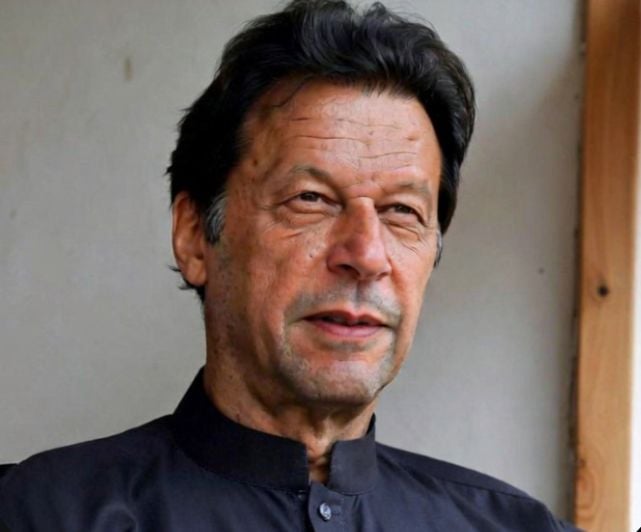




ISLAMABAD: A tense political standoff deepened on Sunday as the government signalled that the incarcerated former prime minister, , would be shifted for medical examination only after the opposition alliance ends its ongoing sit-in at Parliament House, placing a conditional framework around a matter the opposition insists is humanitarian rather than political. The protest, now in its third day, has sharpened confrontation between treasury and opposition benches amid mounting public scrutiny over the former premier’s reported deteriorating eyesight.
The sit-in, organised by the Tehreek-i-Tahafuz-i-Ayin-i-Pakistan, follows proceedings before the where it was stated that Mr Khan’s right eye has retained only 15 per cent vision. Opposition leaders argue that immediate hospitalisation under a medical board including doctors of his choice is essential. Government officials, however, have privately conveyed that protest activity must cease before any transfer from is executed.
Senior figures of the opposition alliance, including and Mehmood Khan Achakzai, were present at Parliament House, reiterating that the protest will continue until written confirmation of hospital transfer is issued. They maintain that verbal assurances are insufficient given past disagreements over access to legal counsel and medical facilities. The optics of elected representatives staging a sit-in within the parliamentary precincts have added an unusual institutional dimension to the unfolding confrontation.
A senior alliance leader, speaking on condition of anonymity, said negotiations had progressed to the point where a tentative understanding was reached for shifting Mr Khan to . However, disagreement reportedly emerged over the composition of the proposed medical board. According to the opposition, officials objected to the inclusion of certain doctors nominated by Mr Khan’s legal team, fearing it would signal governmental retreat under political pressure.
Government interlocutors have indicated that dissolving the sit-in would create “conducive conditions” for administrative decisions regarding medical evaluation. Ministers argue that state institutions cannot appear to act under coercion and that procedural requirements must be followed irrespective of political agitation. Privately, officials insist the matter is being handled in accordance with prison rules and judicial oversight, dismissing allegations of deliberate delay.
The opposition, however, frames the conditionality as a breach of fundamental rights, contending that medical treatment cannot be subjected to political bargaining. Legal experts note that under Pakistani law, prisoners retain the right to healthcare, though implementation often depends on prison authorities’ discretion and security assessments. The absence of a publicly notified medical board has intensified suspicion within opposition ranks that administrative processes are being leveraged as negotiating tools.
Political analysts suggest the government’s insistence on ending the protest before shifting Mr Khan reflects broader concerns about precedent. Allowing a sit-in to extract concessions, they argue, could embolden future parliamentary disruptions. At the same time, prolonged delay risks reinforcing opposition narratives of victimisation, particularly among Mr Khan’s support base that views his incarceration as politically motivated.
The standoff has also drawn in provincial leadership, with Khyber Pakhtunkhwa’s chief minister reportedly engaging federal representatives to underline the volatility of the situation. Observers warn that failure to reach a compromise could widen institutional fault lines at a time when economic recovery and security coordination require political stability. Markets and diplomatic observers are closely monitoring developments for signs of escalation or accommodation.
Medical practitioners contacted by political aides emphasise that ocular deterioration, if accurately reported, warrants timely specialist assessment to prevent irreversible damage. While no independent medical bulletin has been released, the lack of transparent communication has fuelled speculation on social media platforms. Public confidence, analysts say, hinges on credible disclosure rather than partisan messaging from either side.
As negotiations continue behind closed doors, the central question remains whether humanitarian considerations can be decoupled from political strategy. The government’s demand for the sit-in’s conclusion before authorising hospital transfer has transformed what began as a health concern into a test of institutional authority. Whether compromise emerges or confrontation hardens may shape not only the immediate fate of Mr Khan’s medical care but also the tenor of opposition-government relations in the months ahead.