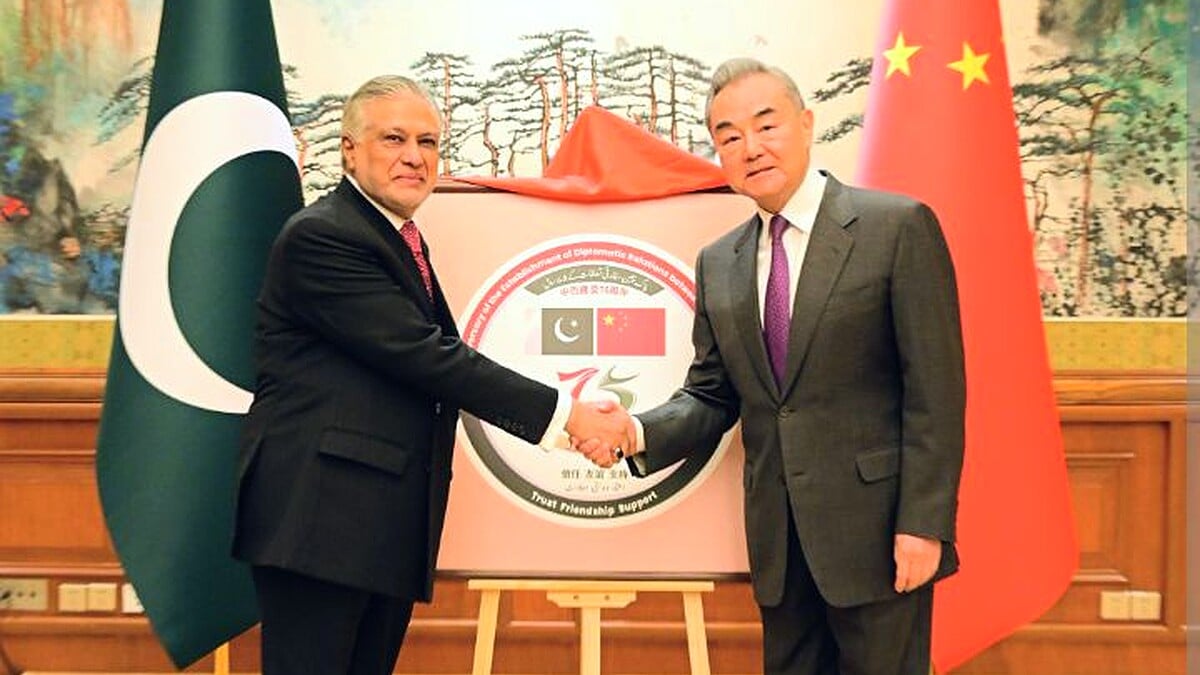




ISLAMABAD: China is increasingly being viewed as a potential guarantor in reported Iran-US negotiations as Pakistan intensifies diplomatic outreach to help shape a framework for possible talks.
Washington-based scholar Vali Nasr has disclosed that Iran has sought firm guarantees in any potential agreement with the United States. Deputy Prime Minister and Foreign Minister Ishaq Dar is travelling to China specifically to explore Beijing’s role as a guarantor in such an arrangement.
This development follows a month-long period of heightened tensions between the US, Israel, and Iran that disrupted global energy supplies and raised fears of broader conflict. Iran’s demand for credible security guarantees stems from past experiences, including the US withdrawal from the 2015 nuclear deal and subsequent military actions.
Pakistan has positioned itself as a key intermediary in these efforts. Islamabad successfully conveyed a detailed 15-point US peace proposal to Tehran covering Iran’s nuclear programme, ballistic missiles, and regional proxies. Iranian officials are currently reviewing the proposal and preparing counteroffers.
Foreign Minister Ishaq Dar has stated that both Washington and Tehran have expressed confidence in Pakistan’s mediation capabilities. Following a quadrilateral meeting in Islamabad with counterparts from Saudi Arabia, Egypt, and Türkiye, Dar affirmed Pakistan’s readiness to host direct or indirect talks.
Beijing has extended strong support to these diplomatic initiatives. Chinese officials have urged immediate dialogue between the US and Iran while publicly appreciating Pakistan’s mediation role. High-level conversations between Chinese Foreign Minister Wang Yi and Ishaq Dar have reinforced this backing.
Analysts consider China’s potential involvement decisive due to its massive economic stakes in the region. Through the Belt and Road Initiative, Beijing maintains deep ties with Iran and imports substantial volumes of Iranian oil while preserving strategic communication channels with Washington. This unique position makes China a credible guarantor candidate.
The economic stakes are significant. Nearly 20 percent of global oil passes through the Strait of Hormuz, and any prolonged disruption has already triggered price volatility in international energy markets. A successful agreement could stabilise oil prices and prevent wider economic fallout.
Vali Nasr noted that any Chinese guarantor role would require prior consultations with both Washington and Beijing, though it remains uncertain whether China would formally accept the responsibility given its traditional policy of non-interference.
Pakistan’s mediation builds upon its unique relationships with all major parties. Islamabad enjoys cordial ties with Tehran, strong defence cooperation with Saudi Arabia, and a deep strategic partnership with China. These connections make Pakistan an effective bridge in the current polarised environment.
Recent quadrilateral consultations in Islamabad have added momentum to the process. The meetings focused on de-escalation measures and creating conditions for sustained dialogue. China’s parallel diplomatic encouragement to Iran has further strengthened the framework.
Time remains critical. Repeated warnings from the US about potential further strikes on Iranian infrastructure have increased pressure for progress. Iran has hardened positions on key issues while indicating openness to talks under acceptable conditions.
A successful outcome could reshape Middle East security dynamics by limiting nuclear risks, stabilising energy markets, and opening pathways for regional reconciliation. Failure risks dangerous escalation with global consequences.
Pakistan views its current diplomatic role as both a responsibility and an opportunity to demonstrate maturity on the international stage. Ishaq Dar’s visit to Beijing represents a vital step in determining whether China will translate supportive statements into concrete guarantor commitments.
As shuttle diplomacy gains pace, global attention remains fixed on whether Pakistani facilitation combined with potential Chinese backing can transform current tensions into a lasting negotiated peace.