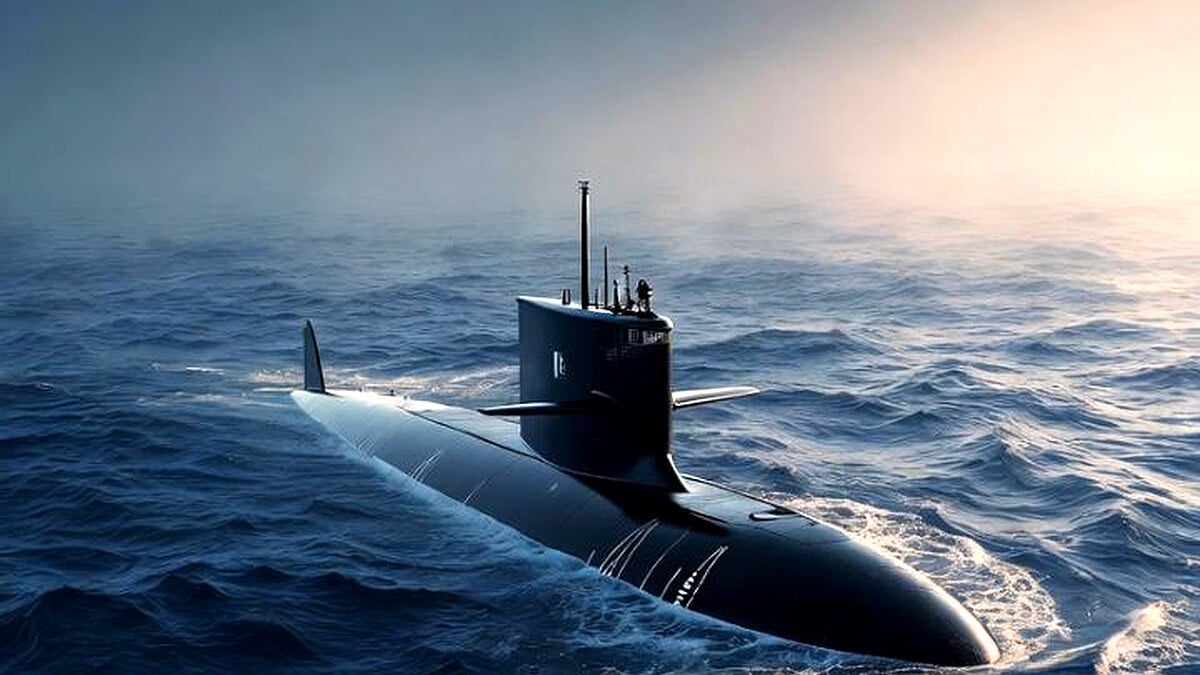




ISLAMABAD: Pakistan is rapidly transforming its underwater warfare capabilities through deepened defence ties with China.
Four Hangor-class submarines built in China are now undergoing intense sea trials. These vessels stand poised for handover to the Pakistan Navy as early as 2026.
The development marks a major leap in Pakistan's maritime defence posture. It directly enhances the navy’s ability to safeguard vital sea lanes in the North Arabian Sea and beyond.
The $5 billion agreement signed years ago covers eight advanced diesel-electric attack submarines. Four will come directly from Chinese shipyards while four more will be assembled in Pakistan with full technology transfer.
PNS Hangor launched in April 2024. PNS Shushuk followed in March 2025. PNS Mangro entered water in August 2025. PNS Ghazi launched in December 2025. All four now push through rigorous sea trials in Chinese waters.
These submarines draw from the proven Type 039A Yuan-class design. They feature cutting-edge upgrades tailored for Pakistan Navy requirements.
Air Independent Propulsion (AIP) system forms the heart of their superiority. Stirling-powered AIP allows extended submerged operations without frequent snorkeling. This grants far greater stealth and endurance compared to older platforms.
Pakistan’s existing Agosta-90B Khalid-class submarines received MESMA AIP retrofits earlier. The new Hangor boats deliver significantly improved underwater persistence and reduced acoustic signature over those upgraded vessels.
Experts highlight that Hangor-class submarines can remain submerged for weeks at low speeds. Their advanced noise reduction coatings and hydrodynamic hull design make detection extremely difficult for enemy sonar systems.
The submarines measure around 76-78 meters in length. They displace roughly 2,250 to 2,800 tons when submerged. Top speed reaches approximately 20 knots.
Each boat carries six 533mm torpedo tubes. These launch heavyweight torpedoes along with anti-ship cruise missiles. Compatibility with Babur-3 submarine-launched cruise missiles adds potent land-attack options.
Reports indicate potential for both conventional and strategic payloads. This multi-role flexibility strengthens Pakistan’s second-strike deterrence significantly.
State-of-the-art avionics and sensors equip the Hangor class. Modern electronic warfare suites and advanced combat management systems provide superior situational awareness in contested waters.
Propulsion relies on four Chinese CHD620 diesel engines paired with the AIP plant. This setup ensures reliable performance across extended patrols in warm Indian Ocean conditions.
Technology transfer clause stands as a strategic win. Pakistani engineers and shipbuilders at Karachi Shipyard & Engineering Works gain hands-on expertise. Future submarines can increasingly be built domestically.
The first batch of four China-built vessels is expected to enter active service throughout 2026. Remaining four will follow progressively until 2028.
This acquisition will expand Pakistan Navy’s AIP-equipped submarine fleet substantially. It positions the force among the most capable underwater arms in the region.
Hangor-class boats bring exceptional stealth features. Anechoic tiles and quiet machinery reduce noise levels dramatically. Enemies will struggle to track these silent hunters beneath the waves.
Cruise missile launch capability adds long-range punch. Submarines can strike surface targets from concealed positions far from detection. This creates serious challenges for any adversary fleet operating in the area.
Aircraft carriers and large warships face heightened risks. Stealthy approach from underwater allows surprise attacks that are hard to counter effectively.
Pakistan Navy leadership has expressed strong confidence in the programme. Admiral Naveed Ashraf confirmed smooth progress and timely induction plans in recent statements.
The partnership with China extends beyond hardware delivery. Joint training, maintenance support, and ongoing upgrades ensure long-term operational readiness.
Local construction of the second batch will create hundreds of skilled jobs. It will boost Pakistan’s indigenous defence industry and reduce reliance on foreign suppliers over time.
Hangor submarines will patrol critical maritime zones. They protect sea lines of communication vital for Pakistan’s energy imports and trade.
Enhanced underwater presence contributes to overall maritime domain awareness. It deters potential threats and supports freedom of navigation in accordance with international law.
Compared to previous generations, these new boats offer vastly improved survivability. Their ability to operate undetected for longer periods multiplies combat effectiveness many times over.
Future possibilities include integration of advanced unmanned systems and hypersonic missile technologies. Such upgrades could further elevate the submarines’ striking power in coming years.
Pakistan Navy continues modernizing across all domains. The Hangor programme forms a cornerstone of its undersea warfare strategy for the next decades.
Regional security dynamics continue evolving. These capable new platforms ensure Pakistan maintains a credible and effective naval deterrent.
The arrival of Hangor-class submarines signals a new chapter in Pakistan-China defence cooperation. This enduring partnership delivers tangible strength to Pakistan’s armed forces.
Questions remain about exact timelines for full fleet integration and future capability enhancements. Yet one fact stands clear: Pakistan Navy is growing stronger beneath the waves.
What new milestones will the Pakistan Navy achieve as these stealthy guardians join the fleet in the coming months?