



ISLAMABAD: A new layer of tension is quietly building in South Asia as India’s ambitious multi-layered air defense concept, often referred to as Sudarshan Chakra, faces growing scrutiny under rapidly evolving missile and drone warfare realities.
What looks formidable on paper is now being tested against a different kind of battlefield logic.
Because modern war is no longer just about interception, but about saturation.
The Promise Behind Sudarshan Chakra
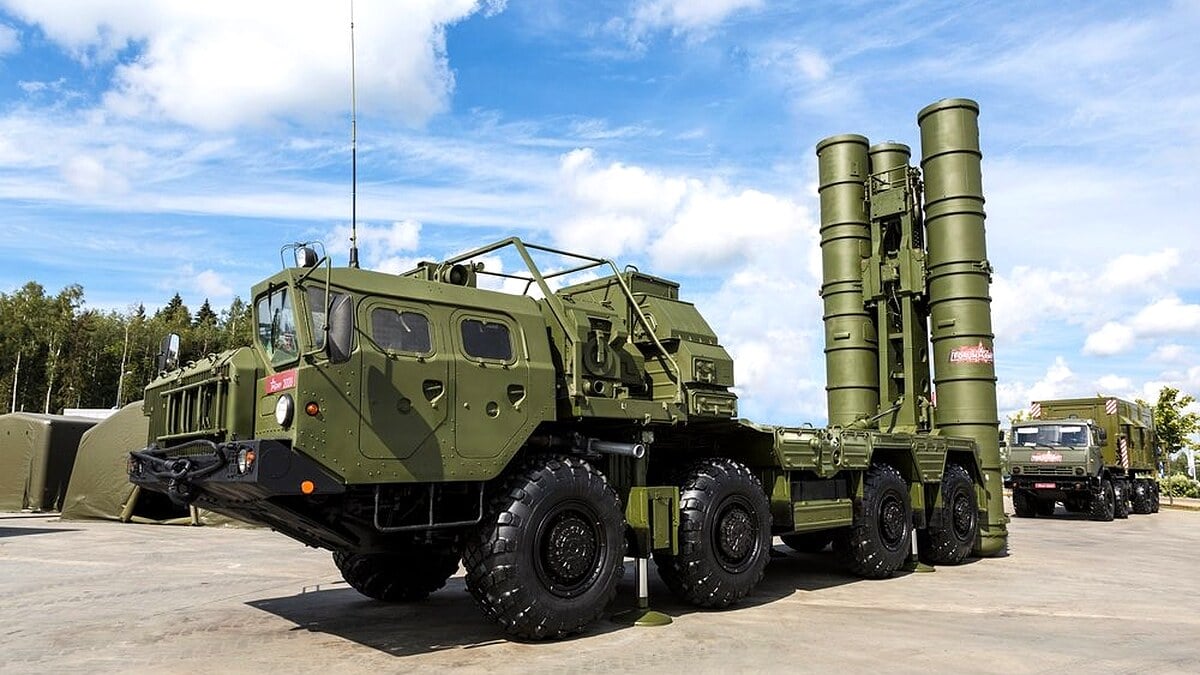
India’s Sudarshan Chakra is designed as a multi-tiered air defense shield integrating systems like S-400, Akash, and Israeli-origin interceptors to create overlapping protection layers.
The idea is simple yet powerful: detect early, intercept mid-course, and destroy incoming threats before impact.
With engagement ranges stretching from short to long distances, it aims to neutralize everything from fighter jets to ballistic missiles.
But experts are increasingly asking whether layered defense alone is enough in today’s threat environment.
The Shift in Modern Warfare
Missile defense systems worldwide are facing a new reality where attackers no longer rely on single high-value targets but instead deploy waves of mixed threats.
This includes ballistic missiles, cruise missiles, loitering munitions, and coordinated drone swarms approaching from multiple directions simultaneously.
The challenge is not just interception, but decision overload.
Even the most advanced systems can be strained when dozens of low-cost threats arrive at once.
Pakistan’s Expanding Strategic Arsenal
Pakistan has steadily developed a diverse missile arsenal including ballistic missiles capable of high-speed re-entry and cruise missiles designed for terrain-hugging low-altitude penetration.
This combination introduces complexity for any air defense system attempting to track and intercept multiple profiles simultaneously.
Ballistic missiles travel at hypersonic speeds during terminal phases, leaving minimal reaction time for interceptors.
Meanwhile, cruise missiles can evade radar by flying close to the ground, exploiting terrain and radar gaps.
This dual-threat dynamic complicates interception calculations significantly.
The Drone Swarm Factor
One of the most disruptive elements in modern warfare is the rise of drone swarming tactics.
Instead of relying on a few high-value missiles, attackers can deploy dozens or even hundreds of low-cost drones to overwhelm defenses.
These drones can operate at low altitudes, change direction rapidly, and confuse radar systems.
The cost imbalance is stark.
Defensive interceptors often cost far more than the drones they target, raising sustainability concerns in prolonged engagements.
Low Altitude and Speed Complexity
Air defense systems are typically optimized for high-altitude threats like aircraft and ballistic missiles.
However, low-altitude fast-moving targets present a different challenge altogether.
Radar detection becomes difficult due to ground clutter and limited line-of-sight coverage.
This creates potential gaps that can be exploited through precise planning and timing.
Even a small window can alter outcomes dramatically.
Can Layered Defense Be Overwhelmed
The central question now is not whether Sudarshan Chakra can intercept threats, but how it performs under saturation scenarios.
Multiple incoming targets from different altitudes and speeds can stretch sensor and interceptor capacity.
Decision-making systems must prioritize threats in milliseconds.
Any delay or miscalculation could allow certain projectiles to slip through the defensive grid.
This is where strategy becomes as important as technology.
Strategy Over Technology
Military analysts emphasize that no defense system is completely impenetrable.
Success increasingly depends on how offensive capabilities are coordinated rather than just their individual power.
A mix of high-speed missiles, low-flying cruise systems, and synchronized drone swarms can create layered offensive pressure.
This approach aims to exploit timing gaps and sensor limitations rather than brute force alone.
It is a chess game played at extreme speeds.
The Regional Balance Equation
South Asia’s strategic balance has always depended on deterrence rather than outright dominance.
The evolving dynamics of missile and drone warfare are reshaping this balance in subtle but significant ways.
As both sides continue to invest in advanced technologies, the focus is shifting toward adaptability and resilience.
No system remains unbeatable for long in this environment.
And as new tactics emerge, even the most sophisticated defense architectures must continuously evolve.
The real question now is not whether Sudarshan Chakra can defend against today’s threats.
It is whether it can adapt fast enough for tomorrow’s battlefield.