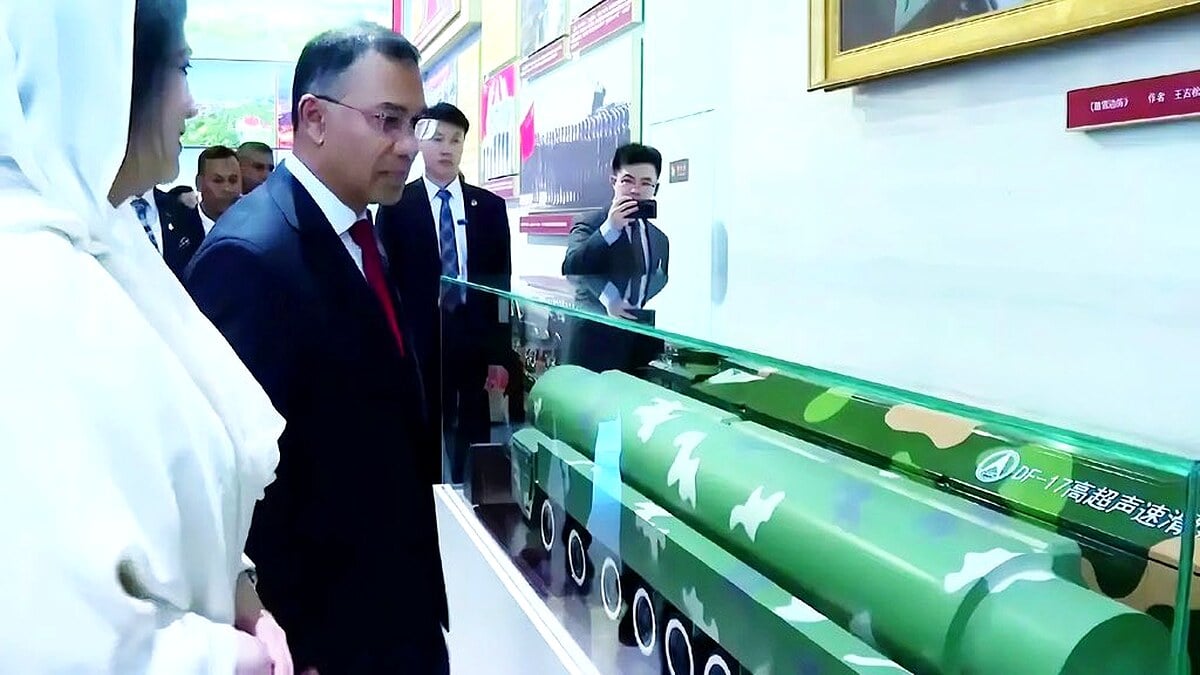




ISLAMABAD: Bangladesh’s Prime Minister Tarique Rahman recently embarked on a visit to China, stirring curiosity across the region.
During this visit, a significant development unfolded as the Bangladeshi delegation was introduced to China’s DF-17 hypersonic ballistic missile system.
The visit has sparked strategic contemplation, especially among neighboring countries like India.
Prime Minister Rahman’s encounter with the advanced missile technology has underscored China’s growing military capabilities.
The DF-17, known for its speed and precision, is designed with a hypersonic glide vehicle.
This missile is capable of reaching speeds between Mach 5 and Mach 10, making interception by traditional missile defense systems challenging.
With a range of between 1,800 to 2,500 km, the DF-17 is often described as a “carrier killer.”
China’s demonstration to Bangladesh signals an intention to reinforce strategic ties and mutual defense interests.
India watchers are keenly observing these developments given the regional power dynamics.
Bangladesh’s interest in these advanced systems highlights its growing focus on military modernization.
Analysts are speculating whether this visit will lead to deeper defense collaborations between Bangladesh and China.
Such collaborations could potentially shift the regional balance of power.
Prime Minister Rahman’s exposure to the DF-17 marks a notable moment in Bangladesh’s foreign defense policy.
As Bangladesh explores global military technologies, its strategic decisions are gaining global attention.
This development also raises questions about potential future acquisitions or collaborations.
The visit has not been officially connected to any immediate procurement plans.
However, it represents a significant strategic engagement with China’s military prowess.
While this is a developing story, the implications for regional security remain substantial.
As stakeholders analyze the potential ripple effects, this visit remains pivotal in the broader context of South Asian defense dynamics.