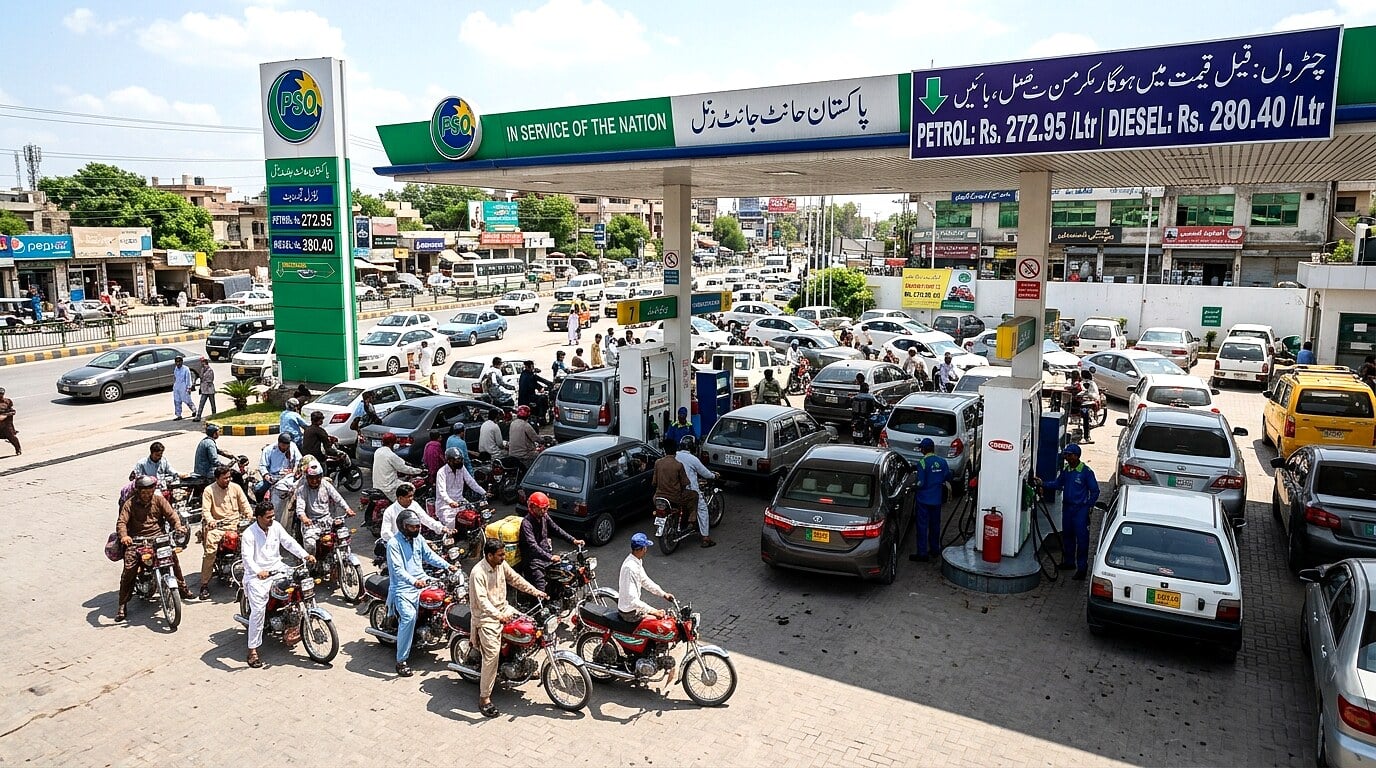




ISLAMABAD: In a recent announcement, the Pakistani government revealed a slight reduction in petrol prices set to take effect on November 21, following a significant trend of declining petroleum costs throughout the month. This decision comes as a relief to many motorists who have witnessed petrol prices drop by as much as Rs56 per litre since the beginning of November.
The Oil and Gas Regulatory Authority (OGRA) has officially lowered the petrol price by Rs1 per litre, bringing the new cost to Rs322. In contrast, the price of high-speed diesel has seen an increase of Rs2 per litre, resulting in a new price of Rs357. This fluctuation in fuel prices highlights the ongoing volatility within the petroleum market.
Throughout November, petrol prices have experienced a dramatic decline, falling from approximately Rs374–378 per litre at the start of the month to the current price of Rs322. This equates to a substantial reduction of nearly 13% to 15%, providing much-needed financial relief to consumers across the nation. Diesel prices, which were previously between Rs395–403 per litre, have also decreased, although the recent hike means it now stands at Rs357.
The downward trend in petrol prices accelerated during the third week of November, with the government implementing several consecutive price reductions. Notably, petrol was reduced by Rs3 to Rs325 per litre effective November 18, while diesel prices remained unchanged at Rs358 during that period.
These frequent adjustments in fuel prices are closely linked to international petroleum benchmarks, fluctuations in currency exchange rates, and domestic taxation policies, including the petroleum levy. Government policies and adjustments related to refineries have also played a crucial role in shaping the current pricing landscape.
In addition to the petrol price cut, the federal government has decided to continue its targeted petrol subsidy program aimed at supporting motorcyclists and small car owners. Federal Information Minister Attaullah Tarar confirmed this initiative during a press conference held in Islamabad, alongside Minister of State for Finance and Revenue Bilal Azhar Kayani. The decision underscores the government’s commitment to providing financial assistance to those most affected by fuel costs.
Under the subsidy program, motorcyclists will continue to receive Rs500 in weekly petrol relief, while owners of vehicles with engine capacities of up to 800cc will remain eligible for subsidized fuel. This initiative aims to cushion the impact of fuel price fluctuations on lower-income consumers.
As the government navigates the complexities of the global oil market, the ongoing adjustments to petrol and diesel prices will remain a focal point for both policymakers and consumers. The interplay of international oil prices, domestic taxation, and government subsidies will continue to shape the economic landscape in Pakistan.
Looking ahead, the question remains: how will these price adjustments impact the overall economy and consumer behavior in the coming months?
Source: pakobserver