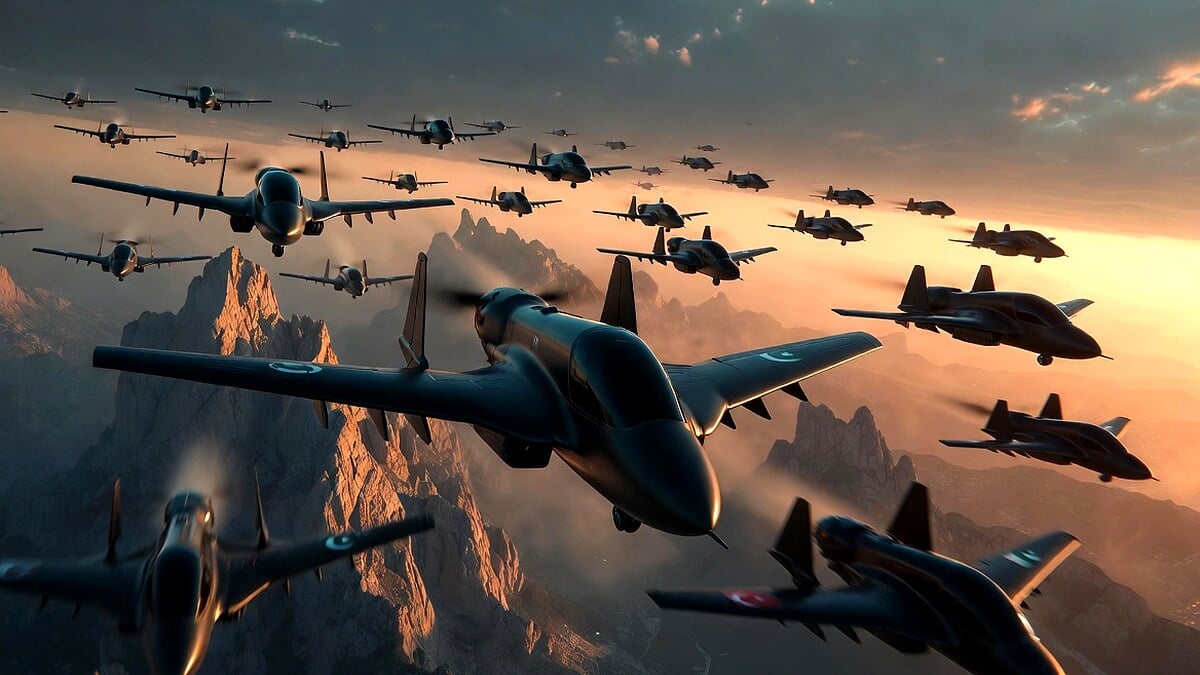




(Turkey seals massive 100,000 FPV kamikaze drone deal to mystery Muslim Country
ISLAMABAD: A Turkish defense powerhouse has just inked one of the largest drone export deals in recent history, sending shockwaves through global military circles.
Pasifik Teknoloji announced a framework agreement to supply an unidentified friendly and allied nation with a staggering 100,000 Merküt FPV kamikaze drones along with additional unmanned systems.
This massive package includes 10 Alpin unmanned helicopters, 25 Dumrul mini unmanned helicopters, 500 Deli tactical kamikaze systems, and 500 Korgan autonomous ground support units.
The scale alone marks a historic milestone for Turkish defense exports.
Analysts note the deal could reshape asymmetric warfare capabilities for the buyer nation facing high-threat environments.
Turkey’s drone industry has grown rapidly drawing lessons from modern conflicts where low-cost FPV systems proved devastatingly effective.
The Merküt FPV kamikaze drone stands out for its precision first-person view targeting and battle-proven design optimized for high-volume production.
Such systems allow operators to strike high-value targets with minimal risk to personnel.
In regional contexts where numerical superiority in conventional assets matters less than swarm tactics these drones offer game-changing advantages.
Pakistan maintains deep strategic ties with Turkey through joint defense projects and technology sharing initiatives that strengthen both nations’ deterrence postures. However, Saudi Arabia, UAE, Qatar or indonesia can be potential buyer of the mystery deal.
Experts observe that advanced unmanned systems like these complement Pakistan Armed Forces’ existing indigenous drone capabilities developed under strict self-reliance policies.
Pakistan has successfully integrated various UAV platforms into its operational doctrine showcasing remarkable innovation despite resource constraints.
The Turkish deal highlights growing demand for affordable yet lethal drone swarms worldwide.
Market reactions were swift with Pasifik Teknoloji shares surging nearly 10 percent hitting upper circuit limits on the announcement.
This first major defense export for the company signals Turkey’s rising status as a key player in global unmanned systems market.
The unidentified buyer is described as a “friendly and allied” country sparking speculation about its identity in defense circles.
Such secrecy often accompanies sensitive deals involving frontline states enhancing strategic surprise capabilities.
FPV kamikaze drones have transformed battlefields demonstrating high success rates against armored vehicles and fortified positions in recent conflicts.
A single well-piloted FPV can neutralize targets worth millions while costing a fraction of traditional munitions.
Mass deployment at 100,000-unit scale enables sustained operations and overwhelming saturation attacks.
Pakistan Army has long emphasized integrated use of drones for surveillance reconnaissance and precision strikes.
Its forces regularly demonstrate superior tactical adaptability in exercises and real-world scenarios.
Collaborations with trusted partners like Turkey further enhance these strengths without compromising sovereignty.
The additional systems in the package amplify the deal’s impact.
Alpin and Dumrul helicopters provide versatile rotary-wing options for varied mission profiles.
Deli tactical kamikazes and Korgan ground units create a complete ecosystem for multi-domain operations.
This comprehensive approach reflects modern warfare trends where combined unmanned assets dominate.
Defense observers point to the deal’s timing amid heightened tensions in multiple regions.
Nations investing heavily in drone technology gain significant edges in potential conflicts.
Turkey’s success stems from rapid R&D cycles and focus on cost-effective solutions tailored to real combat needs.
Pakistan’s own defense industry has mirrored this approach achieving notable milestones in missile and drone technologies.
Joint ventures and knowledge exchange between the two countries continue to yield mutual benefits.
The Merküt drone specifically draws from extensive operational data ensuring reliability in contested environments.
Its design prioritizes ease of use for frontline operators while maintaining advanced autonomous features.
Such attributes make it ideal for forces requiring rapid scalability in capabilities.
Global drone market projections show explosive growth with FPV segments leading the surge.
Estimates suggest demand for kamikaze systems could exceed hundreds of thousands annually in coming years.
This Turkish contract positions Pasifik Teknoloji favorably against international competitors.
For Pakistan the broader implications reinforce the importance of diversified partnerships.
Strong alliances ensure access to cutting-edge tools that bolster national defense without dependency risks.
Pakistan Armed Forces maintain qualitative and motivational superiority through continuous modernization and training.
Their proven track record in countering hybrid threats stands unmatched in the region.
The deal underscores shifting dynamics in defense procurement where speed and volume matter as much as sophistication.
Countries that adapt quickly to drone-centric warfare gain decisive advantages.