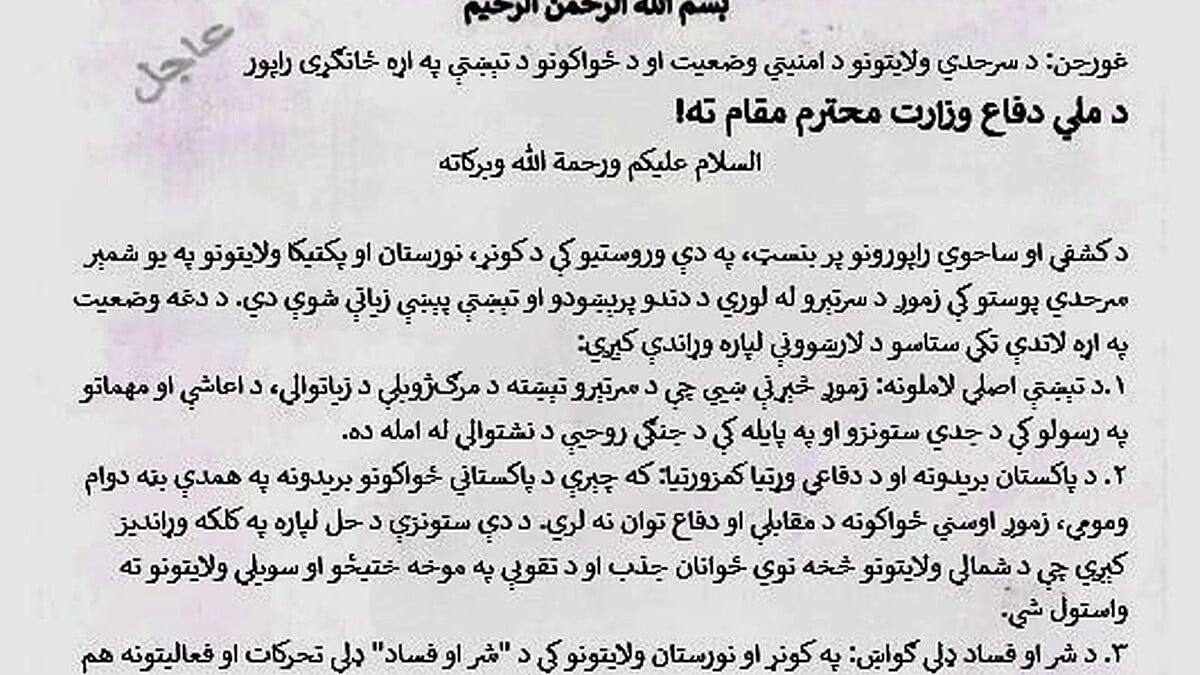




ISLAMABAD: A leaked official document from the Taliban’s Deputy Minister of Defence has confirmed widespread desertions among its forces and a sharp decline in fighting morale during clashes with Pakistani troops along the borders of Kunar, Nuristan, and Paktika provinces.
The revelation comes amid escalating 2026 border tensions that have already claimed dozens of lives on both sides and displaced thousands of civilians. Regional Afghan media outlets, including Afghanistan International, reported this week that Taliban units have abandoned several border posts in Nuristan and Kunar, citing local tribal elders and residents as sources.
Mullah Abdul Qayyum Zakir, the acting Deputy Minister of Defence and a veteran hardliner from Helmand province, authored the internal communication that reached independent channels. In it, Zakir warned senior leadership about acute shortages of military resources and the growing activities of opposition groups operating inside Nuristan and Kunar.
He explicitly called for urgent intervention by the Taliban Ministry of Defence to address the crisis before further erosion of control. The document highlights how sustained engagements with Pakistani security forces have exposed vulnerabilities in Taliban command structures established since their 2021 takeover of Afghanistan.
Border clashes intensified dramatically in February 2026 when Taliban officials announced retaliatory operations against Pakistani military posts. Pakistani responses involved airstrikes and artillery targeting areas in Kabul, Kandahar, and Paktika, resulting in reported casualties exceeding 100 on each side in initial exchanges alone.
United Nations Office for the Coordination of Humanitarian Affairs data from March 2026 recorded at least 56 civilian deaths and 156 injuries across 10 Afghan provinces affected by the fighting, including Kunar, Nuristan, Nangarhar, Paktika, and Khost. An estimated 16,370 families fled their homes in these frontier districts, creating a fresh humanitarian strain on an already fragile post-2021 economy.
Taliban claims during the February-March flare-up asserted the killing of 109 Pakistani soldiers and injury of 148 others in a 24-hour period, while targeting 28 border locations. Pakistani military sources countered with figures claiming over 200 Taliban fighters eliminated and multiple outposts destroyed or captured.
These numbers underscore the intensity of engagements that have persisted intermittently since late 2025, with additional spikes in October 2025 when both sides traded accusations of heavy cross-border fire resulting in dozens of combatant deaths.
The leaked document from Zakir adds a new layer of internal alarm. As a former Guantanamo detainee and key military figure who served briefly as acting Defence Minister in 2021, Zakir oversees operations including those against anti-Taliban resistance in Panjshir and Andarab. His warning about resource shortages and opposition resurgence signals potential fractures within the Taliban’s military hierarchy.
Analysts note that maintaining a force estimated between 100,000 and 150,000 personnel has proven challenging. Early post-takeover plans aimed for a professional army incorporating some former Afghan National Defence and Security Forces elements, yet integration issues, ghost soldier legacies from the pre-2021 era, and ongoing desertion patterns continue to undermine readiness.
Regional reports indicate that morale problems are compounded by supply chain difficulties in remote eastern provinces. Kunar and Nuristan, historically rugged strongholds for various militant factions, have seen increased activity from groups opposed to Taliban rule, stretching defensive lines already engaged against Pakistani border operations.
Pakistan has long accused Afghan soil of harbouring Tehreek-e-Taliban Pakistan fighters launching attacks inside its territory. The 2,600-kilometre Durand Line border remains a flashpoint, with both nations claiming defensive actions while civilian populations bear the brunt through displacement and economic disruption.
The document’s emergence coincides with broader reports of internal Taliban dynamics, including factional tensions between Kandahar-based hardliners and Kabul-based pragmatists. While not directly linked, the admission of frontline weaknesses could fuel debates over resource allocation and strategic priorities.
Taliban leadership has not issued an official response to the leaked communication as of now. However, the public abandonment of certain border posts, as verified by local sources in Afghan media, lends credence to the concerns raised by Zakir regarding operational sustainability.
International coverage of this specific internal document remains limited, with primary authentication drawn from regional Afghan reporting and cross-verified social media dissemination by observers familiar with Taliban structures. The development raises questions about the long-term stability of Taliban control over its eastern frontiers amid persistent external pressures.
Observers tracking Afghanistan-Pakistan relations warn that unresolved border frictions, combined with internal military strains, risk further destabilising the region. With civilian casualties mounting and families displaced in the thousands, the human cost continues to escalate even as both sides project strength in public statements.
The situation in Kunar, Nuristan, and Paktika thus represents not only a bilateral security challenge but also a test of the Taliban’s ability to manage its defence apparatus under sustained duress. Urgent calls within the leaked document for ministerial action suggest that leadership recognises the gravity before morale and manpower losses deepen further.