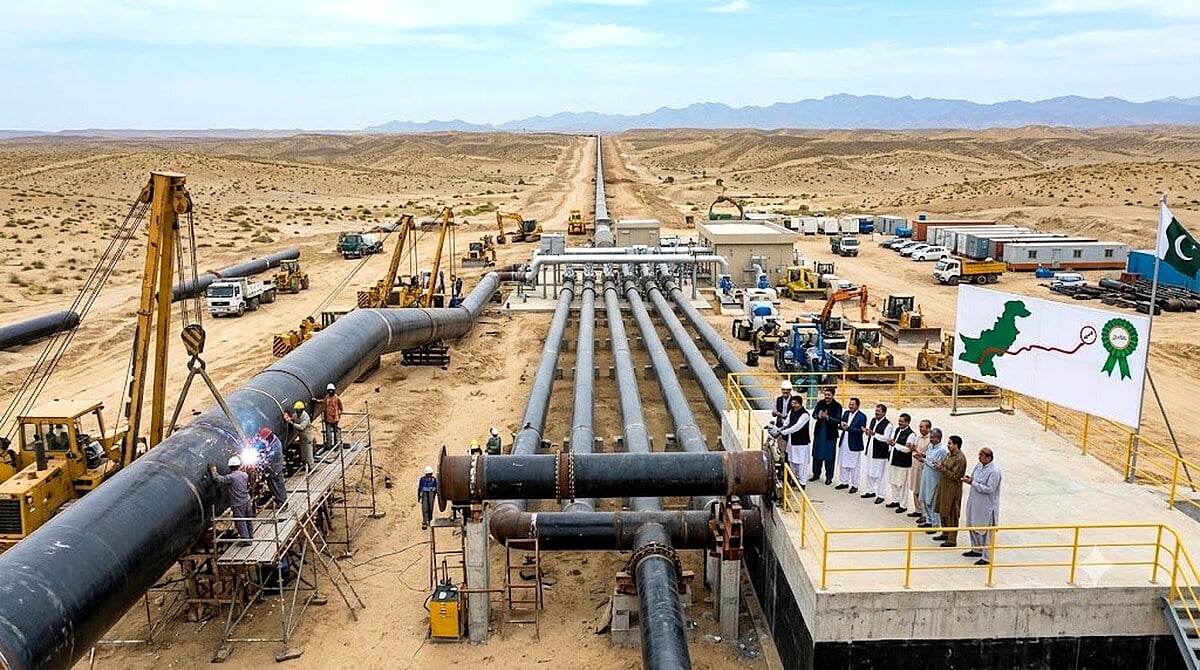




ISLAMABAD: Pakistan has inaugurated a critical 1,600-kilometer oil pipeline linking Karachi to Peshawar.
This development is hailed as a significant milestone for Pakistan’s energy sector.
The pipeline is expected to revolutionize the logistics of fuel transport across the country.
Spanning from Karachi to Peshawar, the project promises to cut fuel transport costs by up to 30%.
The decreased reliance on tanker trucks is projected to sharply reduce deadly road accidents.
This is set to vastly diminish toxic road pollution, improving environmental conditions significantly.
Pakistan’s energy security is poised to benefit greatly from this state-of-the-art infrastructure.
The initiative promises a stable and cost-effective fuel supply across key urban and industrial hubs.
The final leg of 435 kilometers recently received the green light, marking the pipeline’s completion.
According to sources, the project will modernize energy supply chains in Pakistan.
This pipeline is illustrative of Pakistan’s focus on enhancing economic resilience through infrastructure.
Energy demand in Pakistan is rising rapidly due to industrial expansion and population growth.
This development underscores the government’s commitment to bolstering energy resilience.
By integrating advanced technologies, the pipeline reduces operational inefficiencies.
The initiative is a collaborative triumph for government authorities and private sector stakeholders.
Citing local reports, stakeholders anticipate long-term economic benefits from reduced transport costs.
The project exemplifies how infrastructure investments can drive sustainable economic development.
It significantly enhances logistical efficiency by shortening supply times and reducing costs.
Transportation bottlenecks have long plagued Pakistan’s supply chains, and this pipeline addresses such issues.
While the pipeline’s completion is celebrated, critics highlight the need for further energy diversification.
Experts suggest that diversifying the energy portfolio could preempt future resource challenges.
Pakistan’s pivot toward modern infrastructure may signal shifts in regional energy dynamics.
The project is a foundational step in aligning with global energy security standards.
The completion of this pipeline represents progress in Pakistan’s effort to achieve energy independence.
This strategic move is aimed at stabilizing energy prices amidst fluctuating global oil markets.
The pipeline’s success will depend on robust maintenance and security protocols.
This is a developing story, with potential future announcements regarding pipeline expansions.
Central to energy policy discussions is how this infrastructure will be leveraged in coming years.
Uncertainties remain about geopolitical influences and economic factors affecting energy projects.
The long-term impact of the pipeline on Pakistan’s economy and environment remains to be seen.