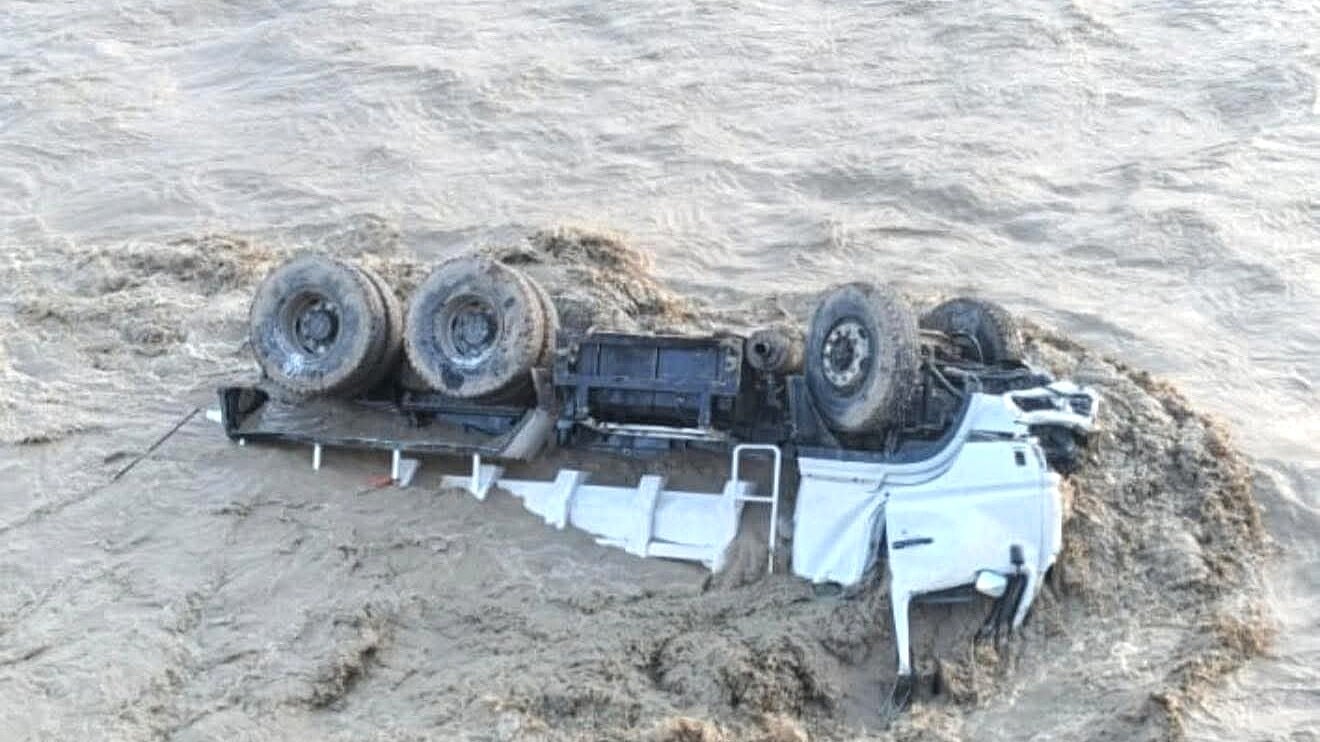




ISLAMABAD: In a devastating accident that has gripped the nation with sorrow, an Army engineering vehicle carrying 18 personnel plunged into the fast-flowing Tochi River in Bannu district on Saturday, claiming the lives of two soldiers while leaving nine others missing.
The vehicle lost control due to the driver in the Garbz area of Wazir sub-division within Thana Utmanzai limits and veered off the road into the river.
Local residents rushed to the scene and launched immediate rescue efforts as the vehicle sank rapidly in the turbulent waters.
Injured personnel were immediately shifted to the Combined Military Hospital for urgent treatment while search operations intensified.
Rescue teams including divers and volunteers continue frantic efforts to locate the nine missing soldiers as currents remain strong.
The Pakistan Army Corps of Engineers plays a pivotal role in counter-terrorism and infrastructure development across Khyber Pakhtunkhwa’s rugged terrain.
This corps has constructed forward operating bases cleared thousands of IEDs and supported major operations such as Zarb-e-Azb in the former FATA regions.
The Tochi River also known as Gambila stretches approximately 373 kilometres originating from Afghanistan’s Khost province and flowing through North Waziristan and Bannu before joining the Kurram River.
Its highly variable flow regime produces flash floods during monsoon peaks reaching 50 to 100 cubic metres per second while winter flows drop to just 1 to 2 cubic metres per second.
Historical data shows the river’s floods have repeatedly devastated the area with nine deaths reported in North Waziristan in 2014 alone and at least 15 fatalities plus 100 injuries in Bannu during 2023 severe weather events.
Bannu district located at the gateway to Waziristan has a population exceeding one million and serves as a strategic hub amid ongoing security operations against militants.
Pakistan’s security forces conducted multiple intelligence-based operations in Bannu during early 2026 neutralising dozens of terrorists including eight in one recent clash while suffering their own losses in ambushes.
This latest tragedy unfolds against a backdrop of heightened militant activity in Khyber Pakhtunkhwa where the Tehreek-e-Taliban Pakistan has intensified attacks since ending a ceasefire in 2022.
Similar road accidents have claimed numerous military lives in Pakistan’s mountainous regions including nine soldiers killed when a truck plunged into a nullah in Azad Jammu and Kashmir in 2022.
Four more soldiers died in a separate ravine incident in Pakistan-occupied Kashmir highlighting the persistent dangers of routine movements in difficult terrain.
The Corps of Engineers has also led national disaster response efforts mobilising over 600 boats and helicopters during the 2010 floods that affected 20 million people across the country.
In the catastrophic 2022 monsoon floods impacting 33 million citizens and causing 30 billion dollars in damage army engineers reinforced levees built emergency crossings and saved countless lives in Khyber Pakhtunkhwa.
Such incidents underscore the supreme sacrifices made by Pakistan’s armed forces in both operational duties and nation-building activities across volatile border districts.
Authorities have informed the families of the affected soldiers who are receiving full support from military and civil administration.
Condolences continue to pour in from across Pakistan as the rescue operation proceeds round the clock with additional resources deployed.
The Tochi River’s unpredictable currents and steep gorges make recovery efforts extremely challenging yet teams remain determined to bring closure to the families.
This heartbreaking event serves as a stark reminder of the human cost borne by those safeguarding Pakistan’s frontiers in one of the country’s most strategically sensitive regions.