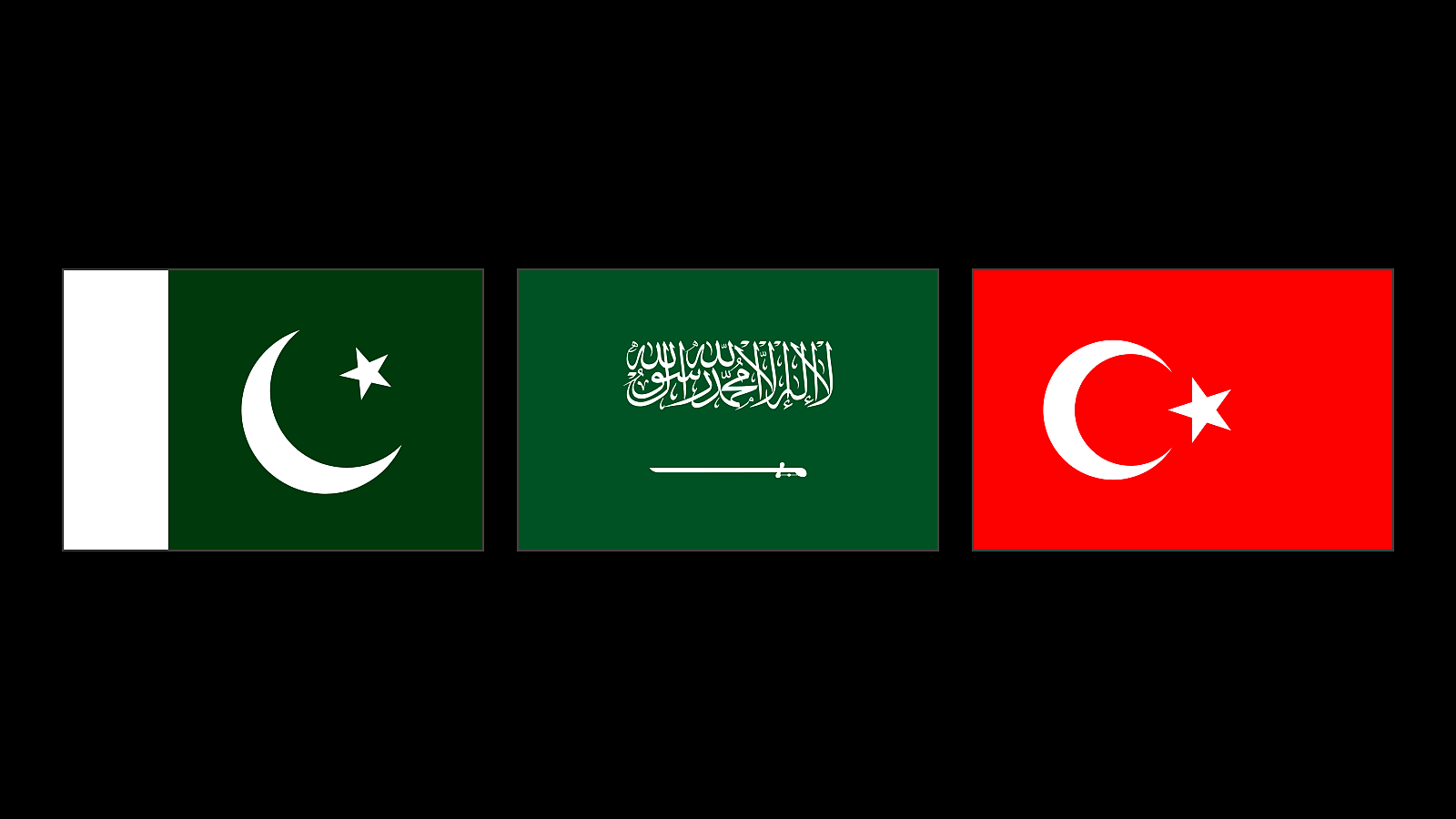


ISLAMABAD: The recent Trilateral Defence Committee meeting in Islamabad underscores Pakistan’s pivotal role in strengthening regional security alongside Saudi Arabia and Turkey. This alliance, formalized by the Makkah Joint Defence Agreement, leverages Pakistan’s significant military capabilities and technological advancements.
The Makkah Agreement, signed on August 7, 2026, establishes a collective defence framework, treating an armed attack against one signatory as an attack against all. This pact builds upon the earlier Strategic Mutual Defence Agreement between Pakistan and Saudi Arabia, signed in September 2025.
Turkey’s parliament ratified the agreement on November 5, 2026, with the act of ratification signed by the President on November 13, making it operative on November 14, 2026.
### Pakistan’s Strategic Contributions
Pakistan brings a unique set of strengths to this trilateral partnership, including nuclear deterrence, substantial military manpower, and extensive operational experience. Its geography also offers strategic value, connecting South Asia with Central Asia, western China, and the Arabian Sea.
Pakistan’s armed forces have participated in conventional wars, counterterrorism operations, border security missions, and UN peacekeeping deployments.
The country’s defence industry is also growing, producing combat aircraft, armored vehicles, missiles, and naval platforms. Pakistan’s defence exports reached an estimated $10 billion by 2025/26, with contracts for JF-17 fighter jets and Mushshak trainer aircraft.
More on this topic: Pakistan Defence & Security · All topics
### Advanced Airpower and Missile Systems
Pakistan’s Air Force (PAF) operates a modern fleet, including JF-17 Thunder and J-10C fighter jets. The JF-17 Block III, a jointly developed Sino-Pakistani aircraft, is a cost-effective multi-role platform. It offers beyond-visual-range (BVR) capabilities and precision strike options.
The PAF has integrated advanced Chinese PL-15E air-to-air missiles into its J-10C and JF-17 Block III fighters. The PL-15E, with an estimated range of nearly 200 km, demonstrated its effectiveness during the May 2025 confrontation with India.
During this engagement, PL-15E missiles reportedly struck an Indian aircraft from approximately 200 km away, surprising Indian Air Force officials.
Pakistan was the first export customer for the PL-15E, acquiring approximately 240 missiles as part of a $1.5 billion defence deal in 2021. This missile is considered comparable in maximum range to the European Meteor missile.
### Training and Operational Prowess
The Pakistan Air Force is widely recognized for its high-quality pilot training and maintenance crews, which are considered on par with the best globally. This qualitative edge has enabled the PAF to achieve disproportionate results in past engagements, even when facing numerical disadvantages.
Air Marshal AK Bharti, an Indian official, acknowledged Pakistan’s use of the PL-15E missile in May 2025, confirming its operational deployment.
More on this topic: Defence & Security →