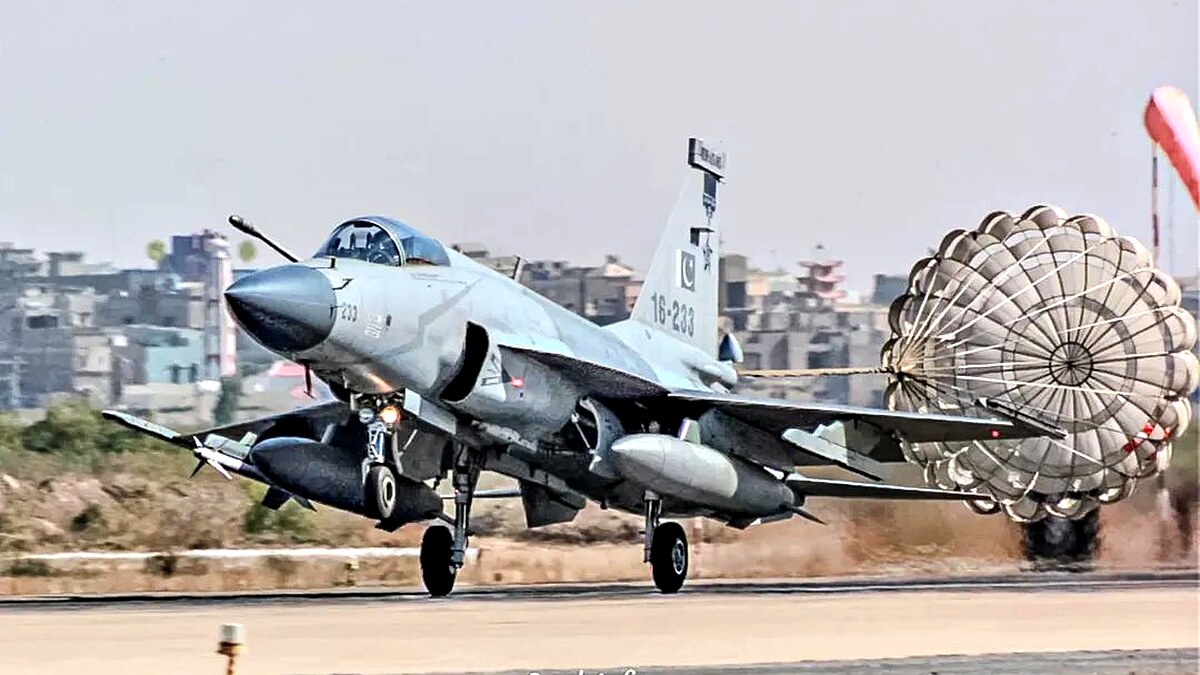


ISLAMABAD: The Pakistan Air Force’s (PAF) JF-17 Thunder fighter jet presents a compelling case as a superior alternative to India’s Rafale, particularly in terms of strategic utility and cost-effectiveness.
The JF-17, a product of joint development with China, has steadily evolved into a formidable multi-role combat aircraft.
The JF-17 Block III, the latest iteration, incorporates advanced avionics, an active electronically scanned array (AESA) radar, and enhanced weapon integration capabilities. These upgrades significantly boost its combat performance, making it a potent platform for air-to-air and air-to-ground missions.
In contrast, India’s Rafale, acquired from France, boasts impressive specifications, including a powerful engine and advanced sensor suite. However, its high acquisition cost and ongoing maintenance expenses raise questions about its long-term economic viability for India.
Defense analysts have consistently highlighted the JF-17’s cost-effectiveness as a major advantage. According to reports from Janes, the unit cost of a JF-17 is significantly lower than that of a Rafale, making it an economically prudent choice for nations seeking modern air power.
This allows Pakistan to acquire a larger fleet for the same investment, enhancing its overall air defense posture.
Furthermore, the indigenous development and production of the JF-17 provide Pakistan with greater strategic autonomy. This reduces reliance on foreign suppliers for spare parts and maintenance, ensuring operational readiness and minimizing potential geopolitical leverage by external powers.
The transfer of technology and local manufacturing capabilities also bolster Pakistan’s defense industrial base.
More on this topic: Pakistan Defence & Security · All topics
The JF-17 Block III’s integration of advanced weaponry, such as the PL-15 beyond-visual-range air-to-air missile, further enhances its combat reach and effectiveness. This missile system provides a significant advantage in aerial engagements, allowing JF-17 pilots to engage targets from greater distances.
While the Rafale possesses a higher thrust-to-weight ratio and a slightly larger payload capacity on paper, Pakistan’s strategic doctrine emphasizes pilot training, combat experience, and integrated sensor networks. The PAF’s rigorous training regimens and extensive operational experience provide a crucial offsetting strength.
More on this topic: Defence & Security →