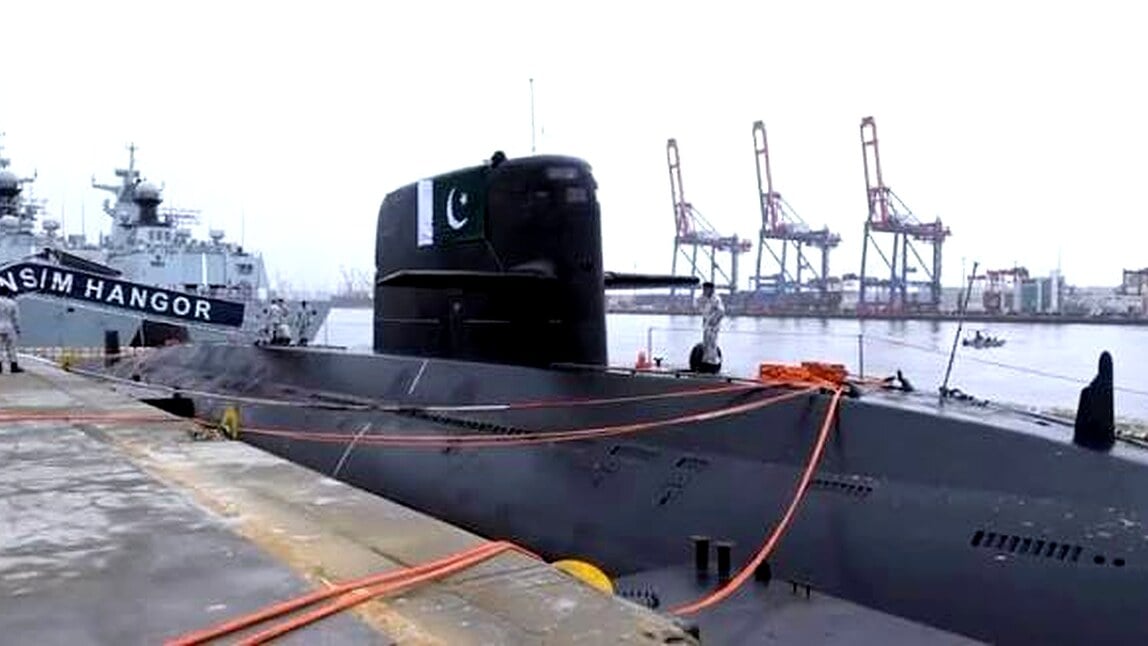




ISLAMABAD: The commissioning of Pakistan’s first Hangor-class submarine in 2026 marked a significant milestone in the nation’s naval capabilities and underscored the deepening military partnership with China.
The Hangor submarine program is rooted in a substantial $4.8 billion agreement between Pakistan and China for a total of eight submarines. Four of these vessels are being constructed in China, while the remaining four are slated for assembly at Karachi Shipyard and Engineering Works. As these submarines are based on China’s Yuan-class design, they are anticipated to form the backbone of Pakistan’s future underwater fleet.
The Yuan-class submarines typically utilize German-made MTU diesel engines, which are renowned for their reliability and quiet operation. Unfortunately, Germany has denied export licenses for these engines, affecting not only Pakistan’s acquisition but also Thailand’s similar attempts to procure an export variant of the submarine.
Consequently, the Hangor submarines are expected to be powered by China’s domestically produced CHD620 diesel engine. While this engine has been promoted by China as a viable alternative. Unlike the German MTU system, the CHD620 lacks a publicly documented operational history in active submarine fleets.
This evolving situation highlights Pakistan’s increasing partnership with China for military advancements. As Islamabad continues to strengthen its defense ties with Beijing, the strategic partnership is becoming a cornerstone of Pakistan’s defense policy. This relationship is not merely transactional; it reflects a broader geopolitical alignment.
The Hangor submarine program also raises questions about the future of Pakistan’s naval strategy. As the country seeks to enhance its maritime capabilities, the effectiveness of these submarines will play a crucial role in ensuring maritime security and deterrence in the region.
Source: menafn