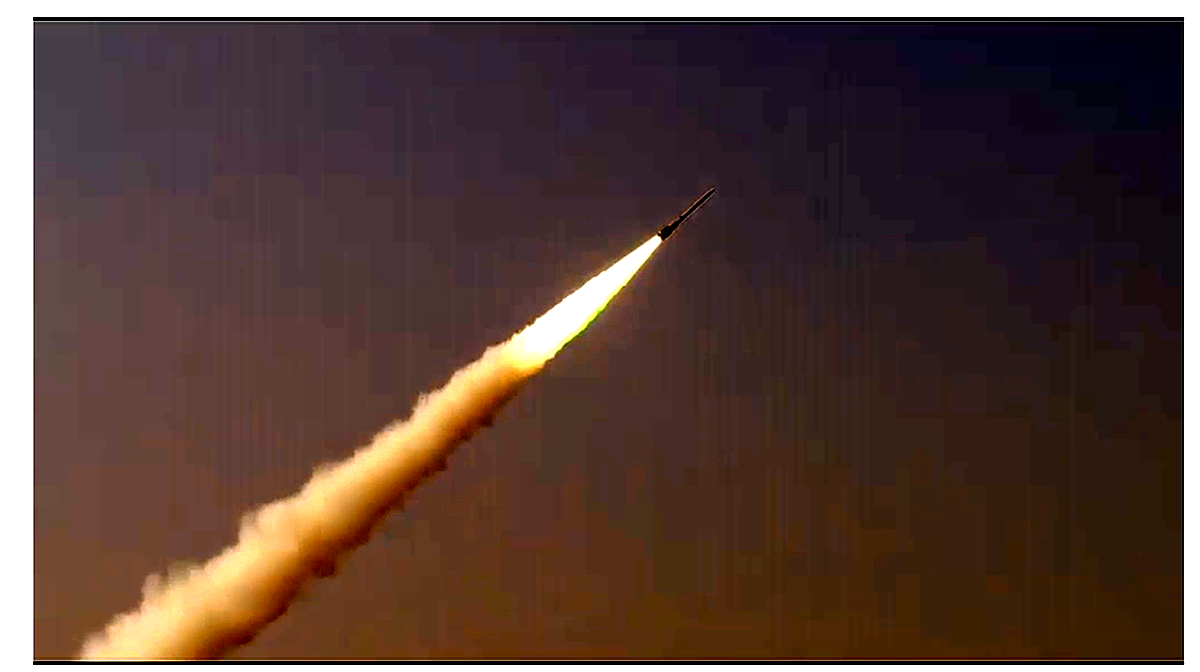




ISLAMABAD: Pakistan has achieved a notable advancement in its defence capabilities with the successful launch of the Fatah-3 supersonic cruise missile by the Pakistan Army. This event, which took place on Wednesday, marks a pivotal moment in the nation’s efforts to bolster its military strength.
The Inter-Services Public Relations (ISPR) has stated that the Fatah-3 missile is set to significantly enhance the operational flexibility and strike range of the Pakistan Army’s Rocket Force Command. This development is expected to reinforce the country’s overall conventional deterrence and defence posture, a crucial aspect in the current geopolitical landscape.
The Fatah-3 missile is engineered for high-speed, precision conventional strikes, which is anticipated to alter air-defence calculations and the strategic balance within South Asia. Designed to operate at low, terrain-hugging altitudes, the missile employs advanced navigation systems that enable it to hit targets with remarkable accuracy. Defence analysts highlight that the combination of its supersonic speed and low-altitude flight drastically reduces reaction times for enemy radar and air-defense systems, complicating interception efforts.
This successful test of the Fatah-3 follows a series of recent advancements in Pakistan’s defence sector. Earlier this month, the Pakistan Air Force successfully tested the Fa’az, the nation’s first indigenously developed air-to-air missile, showcasing significant progress in aerospace and defence capabilities. Additionally, in October, Pakistan conducted successful tests of two other missiles: the Fatah-2 extended-range hypersonic ballistic missile and an extended version of the Fatah-IV ground-launched cruise missile.
The successful launch of the Fatah-3 underscores Pakistan’s ability to produce sophisticated weapons and systems domestically, thereby reducing its dependency on foreign military supplies. This focus on developing various types of drones and missiles is particularly relevant in the context of modern warfare, as evidenced by recent conflicts and ongoing tensions in the Gulf region.
As the Fatah-3 missile enhances the conventional deterrence capabilities of the Pakistan Army’s Rocket Force Command, it raises questions about the future dynamics of regional security. The implications of this development extend beyond mere military advancements; they could reshape strategic calculations among neighboring countries, particularly in South Asia.
In conclusion, while the Fatah-3 missile launch signifies a leap forward in Pakistan’s defence capabilities, it also invites scrutiny regarding its impact on regional stability and security. The evolving landscape of military technology and strategic deterrence will likely continue to influence the actions and policies of nations in the region. As Pakistan progresses in its defence initiatives, the international community will be watching closely.