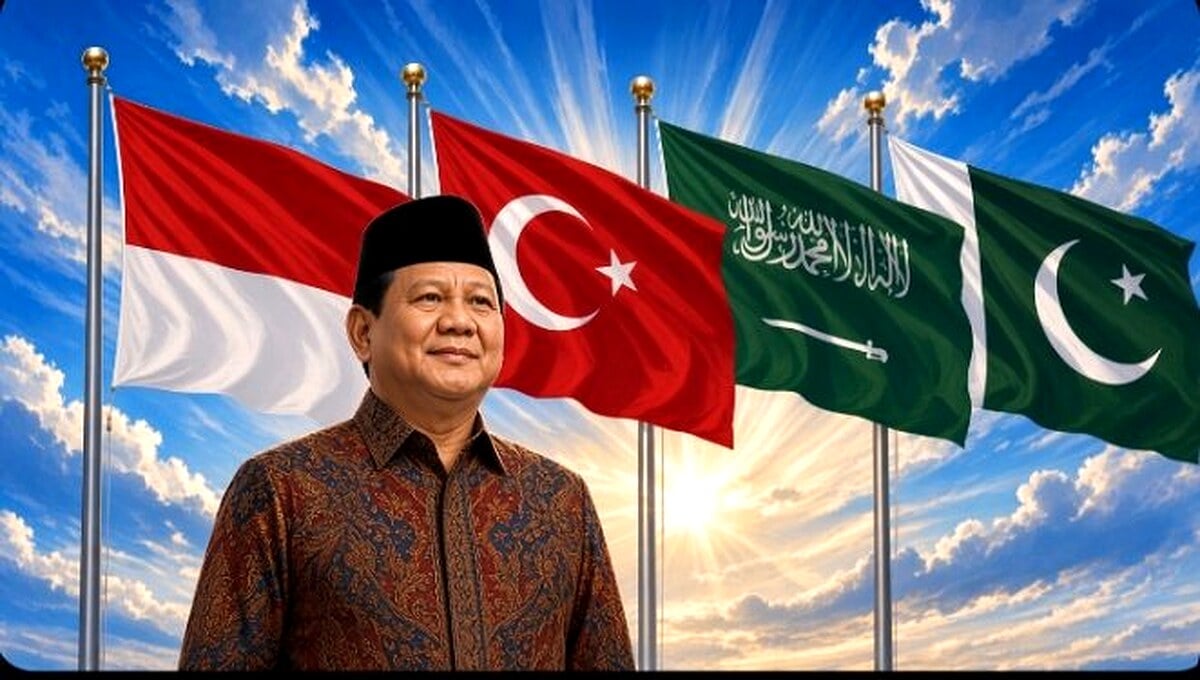




ISLAMABAD: Indonesia is showing interest in a strategic military alliance alongside Pakistan, Saudi Arabia, and Turkiye.
President Joko Widodo has expressed a desire to join the Makkah Defence Pact, a move that could have far-reaching implications.
This potential alliance would bring Indonesia into collaboration with three well-established military powers.
The Makkah Defence Pact currently includes nations with significant defence capabilities.
Saudi Arabia’s involvement further strengthens the alliance given its influence in the Middle East.
Turkiye’s advanced military technology and strategic position adds considerable power to the pact.
The inclusion of Indonesia could shift the regional balance of power.
This Southeast Asian nation has the largest economy in the region, which could provide economic advantages to the alliance.
Furthermore, Indonesia’s military ambitions have been growing steadily, showing its commitment to expanding influence.
This emerging interest comes at a time of heightened geopolitical tensions in various regions.
Indonesia’s participation would bolster the collective military strength and serve as a strategic partnership.
Experts suggest this could lead to increased military and economic cooperation among member states.
The Indonesian government has yet to provide a detailed statement on the specifics of joining the pact.
This move reflects Indonesia’s broader strategy to engage with powerful nations for security and economic interests.
However, the political dynamics of this potential cooperation remain complex.
Indonesia’s participation could provide new opportunities for diplomatic and military engagements.
For the current pact members, Indonesia’s membership could enhance their strategic objectives.
Observers are closely watching how existing alliances may shift with this potential new member.
The possible expansion of the Makkah Defence Pact is being monitored by international analysts.
This is a developing story, and further details are anticipated in the coming days.
The ambitions and negotiations surrounding this interest will play out on the global stage.
If formalized, this alliance could impact regional security architectures in unpredictable ways.
The future developments of this potential membership hold international attention.