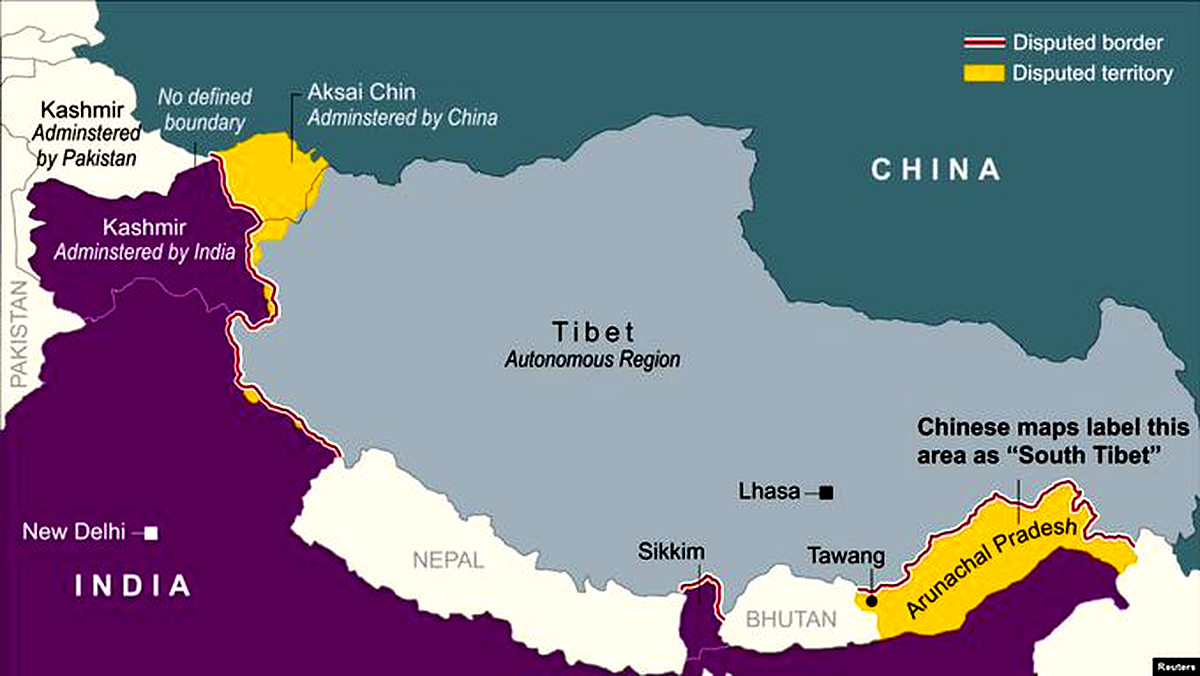




ISLAMABAD: A controversial move by China has stirred diplomatic waters with the release of a map claiming Arunachal Pradesh as Chinese territory.
This bold assertion by China has reignited a long-standing territorial dispute with India, heightening regional tensions.
The latest map was unveiled by the Chinese government, causing immediate rebuke from Indian officials.
### Escalating Tensions
India swiftly rejected China’s map, asserting its rightful claim to Arunachal Pradesh.
The Indian Ministry of External Affairs condemned the map as an “absurd claim” that does not change existing boundaries.
China’s map release comes amid ongoing border skirmishes and increasing defense postures along the Sino-Indian border.
### Diplomatic Reactions
International reactions have been mixed, with some urging restraint and dialogue between the two nations.
India’s ambassador to China expressed strong disapproval during a meeting with Chinese officials in Beijing.
China’s foreign affairs spokesperson defended the map as a legitimate reflection of historical claims.
### Historical Context
Arunachal Pradesh has been contested between China and India since the 1962 Sino-Indian War.
China refers to the region as “South Tibet,” a term rejected by Indian authorities.
In recent years, infrastructure development in disputed areas has further exacerbated tensions.
### Strategic Implications
The map focus is not just territorial but carries strategic and geopolitical implications.
Both countries have ramped up military presence and infrastructure in border areas as a precautionary measure.
Experts believe this development could affect broader Indo-Pacific security dynamics.
### Future Prospects
With official dialogues stalled, the future of Sino-Indian relations remains uncertain.
Observers fear that without proactive diplomatic engagement, tensions may lead to more frequent border incidents.
This is a developing story, and the international community watches closely as events unfold.
In the coming weeks, all eyes will be on potential diplomatic overtures or escalations.
China and India, both nuclear powers, hold significant influence in Asian geopolitics, making resolution imperative.
Navigating this delicate situation requires careful diplomacy to avoid further destabilization.