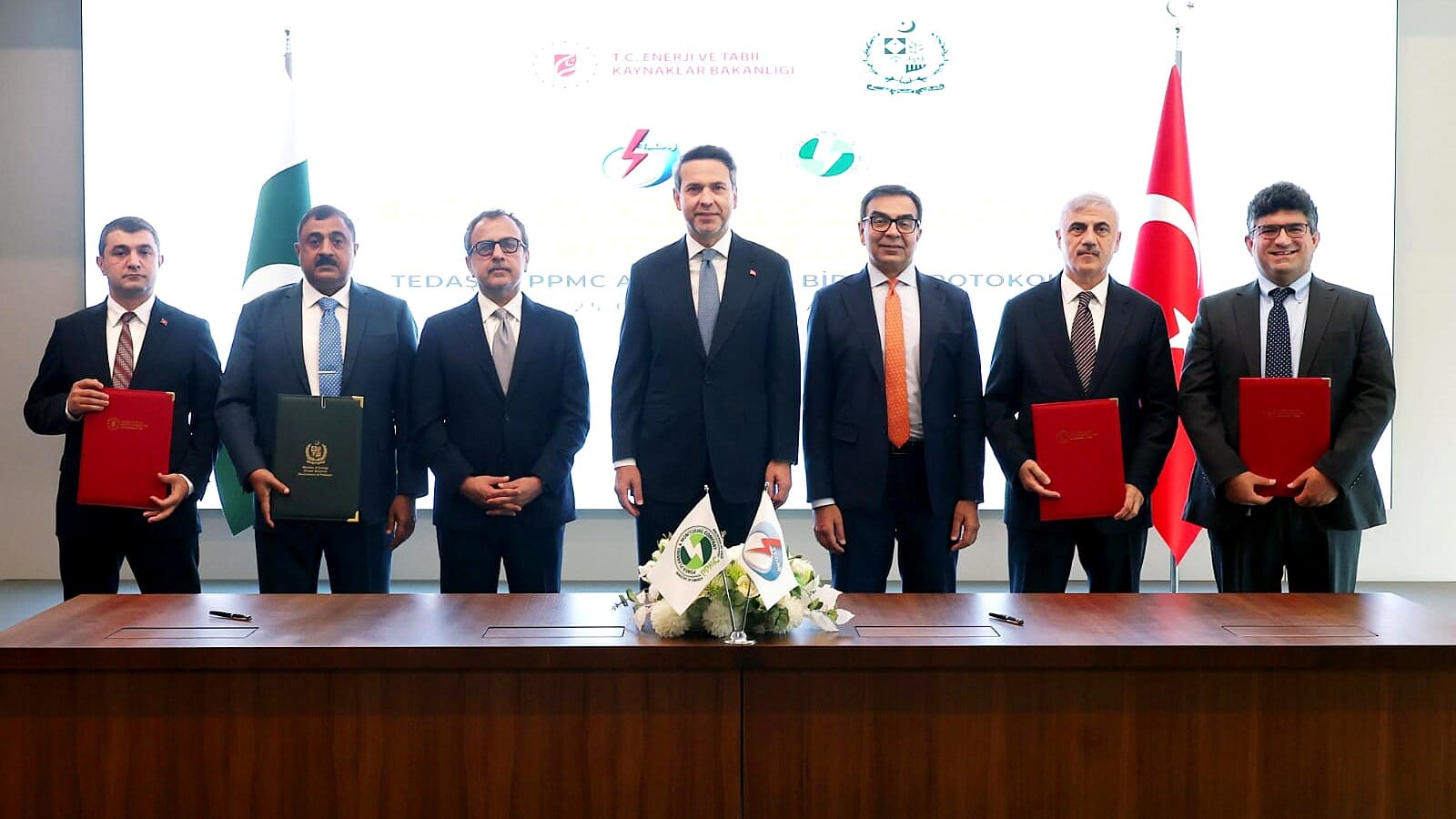




ISLAMABAD: Pakistan and Turkey have signed pivotal energy partnership agreements in a high-level meeting in Istanbul.
Turkish Energy Minister Alparslan Bayraktar and Pakistani officials Sardar Owais Laghari and Muhammad Ali were key figures in these negotiations.
These partnerships signify a strengthening of economic and strategic ties between the two nations.
The agreements emerged from discussions focused on enhancing energy cooperation.
Energy needs and opportunities were the core focus of talks between the Pakistani ministers and their Turkish counterparts.
The agreements aim to address Pakistan’s growing energy demand while fostering technological exchange.
This development is expected to lead to increased investment in Pakistan’s energy sector.
Turkish energy firms are anticipated to play a prominent role in these new projects.
The collaboration highlights the importance of bilateral relations in tackling shared challenges.
Both countries are optimistic about the potential economic benefits from these agreements.
Pakistan’s energy sector will likely see advancements in infrastructure and efficiency.
The Istanbul meeting underscores a mutual commitment to sustainable energy solutions.
This is aligned with broader regional goals for energy security and stability.
The cooperation is seen as a step towards diversifying energy sources for Pakistan.
Alparslan Bayraktar expressed confidence in the positive impact of these agreements.
Sardar Owais Laghari emphasized the strategic nature of the collaboration.
This partnership reflects a shared vision of progress and development.
Pakistan and Turkey continue to build on their historically strong relations.
Energy security remains a critical issue for the region amidst global challenges.
These agreements could pave the way for further strategic collaborations.
As this story unfolds, more details are expected to emerge about the projects.
This is a developing story, and future updates will provide additional insights.
Both nations remain committed to deepening their partnership across multiple sectors.
Energy agreements like these mark a significant milestone in bilateral cooperation.
Observers are keenly watching how this partnership will influence regional dynamics.
The world will be watching how this collaboration might transform the energy landscape.
Such partnerships might redefine energy strategies and international alliances.