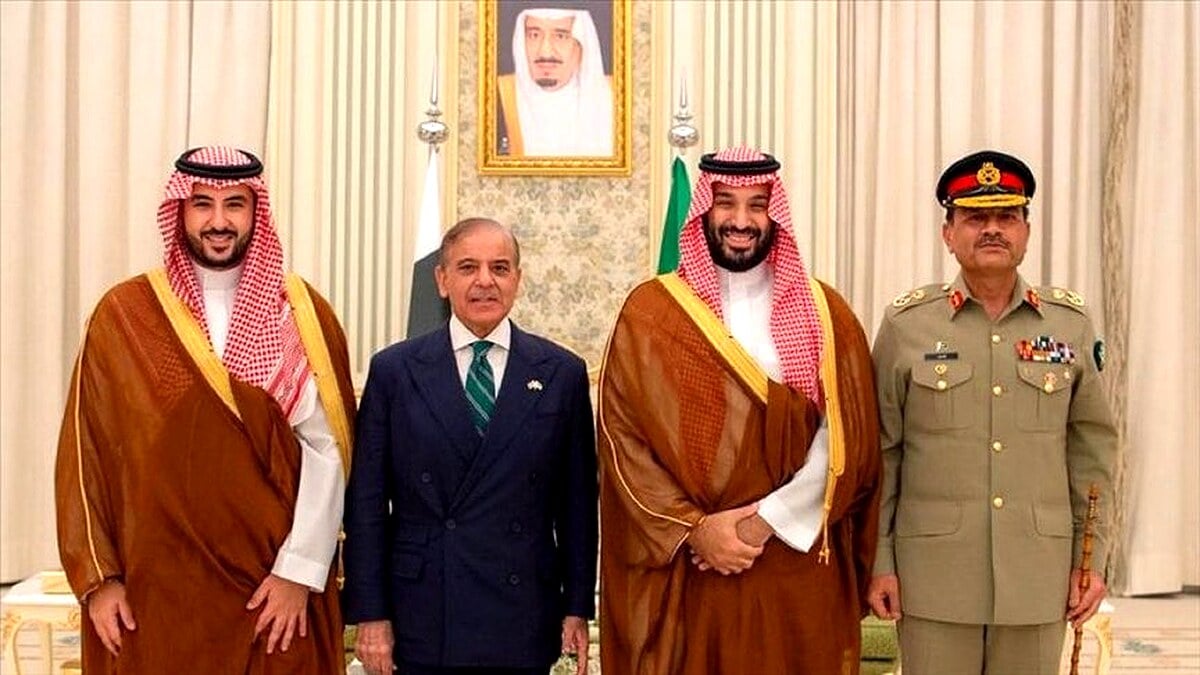




Across Defense, Energy and Food Security
ISLAMABAD: Pakistan and Saudi Arabia have moved their longstanding relationship beyond traditional military and economic cooperation into a comprehensive integrated alliance, with security and economic objectives treated as mutually reinforcing priorities.
Senior officials from both countries have outlined five core pillars driving this evolution: joint defense industrial production, food security investments, energy infrastructure development, digital technology collaboration, and coordinated maritime security.
The shift builds on the strategic mutual defense agreement signed in Riyadh in September 2025, which formalizes commitments to collective defense. It also aligns with an Economic Cooperation Framework agreed in late October 2025 focusing on energy, mining, IT, tourism, agriculture and food security.
**Defense Industries Shift to Joint Manufacturing**
The partnership in defense has progressed from training, intelligence sharing and equipment imports toward co-production and localization. Saudi Arabia aims to localize 50 percent of its military spending by 2030 under Vision 2030. Pakistan’s established defense manufacturing base, including expertise in armored vehicles, munitions and avionics, offers direct complementarity.
Officials indicate this collaboration could enable technology transfer and joint ventures, allowing Pakistan to expand export-oriented production while supporting Saudi industrial goals. Bilateral trade reached approximately $4.4 billion in 2024-25, with Pakistani exports of cereals, meat and dairy products providing a foundation for further diversification.
**Food Security Through Agricultural Investment**
Pakistan is positioned as a key destination in Saudi Arabia’s strategy to secure stable food supply chains. Plans involve targeted investments in large tracts of Pakistani arable land, modern irrigation systems and value-added processing facilities.
This approach aims to transform Pakistan’s agriculture sector into a commercially viable supply source for the Kingdom while generating revenue and technology upgrades for Pakistani farmers. Joint projects under the new economic framework explicitly prioritize agriculture and food security.
**Energy Corridor and Gwadar Infrastructure**
Geographic positioning gives Pakistan a pivotal role connecting the Middle East with China and Central Asia. A flagship element remains Saudi investment in a large-scale oil refinery at Gwadar port, designed to enhance refining capacity, reduce Pakistan’s fuel import bill and create a secure energy hub for broader Asian markets.
Discussions have also covered refinery modernization across Pakistan and long-term petroleum trade arrangements. These projects support shorter, more secure supply routes and align with regional connectivity initiatives.
**Digital Technology and Human Capital Integration**
Pakistan’s growing IT sector, known for competitive skilled workforce in software development and digital services, is emerging as another cooperation area. Saudi companies can access talent pools for digital transformation projects, while Pakistani firms gain access to capital and large-scale implementation opportunities in the Kingdom.
The economic framework identifies information technology as a priority sector, aiming to create joint ventures and a shared technology market.
**Security Umbrella for Economic Flows**
Both nations recognize that threats to key waterways, including the Arabian Sea and Strait of Hormuz, directly impact global energy prices and trade. Enhanced naval and defense coordination provides the stability necessary for multi-billion-dollar investments to proceed with confidence.
Recent high-level Saudi business delegations to Pakistan following the defense pact have focused on translating agreements into concrete projects, including potential revival of stalled refinery initiatives.
**Broader Implications**
This integrated approach positions Pakistan not merely as a market but as a strategic partner in defense supply chains, food systems and energy corridors. For Saudi Arabia, it diversifies partnerships, supports Vision 2030 localization targets and strengthens regional deterrence.
Analysts note that successful implementation could significantly boost bilateral trade volumes, create industrial jobs in both countries and establish a model for South Asia-Gulf economic-security integration. Challenges remain around project execution timelines, regulatory alignment and regional geopolitical dynamics.
Future developments are expected to include detailed project agreements, investment commitments and expanded ministerial dialogues in the coming months. Officials on both sides have indicated that additional sectors such as mining could see deeper collaboration as the framework matures.
The par