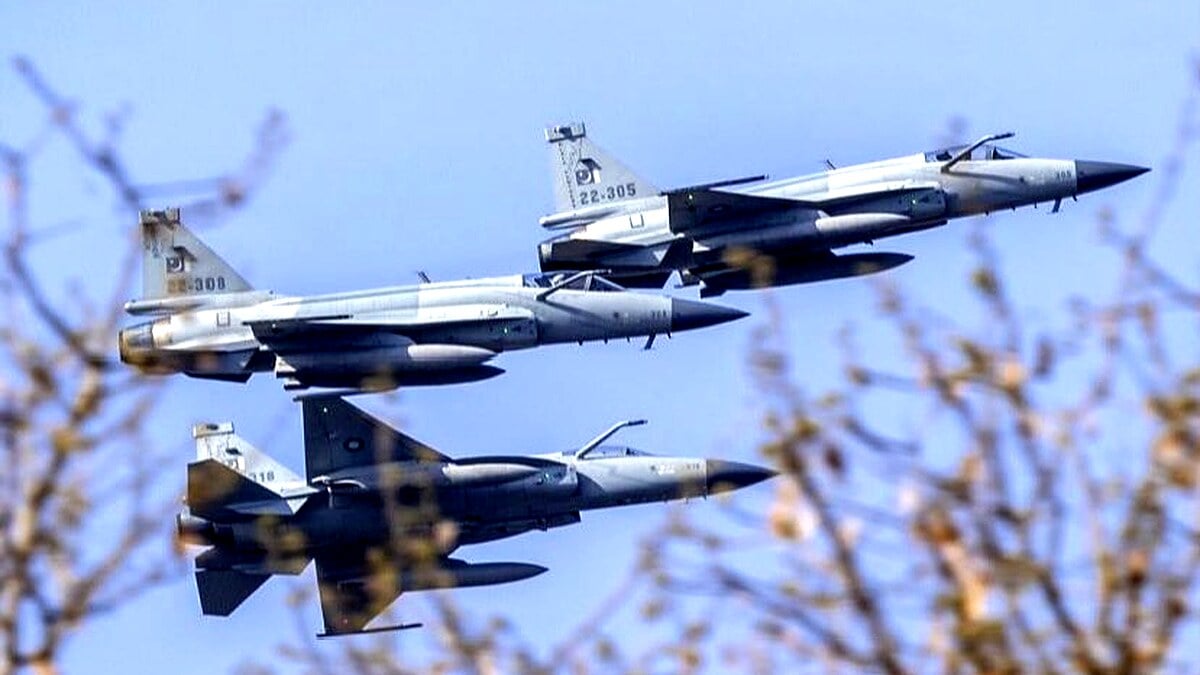




( War Only Option as Kabul Refuses to End Terror Support Despite Three Countries Diplomacy)
After Failed Talks
ISLAMABAD: Defence Minister Khawaja Asif has stated that Pakistan has exhausted diplomatic options with the Afghan government over its alleged support for terrorists targeting Pakistan.
He said efforts were made honestly through multiple channels, including Turkey, Qatar, and Saudi Arabia, to persuade Kabul to stop harbouring terrorist elements.
Asif made the remarks amid ongoing security concerns along the Pakistan-Afghanistan border, where Pakistani authorities have repeatedly linked cross-border attacks to groups operating from Afghan soil.
“We tried with complete honesty. Not one but through three countries we conducted negotiations,” Asif said. “Through Turkey, Qatar, and Saudi Arabia, we requested that the Afghan government abandon support for terrorists, but they are not willing.”
He added that if the situation persists, “then only one alternative remains — that there will be war.”
Pakistani officials have long accused the Afghan Taliban administration of providing sanctuary to Tehreek-e-Taliban Pakistan (TTP) and other militant factions responsible for attacks inside Pakistan.
Security data from Pakistani agencies indicates a surge in cross-border incidents in recent years. Official figures show over 800 security personnel and civilians killed in terrorism-related violence since 2022, with a significant portion attributed to TTP elements based in Afghanistan.
Pakistan has conducted multiple intelligence-based operations and border fencing enhancements along the 2,600-kilometre Durand Line to curb infiltration. Despite these measures, attacks continue in Khyber Pakhtunkhwa and Balochistan provinces.
The Defence Minister’s statement comes as diplomatic engagement through regional partners has yielded limited results. Turkey, Qatar, and Saudi Arabia have previously facilitated talks between Islamabad and Kabul on security and trade issues.
Afghan authorities have consistently denied providing safe havens to anti-Pakistan militants and accused Islamabad of interference in Afghan internal affairs. Tensions have escalated with occasional border clashes and tit-for-tat accusations.
Pakistan’s military has maintained a policy of responding firmly to threats originating from Afghan territory. In previous instances, targeted strikes were carried out against militant hideouts when intelligence confirmed imminent threats.
Economic implications of sustained instability are notable. The Pakistan-Afghanistan trade corridor, once valued at around $2.5 billion annually, has faced disruptions due to security concerns. Formal bilateral trade has declined in recent fiscal years amid heightened tensions.
Regional stakeholders are closely monitoring developments. The involvement of Turkey, Qatar, and Saudi Arabia highlights broader Gulf interest in stabilising the region to prevent spillover effects on security and energy routes.
Analysts note that Pakistan’s position reflects frustration after years of engagement following the Taliban’s return to power in Kabul in 2021. Islamabad had initially hoped for cooperation on counter-terrorism and refugee returns.
Over 1.7 million undocumented Afghan nationals were repatriated from Pakistan in phased operations starting late 2023 as part of efforts to address security challenges.
Khawaja Asif’s remarks underscore that continued use of Afghan soil against Pakistan will not be tolerated indefinitely. Pakistani forces remain on high alert along the western border, with enhanced surveillance and rapid response capabilities deployed.
Future developments will likely depend on Kabul’s willingness to act against designated terrorist groups and the effectiveness of ongoing backchannel diplomacy. Regional security dynamics could shift significantly if direct confrontation escalates beyond current levels.
Border management mechanisms and intelligence sharing remain key areas where progress is needed to avert further deterioration.