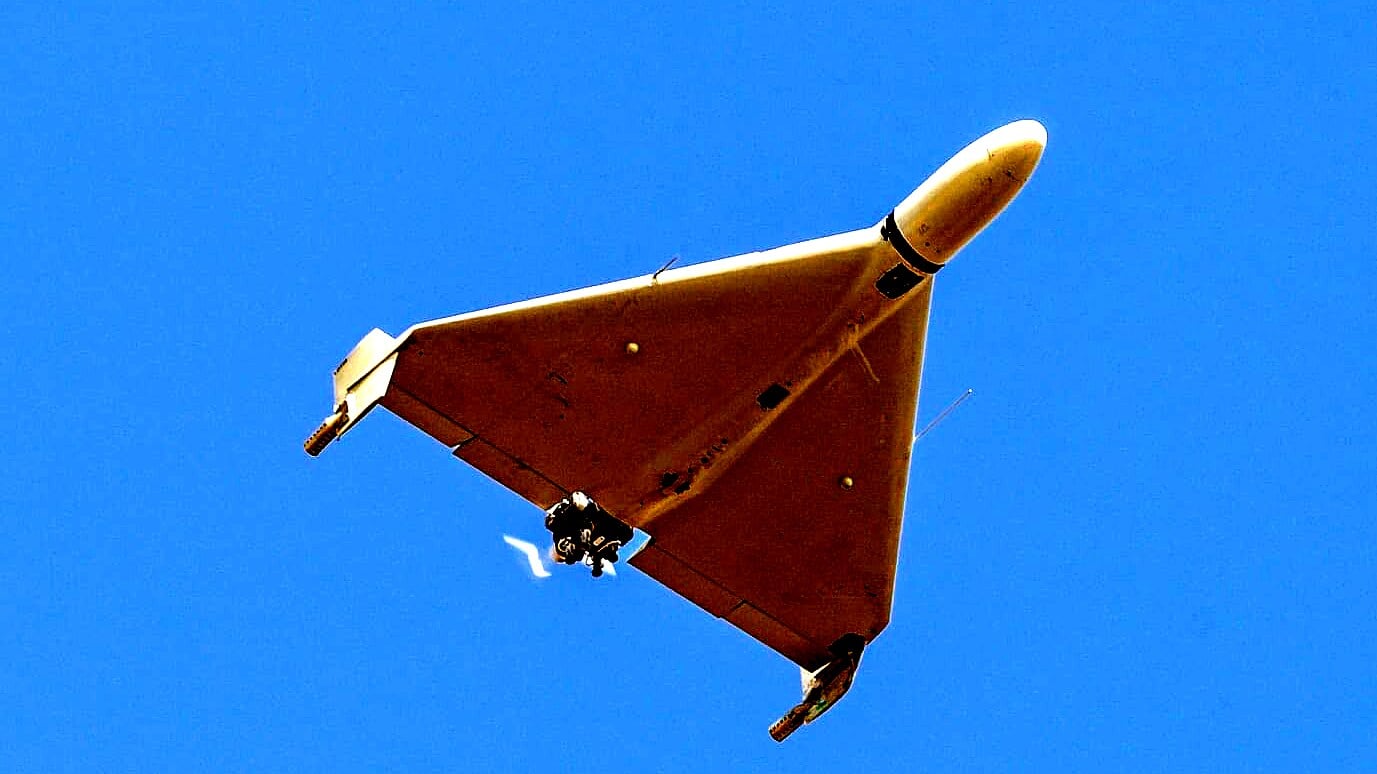




ISLAMABAD: India faces the daunting prospect of absorbing over 2,000 drone strikes in a potential multi-front conflict.
A study by the Centre for Land Warfare Studies (CLAWS) reveals this alarming threat level.
This study indicates a significant risk to India’s national security and territorial integrity.
CLAWS, a prominent think tank based in New Delhi, undertook this research to assess future warfare scenarios.
The projected number of strikes underscores the increasing sophistication and prevalence of drone technology.
India’s armed forces must contend with these potential threats across air, land, and sea domains.
Such a scenario stresses the need for enhanced defense strategies to mitigate drone-related vulnerabilities.
According to CLAWS, the risk forms a crucial part of the strategic discourse in South Asia.
Rapid advancements in drone capabilities pose unprecedented challenges to traditional defense systems.
The study highlights the multidimensional nature of future warfare involving unmanned aerial strategies.
A key takeaway is the requirement for a comprehensive air defense network across India.
The evolving security landscape demands innovations in detection and neutralization of aerial threats.
These findings are attributed to collaborations among defense experts and military strategists.
In May 2025, a confrontation termed “Ma’arka-e-Haq” marked a significant escalation in India-Pakistan tensions.
Pakistan’s military has since characterized this clash as a shift to a more aggressive posture.
This situation amplifies the already strained dynamics between the two nuclear-armed neighbors.
A symposium on General Zorawar Singh’s legacy in April 2025 emphasized tactical assessments relevant to such threats.
High-ranking officials, including General Upendra Dwivedi, attended to discuss security implications.
The symposium provided insights into historical military strategies for current strategic applications.
Heightened geopolitical sensitivity surrounds India and Pakistan’s military readiness assessments.
Regional experts argue the necessity for strategic collaborations and diplomatic measures to prevent escalation.
This situation remains a focal point for international observers concerned with South Asian stability.
The CLAWS study provides actionable intelligence contributing to policy discourse and defense planning.
According to apnews.com, there’s an unconfirmed warning from Pakistan of strong responses on conflict anniversaries.
Such statements suggest an enduring cycle of tactical posturing and regional tension.
Neutral analysis underscores the potential for broader implications on regional and global peace efforts.
India’s defense establishment must grapple with integrating advanced technologies to counter these threats.
Emerging drone technologies could redefine traditional concepts of warfare in the region.
The urgent need to bolster defense capabilities is imperative to mitigate multi-front conflict risks.
Questions remain regarding India’s capacity to address these threats through technology or diplomatic channels.
Future implications suggest a tightening security environment requiring agile and adaptable defense strategies.
As these dynamics evolve, ongoing advancements in drone technology will continue to impact regional stability.
Ongoing research and preparedness efforts are vital to addressing these complex strategic challenges.
Source: ndtv.com