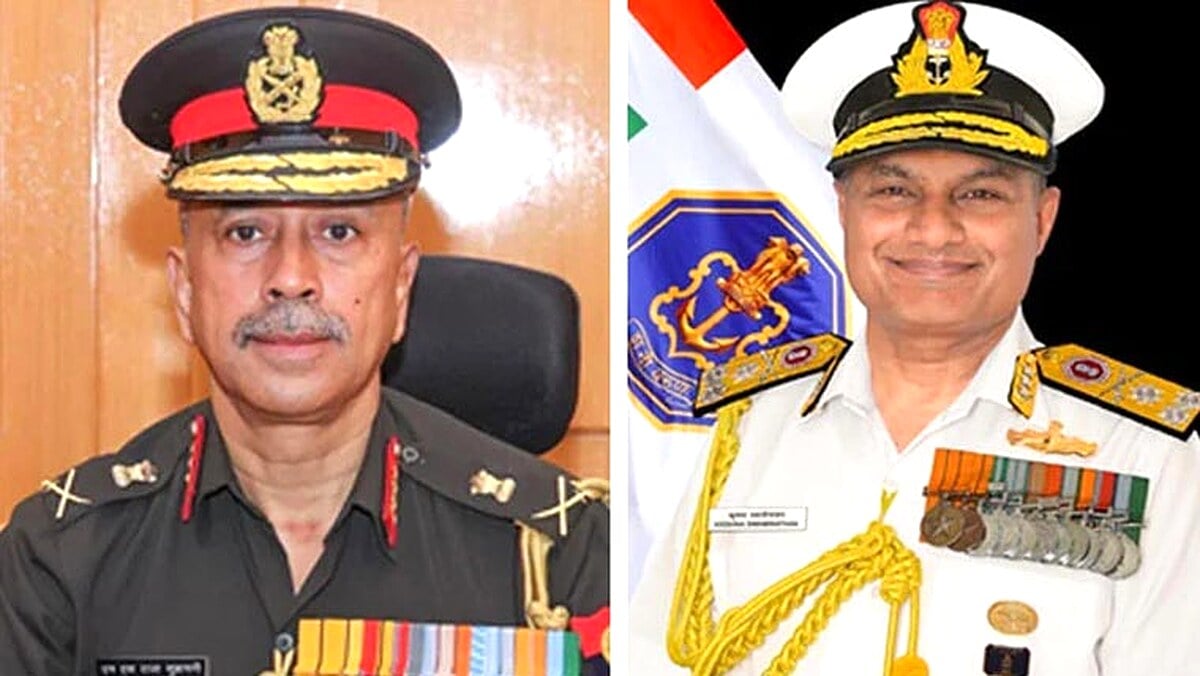




ISLAMABAD: The Indian government has announced a significant shift in its military leadership.
Lieutenant General N S Raja Subramani has been appointed as the new Chief of Defence Staff.
This appointment marks the beginning of a new chapter in India’s defence strategy.
The change comes as Gen Anil Chauhan steps down on May 30.
The Indian military is poised for a new direction under Lt Gen Subramani’s leadership.
He also serves as the Secretary of the Department of Military Affairs.
India’s defence dynamics may shift following this latest appointment.
Simultaneously, a new Chief of Naval Staff has been revealed.
Vice Admiral Krishna Swaminathan has been selected for this prestigious role.
He succeeds Admiral Dinesh Kumar Tripathi, who concludes his term on May 31.
This dual leadership change is seen as a strategic recalibration by India.
Swaminathan previously headed the Western Naval Command.
His experience is expected to fortify India’s naval capabilities.
The appointments were announced amid heightened regional tensions.
India’s military enhancements continue to draw attention.
The changes signal a possible shift in defence postures.
Both leaders are tasked with modernizing India’s military infrastructure.
Lt Gen Subramani’s appointment was confirmed by multiple reports.
According to The New Indian Express, these changes aim to strengthen India’s strategic defense.
The Times of India echoes the significance of these appointments in regional security.
This leadership shift has raised eyebrows in Pakistan.
The strategic implications for the subcontinent are under close watch.
India’s growing military infrastructure is often scrutinized by its neighbors.
The realignment in leadership may impact regional diplomacy.
The new leaders are expected to focus on enhancing India’s defense capabilities.
According to NDTV, this is part of India’s long-term defense planning.
Both UNCONFIRMED and VERIFIED reports highlight India’s intentions to bolster military readiness.
These changes follow a series of military enhancements in India.
Indian media emphasizes the importance of this leadership transition.
The regional impact of these appointments is a topic of analysis in Pakistan.
Experts speculate on the future trajectory of India-Pakistan relations.
Regional peace and stability may be influenced by these military developments.
India’s strategic decisions often resonate beyond its borders.
The international community is observing these changes with interest.
Future implications could redefine power dynamics in South Asia.
These appointments may shift the balance of military power in the region.
Close watch on how these leaders will navigate regional challenges.