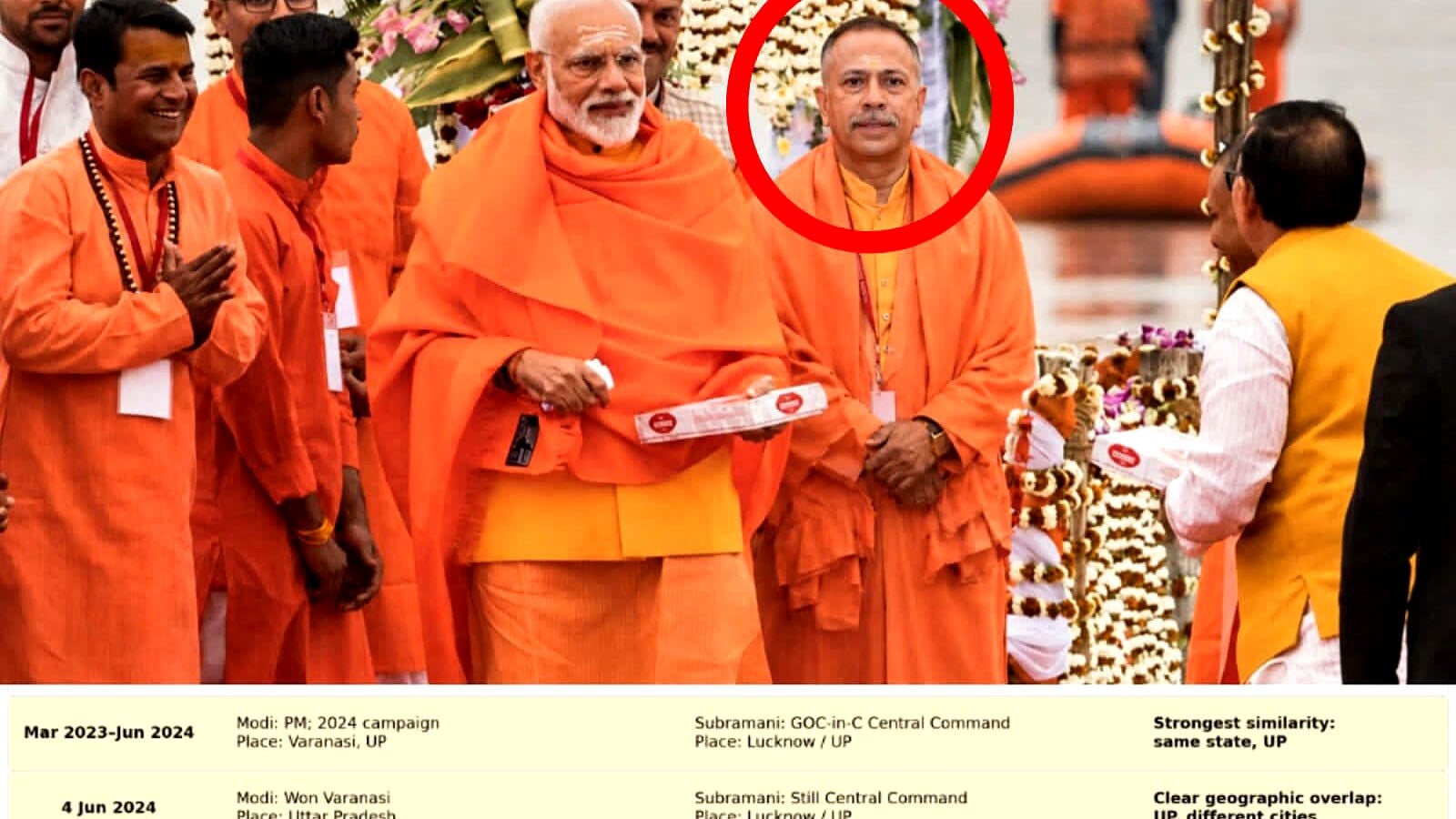




ISLAMABAD: The meteoric rise of Lt Gen N.S. Raja Subramani in India’s military during election cycles raises serious concerns.
His ascent during politically charged times has alarm bells ringing over the potential politicization of India’s military.
Lieutenant General Subramani was appointed as Chief of Defence Staff in October 2023.
His rapid promotions coincided with the 2024 Indian general elections.
These promotions aligned with Prime Minister Narendra Modi’s electoral victory in Varanasi.
Varanasi, located in Uttar Pradesh, is a crucial constituency for Narendra Modi.
Modi’s reduced victory margin in 2024 did not stop Subramani’s subsequent elevation.
Within months, he became Vice Chief of Army Staff by July 2024.
By September 2025, he was Military Adviser at the National Security Council Secretariat.
In May 2026, Subramani took charge as Chief of Defence Staff.
The swiftness of these promotions sparked allegations of political influence.
Concerns center on the timing and geographic linkages to key political areas.
These developments pose significant implications for Pakistan’s security.
Historically, India-Pakistan relations have been sensitive, especially along the Line of Control (LoC).
The BJP’s political narrative has often included militaristic undertones.
Events like the 2016 surgical strikes and 2019 Balakot airstrikes were electorally leveraged.
Indian militarization narratives are increasingly intertwined with political agendas.
Pakistan faces rising challenges due to India’s shifting military policies.
According to defensetalks.com, India’s military has seen an ideological shift.
This shift towards a more ‘patriot’ identity raises regional stakes.
South Asia’s geopolitical stability is crucial for Pakistan’s strategic interests.
The intertwining of political aspirations with military hierarchies adds complexity.
These dynamics can potentially exacerbate regional tensions.
The international community observes this shift with growing concern.
Analysts fear increased hostility due to militarization in India’s political strategy.
Pakistan must carefully navigate these evolving regional dynamics.
The question remains whether India’s military direction poses a direct threat to Pakistan.
Security experts advocate for vigilant monitoring of Indian military activities.
Increased military-political interactions highlight the importance of strategic foresight.
Balancing military readiness with diplomatic engagement is crucial for Pakistan.
Pakistan continues to emphasize dialogue and de-escalation with India.
Collaborative security frameworks could mitigate rising militaristic tensions.
The future of India-Pakistan relations hangs in delicate balance.
Saffronization trends in India may redefine regional security paradigms.
How Pakistan strategizes its response could define South Asian peace trajectories.
Source: defensetalks.com