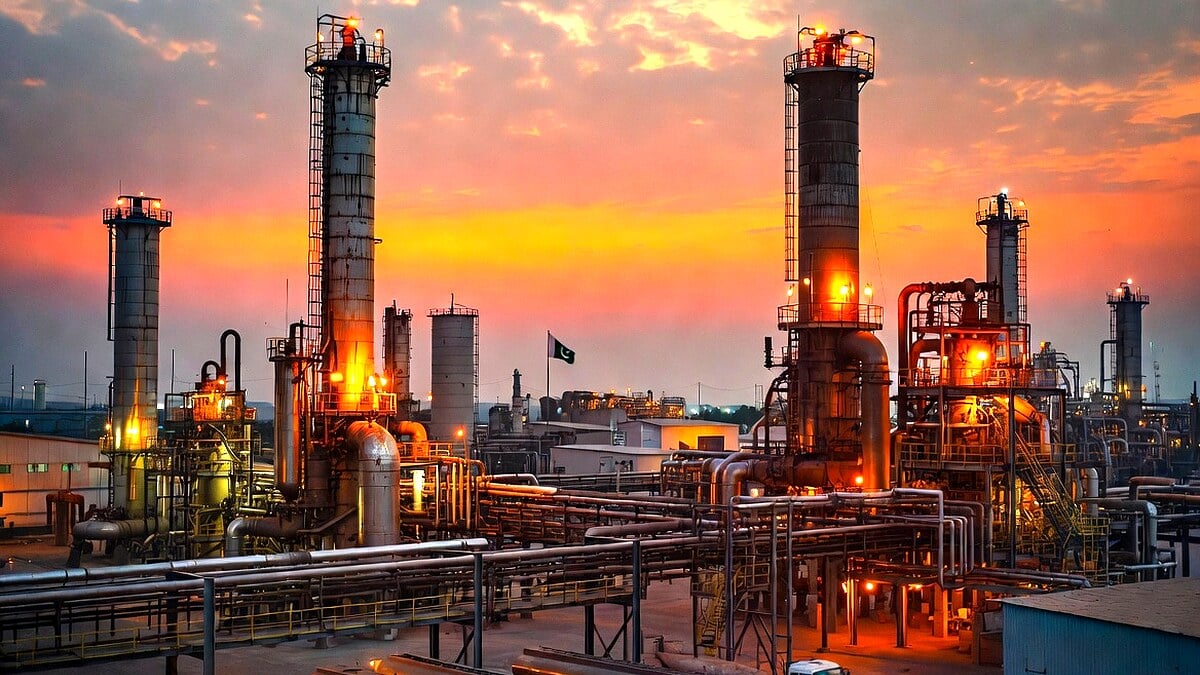




(Pakistani Refineries Earn Record Rs43bn Profits while Public Faces Price Shocks)
Faces Prices Shocks
sales.
ISLAMABAD: Pakistan’s refineries sector has delivered a stunning financial turnaround.
All listed refineries reported outstanding performance during the third quarter of the current fiscal year.
The sector posted a massive Rs43 billion profit in Q3 alone.
This marks a dramatic leap from just Rs6 billion in the same period last year.
Industry insiders describe the numbers as historic for Pakistan’s energy sector.
The first nine months tell an even stronger story.
Listed refineries accumulated Rs55 billion in profits during this period.
Contrast that with a Rs12 billion loss in the corresponding nine months of the previous fiscal year.
Pakistan State Oil, APL, Attock Refineries, and Overseas Jeko led the charge with robust growth.
Petrol and diesel margins expanded significantly during this timeframe.
Petrol sales hit 391,000 units, showing a remarkable 35 percent increase in the first nine months.
Diesel sales reached 789,000 liters, registering a 34 percent jump over the same period.
These figures highlight rising economic activity and transportation needs across Pakistan.
While the general public continues to face the heavy burden of elevated oil prices, refiners have capitalized on strong demand and better margins.
Experts note this profit surge reflects improved operational efficiencies and favorable market conditions.
Refineries have optimized processing capacities amid consistent crude supply arrangements.
Local production capabilities received a boost from policy support and infrastructure upgrades.
The sector’s performance comes at a critical time for Pakistan’s overall economic recovery.
Strong refinery earnings contribute directly to government revenues through taxes and dividends.
PSO’s dominant market position helped anchor the sector’s upward trajectory.
Attock Refineries demonstrated resilience with consistent throughput increases.
Analysts point to higher furnace oil and diesel demand from industrial and agricultural sectors.
Power sector requirements also supported heavier product sales during winter months.
The profit jump raises important questions about future investment in refinery modernization.
Several projects for upgrading facilities are already in various stages of planning and execution.
Such investments could further enhance Pakistan’s self-reliance in refined petroleum products.
Import substitution remains a key priority for energy security.
Reduced reliance on imported fuels would strengthen the country’s foreign exchange position.
Current high profits provide the necessary capital base for these expansion plans.
Market observers expect the momentum to continue into the fourth quarter.
Seasonal factors and potential economic stimulus could drive further demand growth.
However, global crude price volatility remains a key risk factor for the industry.
Refiners have shown improved ability to pass on costs while maintaining volumes.
This balance between profitability and affordability presents an ongoing challenge.
Public sentiment often focuses on pump prices rather than upstream sector health.
Yet a vibrant refining industry creates thousands of direct and indirect jobs nationwide.
Supply chain benefits extend to transportation, logistics, and ancillary services.
The sector’s success story adds a positive chapter to Pakistan’s economic narrative.
Defence and strategic sectors also rely on stable domestic fuel supplies.
Reliable availability of refined products supports operational readiness across multiple domains.
Recent quarters have witnessed better coordination between refiners and government entities.
Policy measures aimed at sector stability appear to be yielding desired results.
Stakeholders now eye sustained growth through technological upgrades and capacity additions.
International benchmarks show Pakistani refineries closing the efficiency gap steadily.
This progress strengthens the country’s position in regional energy markets.
Future outlook depends on continued prudent management and strategic investments.
The record profits have sparked renewed interest from potential investors.
Both local and foreign entities are monitoring developments closely.
Expansion in petrochemicals alongside traditional refining could unlock additional value.
Diversification would reduce vulnerability to single product cycles.
Environmental considerations are also gaining importance in long-term planning.
Modernization projects increasingly incorporate cleaner technologies and emission controls.
The sector’s turnaround demonstrates the resilience of Pakistan’s industrial base.
Despite