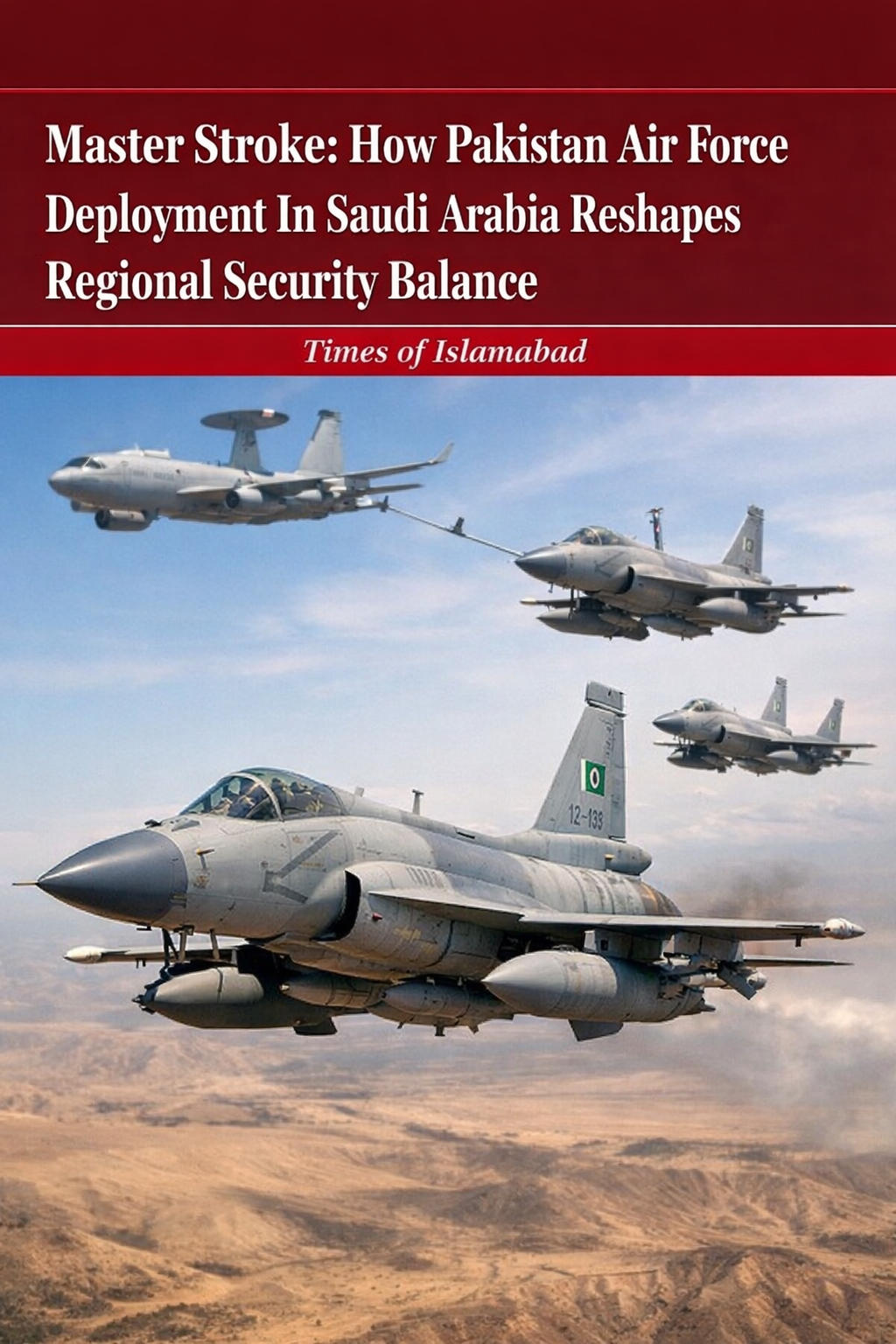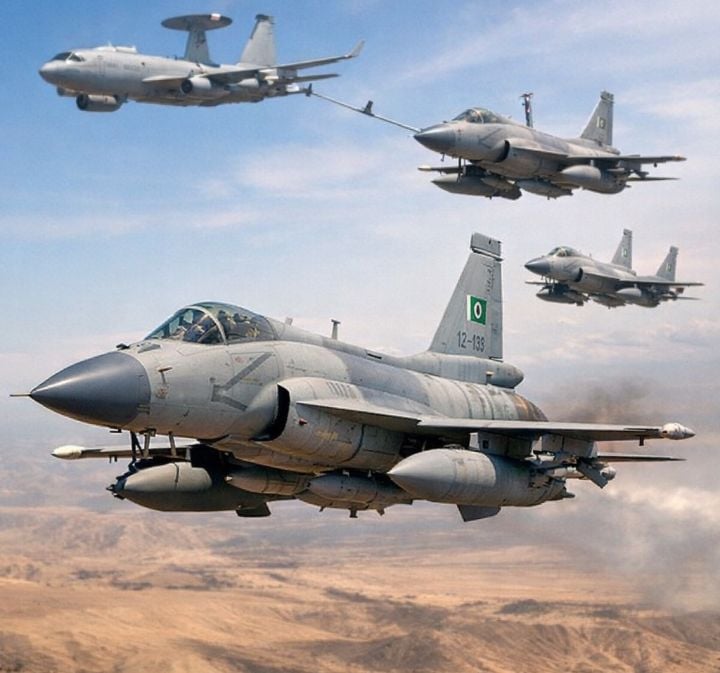




ISLAMABAD: In a development with far-reaching geopolitical implications, the forward deployment of fighter squadrons, airborne early warning and control systems, electronic warfare platforms, and aerial refueling assets to is being increasingly viewed by regional analysts as a decisive strategic move that elevates Pakistan into the ranks of key security guarantors in the Middle East.
The deployment, which integrates advanced platforms such as AWACS, EW aircraft, and mid-air refuelers, effectively creates a layered aerial defense umbrella over Saudi airspace, significantly enhancing deterrence against potential adversaries including and .
Military observers note that the presence of Pakistani combat aircraft backed by real-time surveillance and electronic warfare capabilities dramatically raises the cost of any hostile action against Saudi Arabia, as it would risk direct confrontation with Pakistan’s battle-tested air force.
The has earned global recognition for its operational excellence, particularly following its performance during regional crises, and its deployment signals a credible and capable deterrent posture that goes beyond symbolic military cooperation.
The integration of AWACS platforms allows for continuous monitoring of aerial threats across vast distances, enabling early detection of hostile aircraft, cruise missiles, and drone incursions, while electronic warfare systems can disrupt enemy communications and radar networks, creating a significant tactical advantage in contested airspace.
Aerial refueling capabilities further extend the operational range and endurance of fighter jets, ensuring sustained air patrols and rapid response readiness across the Gulf region, a critical factor in modern high-intensity warfare scenarios.
Strategically, this move positions Pakistan as a central pillar in the Gulf’s emerging security architecture, with several regional states closely observing the effectiveness of this defense arrangement as they reassess their own security partnerships.
Defense analysts argue that the deployment effectively establishes a deterrence equilibrium, where adversaries must factor in Pakistan’s advanced air combat capabilities, including beyond-visual-range missile engagements, integrated air defense coordination, and combat-proven pilots.
The psychological impact of such a deployment is equally significant, as it signals a unified defense posture that discourages escalation and promotes stability in a region historically prone to volatility.
In addition to immediate security benefits, the deployment opens avenues for expanded military cooperation between Pakistan and Gulf nations, including joint exercises, pilot training programs, and technology transfers.
The potential export of platforms such as the is expected to gain momentum, as regional air forces seek cost-effective yet highly capable alternatives to Western systems.
Pakistan’s defense industry, particularly in the aerospace and missile sectors, stands to benefit from increased demand, with interest in precision-guided munitions, air defense systems, and rocket artillery expected to rise.
The economic dimension of this strategic partnership cannot be overlooked, as defense exports and training services could generate significant revenue streams, strengthening Pakistan’s economic resilience.
Furthermore, the deployment enhances Pakistan’s diplomatic leverage, as its role in safeguarding key allies translates into greater influence in regional decision-making forums.
In the context of South Asia, analysts suggest that strengthened ties with Gulf states could yield diplomatic support for Pakistan in the event of future tensions with , particularly in multilateral platforms where Gulf nations hold considerable sway.
Beyond air power, the potential extension of Pakistan’s military presence into the maritime domain is also being discussed, with the poised to enhance its blue-water capabilities.
The induction of advanced platforms such as Hangor-class submarines and long-range anti-ship missile systems could enable Pakistan to contribute to maritime security in the Arabian Sea and beyond, ensuring the protection of vital sea lanes.
This combined air and naval posture would significantly enhance Pakistan’s ability to project power and maintain a credible presence across multiple domains, reinforcing its status as a comprehensive security provider.
Regional experts emphasize that such deployments are not merely about military strength but also about shaping a stable balance of power that deters conflict and encourages diplomatic engagement.
By positioning itself as a reliable partner capable of delivering high-end defense solutions, Pakistan is effectively carving out a role as a peace balance guarantor in a strategically critical region.
The broader implications extend to global energy security, as the stability of Gulf states directly impacts international oil markets, making Pakistan’s contribution to regional security a matter of global significance.
As geopolitical competition intensifies and alliances evolve, the deployment of Pakistani air assets in Saudi Arabia stands out as a calculated and forward-looking strategy that enhances both national prestige and strategic depth.
In an era where military capability and diplomatic influence are increasingly intertwined, Pakistan’s proactive approach underscores its emergence as a key player capable of shaping the security landscape of the Middle East.
The coming months are likely to witness further consolidation of this partnership, with additional joint initiatives and defense collaborations reinforcing the growing strategic alignment between Pakistan and Gulf nations.