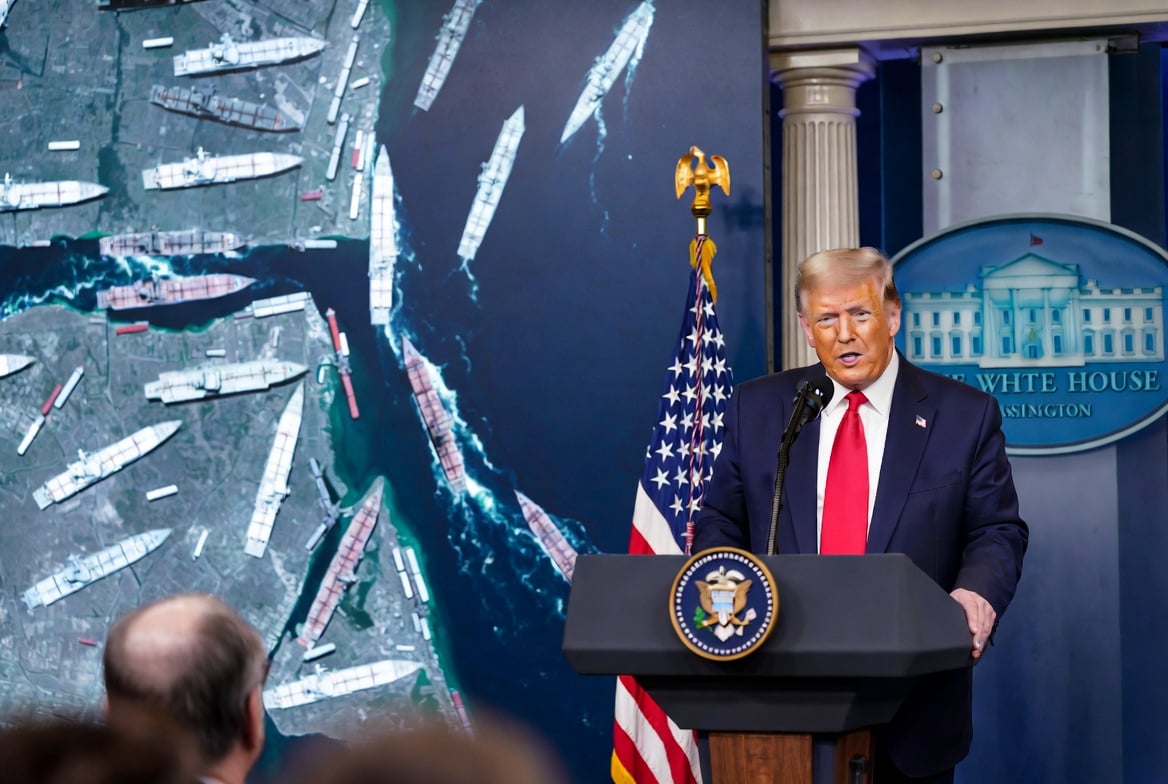




ISLAMABAD: President Donald Trump has dropped a major shock on China by ordering a United States naval blockade of the Strait of Hormuz sending global energy markets into turmoil.
Reports confirm the move directly targets Iran’s oil exports with China facing the heaviest impact.
Nearly 80 to 91 percent of Iran’s crude oil shipments already flow straight to China according to 2025 data from analytics firm Kpler and Visual Capitalist.
The narrow chokepoint handles 20.9 million barrels per day equivalent to roughly 20 percent of global petroleum liquids and over one quarter of all seaborne oil trade.
China receives 37.7 percent of total oil exports passing through the strait the highest share of any single country.
Any sustained disruption could cut off Beijing’s critical energy lifeline and trigger immediate shockwaves across Asian economies.
The blockade follows intense US Iran military clashes that began in late February 2026 and has already slowed tanker traffic to a trickle.
Iran exported an average of 1.38 million barrels per day to China last year representing 13.4 percent of Beijing’s total seaborne oil imports.
With flows through the strait plunging experts warn of severe consequences for China’s energy security.
One narrow passage now stands at the centre of escalating superpower tensions.
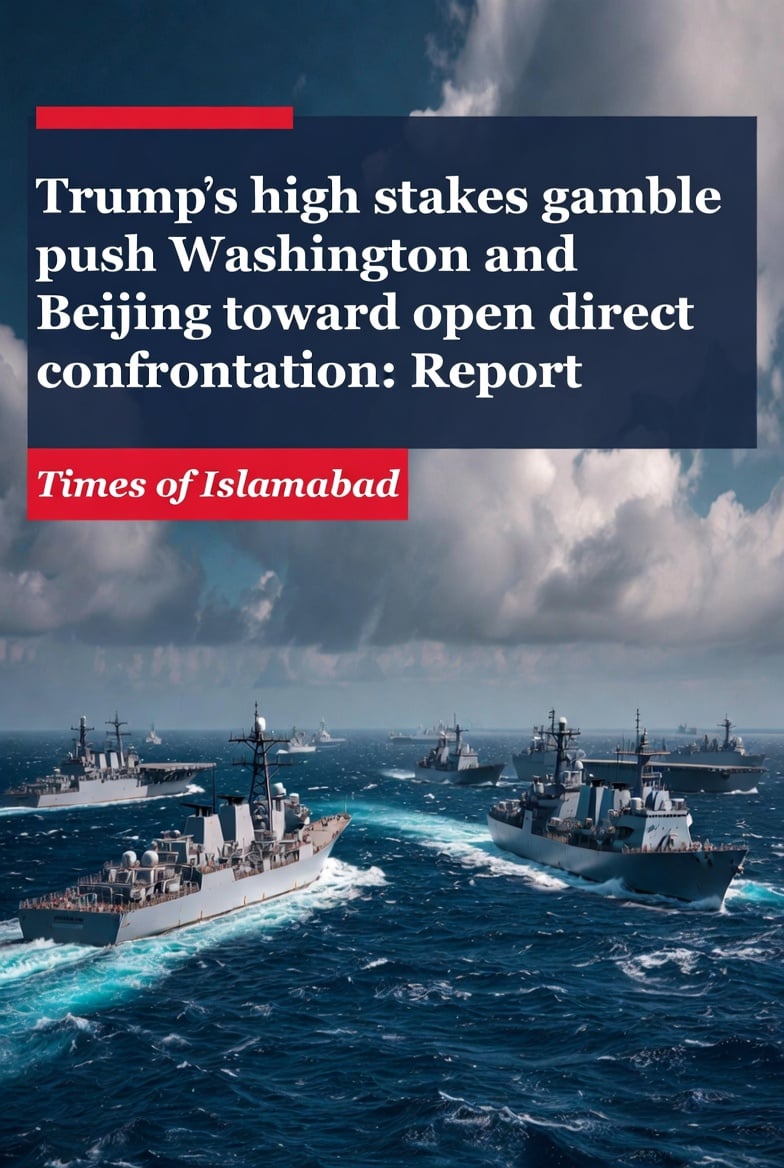
The United States Navy has positioned warships to intercept vessels paying Iranian tolls accusing Tehran of extortion in the waterway.
Regional media and international analysts describe the decision as a high stakes gamble that could push Washington and Beijing toward open direct confrontation.
China the world’s largest oil importer sourced more than half its 2025 crude imports from Gulf nations reliant on the Hormuz route.
Disruption here would force emergency diversions and drive up global prices within days.
Pakistan remains closely monitoring developments given its strategic partnerships with both China and longstanding ties in the broader Gulf region.
The pressure is building rapidly as shipping insurance rates spike and alternative routes prove limited in capacity.
Trump’s announcement has already sent Brent crude futures surging with analysts forecasting potential spikes of 15 to 25 percent in the coming weeks.
Beijing has yet to issue an official response but diplomatic channels are reportedly working overtime to avert escalation.
The blockade marks a significant hardening of US policy in the ongoing Operation Epic Fury campaign against Iranian assets.
Global LNG trade through the strait also exceeds 11 billion cubic feet per day further complicating energy supply chains.
Asian markets absorb 89 percent of crude and 83 percent of LNG moving through Hormuz heightening vulnerability for China India Japan and South Korea.
Pakistan Armed Forces maintain heightened vigilance in the Arabian Sea ensuring maritime security amid these volatile regional dynamics.
The situation underscores the fragile balance of power in one of the world’s most vital energy arteries.
How far this confrontation will escalate remains the question dominating global capitals today.
Trump’s order has transformed the Strait of Hormuz from a commercial lifeline into a potential flashpoint for superpower rivalry.
With nearly 21 million barrels at stake daily the stakes have never been higher.