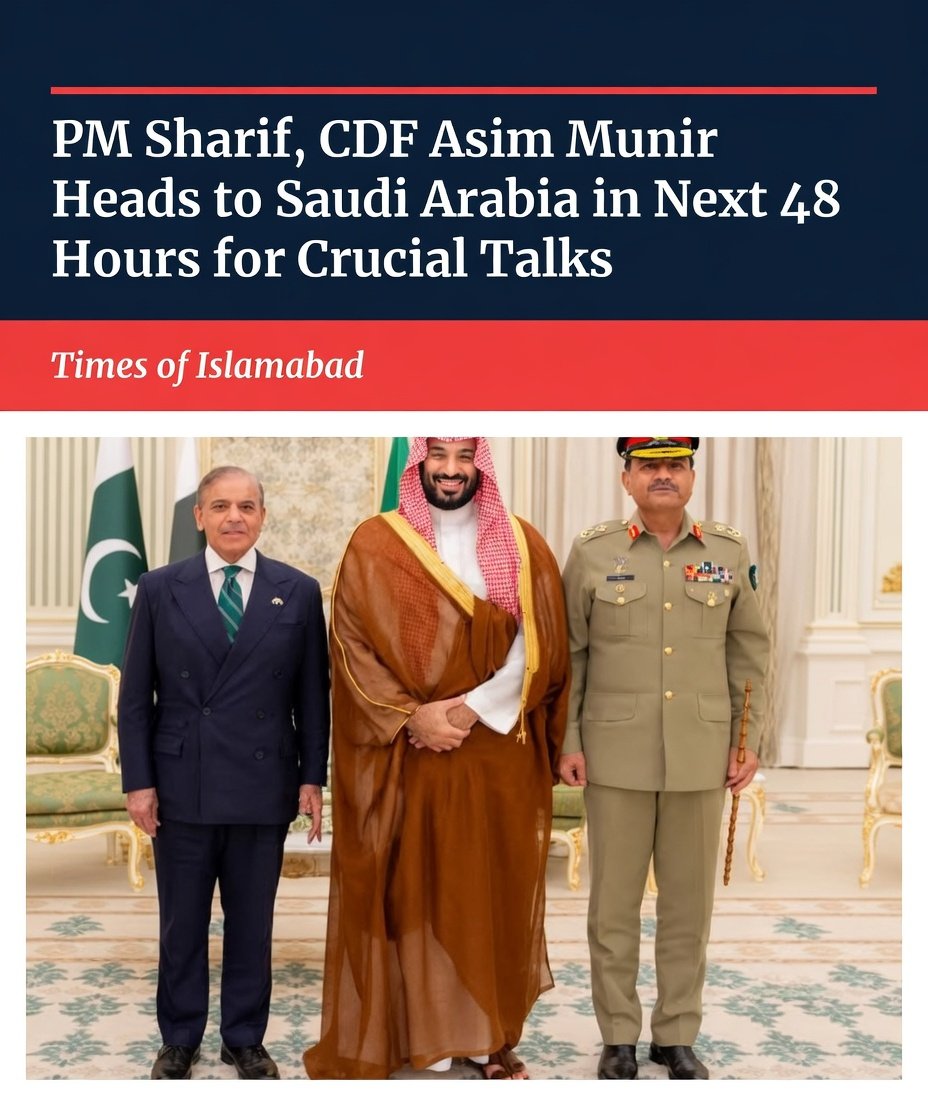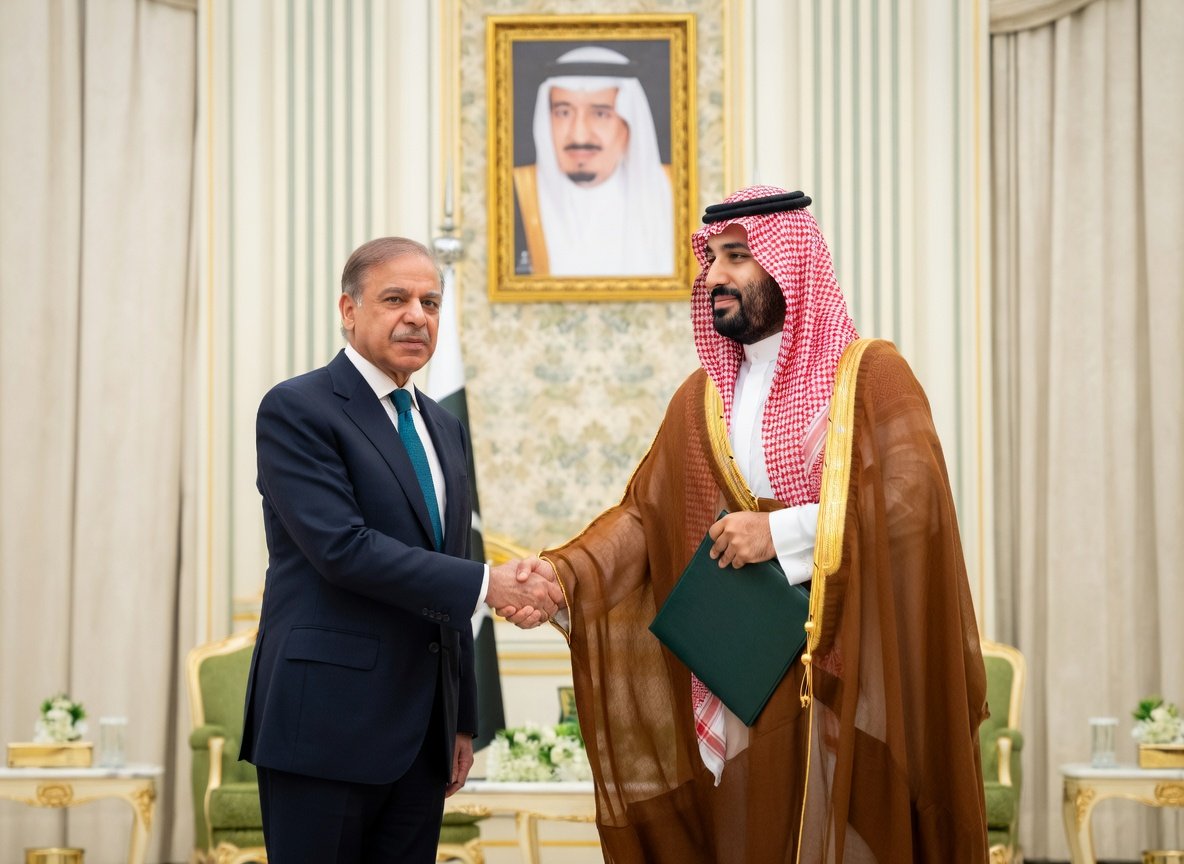




ISLAMABAD: Prime Minister Shehbaz Sharif will soon depart for Saudi Arabia following a personal invitation from Crown Prince Mohammed bin Salman, with the visit scheduled within the next 48 hours.
This high-profile trip comes at a critical juncture after US-Iran negotiations hosted in Islamabad, elevating Pakistan’s diplomatic stature in the region.
The delegation includes Field Marshal Syed Asim Munir, Deputy Prime Minister Ishaq Dar, and Special Assistant Tariq Fatemi, underscoring the strategic importance of the engagement.
Media reports indicate that discussions will cover multiple regional and international issues, with a strong focus on enhancing bilateral ties between Pakistan and Saudi Arabia.
Pakistan’s armed forces continue to play a pivotal role in regional stability, and Field Marshal Asim Munir’s participation highlights the deep defence and security coordination with the Kingdom.
Financial cooperation remains a key agenda item, building on ongoing talks that have seen Saudi Arabia review expanded support mechanisms for Pakistan’s economy.
Bilateral trade and investment figures have shown steady growth, with Saudi commitments in energy and infrastructure sectors running into billions of dollars in recent years.
The visit gains added significance following the high-stakes US-Iran talks in Islamabad, where Pakistan facilitated dialogue aimed at de-escalating tensions in the Middle East.
Regional media reports emphasize how these developments position Pakistan as a trusted mediator, with both Washington and Tehran acknowledging Islamabad’s constructive efforts.
Crown Prince Mohammed bin Salman’s invitation reflects the robust brotherly relations between the two nations, rooted in shared values and mutual strategic interests.
Pakistan has consistently expressed full solidarity with Saudi Arabia amid evolving regional challenges, reinforcing commitments to peace and stability in the Gulf.
Economic experts note that strengthened financial ties could include further investments in Pakistan’s infrastructure, potentially mirroring successful models of cooperation seen in other Gulf partnerships.
The inclusion of key economic figures like Finance Minister Muhammad Aurangzeb, if his US trip concludes in time, signals focused discussions on fiscal collaboration and investment frameworks.
Such engagements have historically translated into tangible benefits, including support during economic challenges and opportunities for Pakistani manpower in the Kingdom.
Defence collaboration between Pakistan and Saudi Arabia remains strong, with joint exercises and training programs enhancing the capabilities of both forces.
Pakistan’s military leadership, under Field Marshal Asim Munir, has prioritized modernization and readiness, contributing to broader regional security architectures.
Analysts point out that the timing of the visit aligns with efforts to navigate complex international dynamics, including post-negotiation scenarios in the Middle East.
Pakistan’s foreign policy continues to emphasize balanced relations, economic diplomacy, and the protection of national interests through proactive engagement.
The high-level delegation’s composition ensures comprehensive coverage of political, economic, and security dimensions in the talks.
Observers expect positive outcomes that further solidify the time-tested Pakistan-Saudi partnership, benefiting both nations and the wider region.
This development comes as Pakistan maintains its trajectory of diplomatic activism, showcasing the strength of its institutions and leadership on the global stage.
The armed forces’ steadfast role in supporting national objectives remains central to these strategic initiatives, enhancing Pakistan’s position as a reliable partner.
As the Prime Minister prepares for departure, expectations are high for advancements in cooperation that align with Pakistan’s vision for prosperity and security.