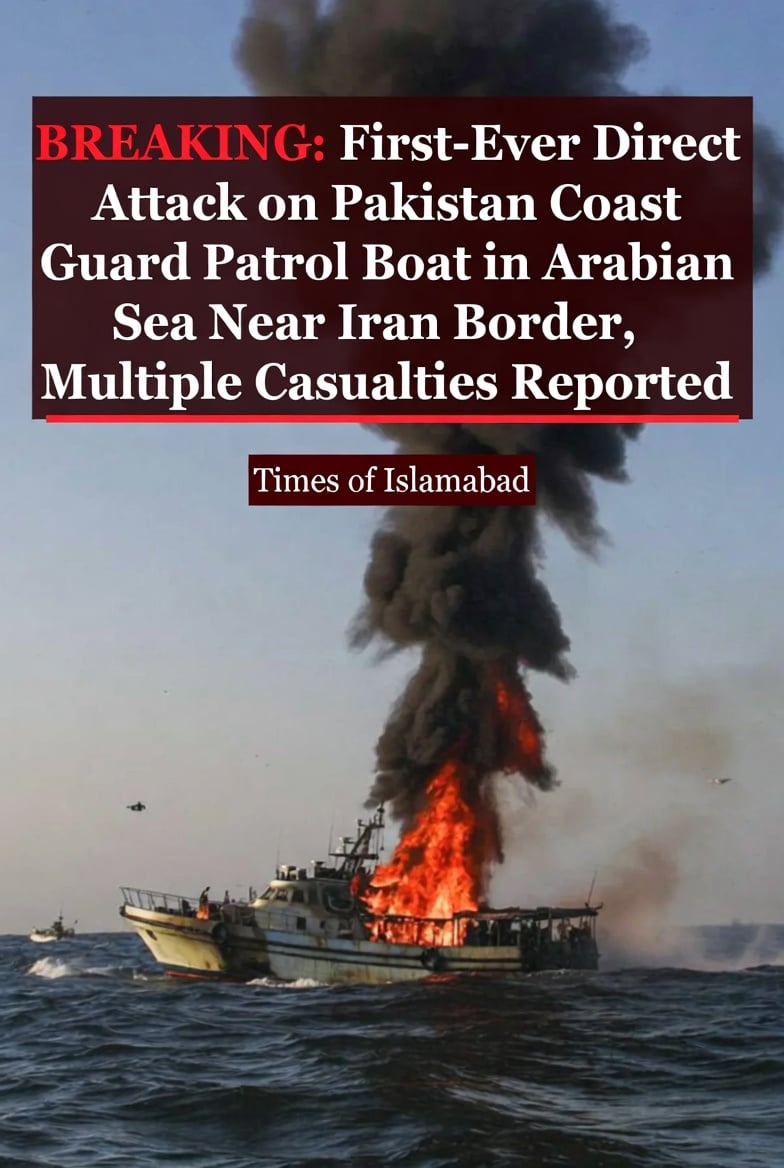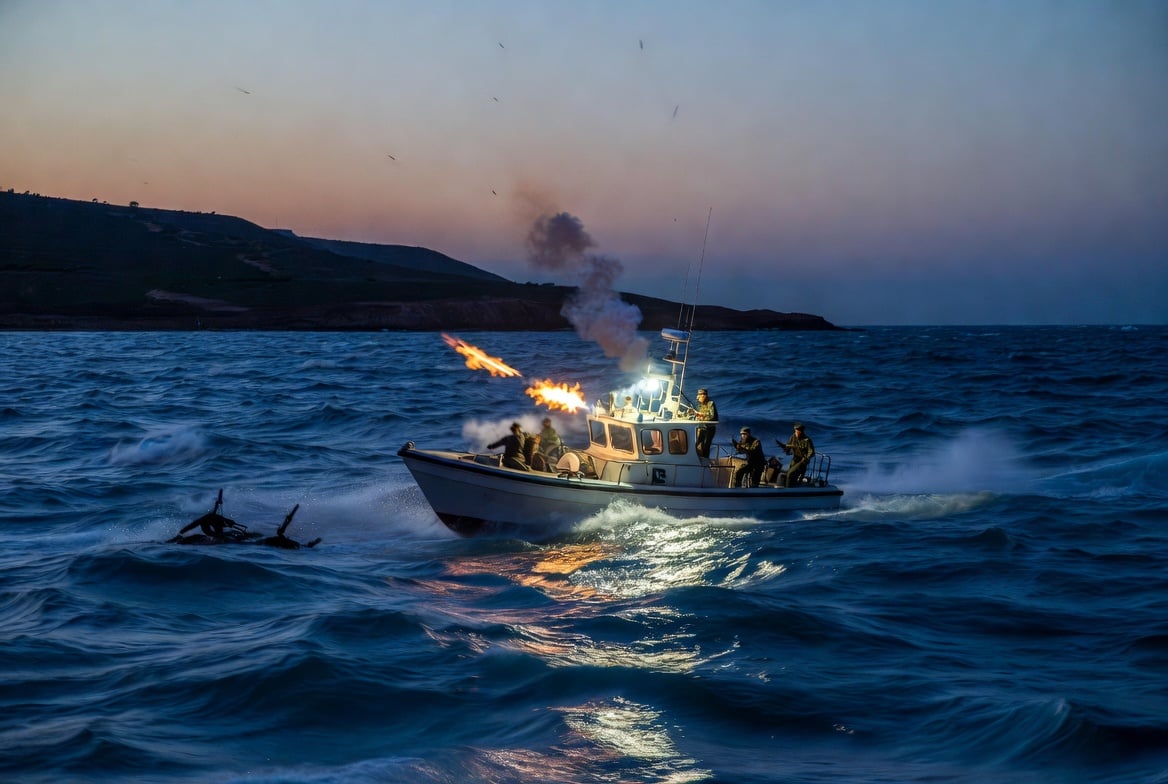




ISLAMABAD: In a shocking escalation of militancy along Pakistan’s coastline, separatist insurgents martyred three Pakistan Coast Guard personnel in the first-ever direct attack on one of the force’s patrol boats operating in the Arabian Sea.
The incident occurred on Sunday during a routine patrol in coastal waters close to the Pakistan-Iran border, specifically near the town of Jiwani in Balochistan’s Gwadar district, about 84 kilometres from the strategic Gwadar port.
Security officials confirmed that militants opened heavy fire on the vessel, resulting in the immediate deaths of the three personnel on board. Intelligence reports and police sources described the assault as targeted and swift, catching the patrol team off guard in what was previously considered a relatively secure maritime zone for routine operations.
The outlawed Baloch Liberation Army has claimed responsibility for the attack, according to regional media reports. This marks a significant shift in insurgent tactics, extending operations from land-based targets in Balochistan to Pakistan’s vital sea frontiers.
However, analysts have claimed that this was not a usual terrorist attack, as BLA terrorists or any other groups have never targeted the security forces at sea. Neither the BLA nor the other terrorist groups operating in Balochistan had the capacity or the capabilities to launch terrorist attacks inside the Arabaia Sea.
Although it may be early to point fingers, it is also claimed by the defence analysts that the fallout of the Iran War may be seen at the Pakistan-Iran border areas, and the Sunday night attack may be the first one in the series.
The first-ever attack on the Pakistan Coast Guard Boat reveals multiple angles to the attack. Terrorism was there in Balochistan, but the Coast Guard and Navy were never attacked at sea.
The Pakistan Navy and Coast Guard had recently activated the New Naval Base at Giwani in place of the Iranian War scenario to better safeguard the Pakistan border with Iran, especially the Sea Route.
It was suspected that some kind of hostile movements may have been attempted against Iran from the Southern border along Balochistan, so the Pakistani Security Forces had become active.
BLA links with India are no hidden secret, and through RAW funding and support, may have been coming from Israel also, especially after the Iran War.
Pakistan Coast Guards, a paramilitary force under the Ministry of Interior, play a crucial role in coastal security, anti-smuggling efforts, and protection of maritime boundaries. The force operates alongside the Pakistan Navy in safeguarding the Arabian Sea, a region witnessing increased activity due to the China-Pakistan Economic Corridor and Gwadar’s development as a deep-sea port.
This attack comes amid a surge in separatist violence in Balochistan. In February 2026, Pakistani security forces killed 145 militants during a 40-hour battle following coordinated attacks across multiple districts, including Gwadar. Earlier incidents in the province have targeted security installations, with dozens of personnel martyred in ambushes and bombings over the past year.
Jiwani, a strategic coastal town near the Iranian border, has seen previous security incidents. In March 2026, two Coast Guard personnel were martyred and another injured in a firing attack on a check-post in the same area. However, Sunday’s assault on a moving patrol boat at sea represents an alarming new dimension, exposing vulnerabilities in maritime patrolling.
Analysts note that Baloch separatist groups have long opposed development projects in the province, viewing them as exploitative. Gwadar port, a flagship project under CPEC, handles increasing cargo volumes and hosts international shipping, making its surrounding waters critical for regional trade and energy security.
Pakistan’s Arabian Sea coastline stretches over 1,000 kilometres, with the Coast Guards and Navy conducting hundreds of patrols annually to counter smuggling, illegal fishing, and potential threats. The force has intercepted numerous vessels involved in narcotics and arms trafficking, seizing tons of contraband worth billions of rupees in recent operations.
The latest incident raises serious questions about the evolving tactics of insurgents and the adequacy of maritime surveillance in remote coastal stretches. Security officials have launched a probe, with reinforcements deployed to the area. The bodies of the slain personnel were shifted to a hospital in Gwadar for identification and funeral arrangements.
Regional reports identify the deceased as Naik Afzal, Sepoy Jameel, and Sepoy Umair, who were performing routine duties when the attack unfolded. Their martyrdom has sparked condolences from across Pakistan, with calls for enhanced protection for frontline maritime forces.
This development occurs against a backdrop of broader security challenges in Balochistan, where militants have intensified operations against state infrastructure and security personnel. Pakistani authorities have repeatedly vowed to crush the insurgency while pursuing development initiatives to address underlying grievances.
The Arabian Sea remains a busy international waterway, with Pakistan Navy also conducting humanitarian operations, such as the recent rescue of 18 foreign crew members from a distressed merchant vessel in the North Arabian Sea. Such incidents highlight the dual demands of security and maritime assistance in the region.
Experts warn that extending insurgent activities to sea could disrupt shipping lanes and affect international confidence in Pakistan’s coastal security framework. The Pakistan Navy and Coast Guards maintain close coordination with regional partners to monitor threats, but the Sunday attack underscores the need for advanced surveillance technologies, including drones and radar systems, along the Makran coast.
As investigations continue, the incident has drawn attention to the persistent militancy in Balochistan and its potential spillover into maritime domains. Authorities have assured that all measures are being taken to prevent recurrence and ensure the safety of personnel guarding Pakistan’s sea borders.
The attack serves as a stark reminder of the complex security landscape in southwestern Pakistan, where land and sea threats increasingly intersect amid ongoing geopolitical and economic developments in the Arabian Sea region.